Folklore & Legends
The Jersey Devil: From Pine Barrens Legend to Newspaper Panic
The Jersey Devil shows how regional folklore, landscape and newspaper appetite can turn a local creature story into a durable public monster.
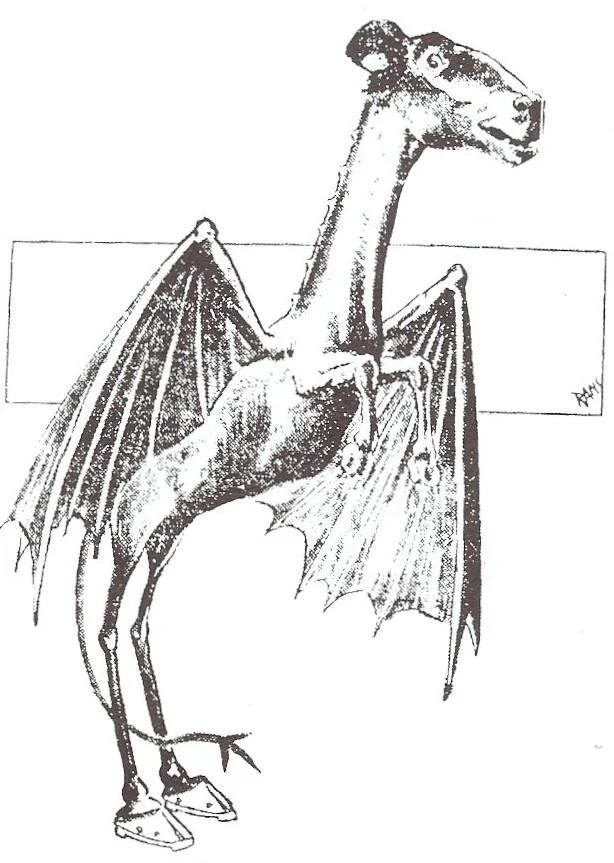
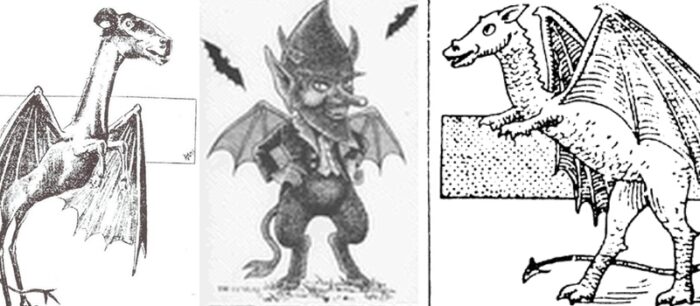
The Jersey Devil has no single stable body. It has hooves in one report, wings in another, a horse-like head, a long neck or only a scream beyond the trees. The consistency lies elsewhere: in the Pine Barrens landscape and in the name that teaches every new witness what kind of creature to see.
A legend with several beginnings
The best-known origin story says that a woman called Mother Leeds cursed her thirteenth child, which transformed into a creature and escaped through a chimney. Versions disagree about the mother, the birth, the date and the shape. Those variations identify folklore rather than a stable historical incident.
The Leeds name also belonged to a real colonial family associated with almanacs, religious controversy and local politics. Connections between that history and the later monster story are suggestive, but they do not turn one surviving document into a birth certificate for the creature.
The Pine Barrens as evidence and setting
Southern New Jersey’s forests, wetlands, sand roads and dispersed settlements provide both habitat stories and difficult viewing conditions. Animal calls travel; tracks cross soft ground; distance is hard to judge at night. The landscape can generate ambiguous encounters while also preserving a strong regional identity.
This does not mean every witness invented an experience. It means a cry, silhouette or track is interpreted inside a place already supplied with a named possibility.
January 1909
A concentrated run of reports in January 1909 moved the Devil far beyond scattered local tradition. Newspapers across New Jersey and the Delaware Valley described tracks, rooftop noises, winged shapes and frightened residents. Claims echoed from town to town quickly enough for each new report to arrive in a public already looking for the creature.
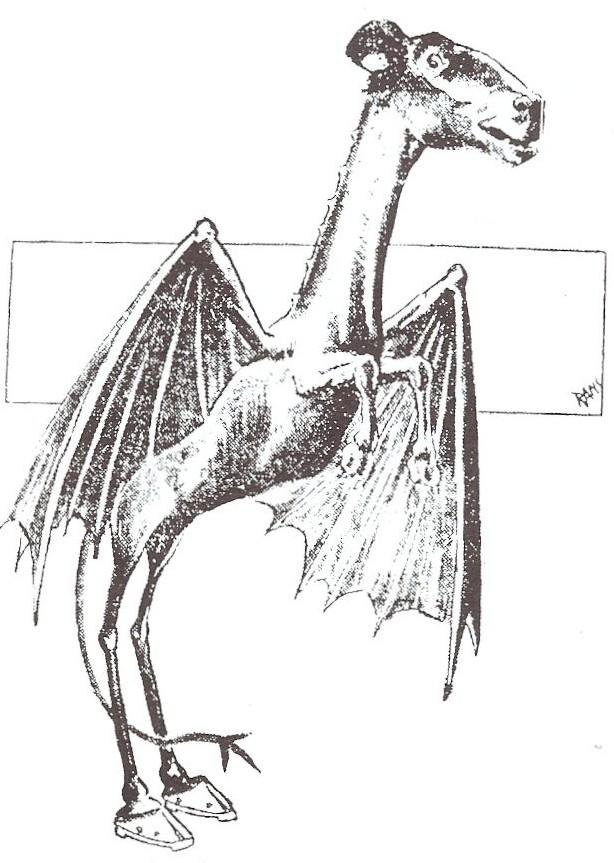
Press illustration gave the reports a shared body even when witness descriptions differed. Hoaxes and jokes entered the stream, and ordinary animals could now be reported under an extraordinary headline. The episode is therefore evidence of a social event even though it is not evidence for a new species.
What is solid?
Leeds-family legends circulated in multiple forms, a major newspaper episode occurred in 1909, and the Jersey Devil became a durable regional emblem. Contemporary newspapers document the spread of claims and the way an image was standardised.
What remains uncertain?
Individual witnesses may have seen animals, props, tracks or shapes that cannot now be identified. The early development of the Mother Leeds story is incomplete, and later versions often project a polished creature biography backwards.
Ordinary candidates
Owls, cranes, deer, dogs and other known animals can account for parts of particular descriptions, but no one species needs to fit every report. Newspaper imitation, expectation and deliberate fabrication connect encounters that may have had different causes.
The same caution applies to the phantom black dog tradition: repeated features may reveal how stories are organised rather than the anatomy of one hidden animal.
Why it still matters
The Jersey Devil survives because it performs more than one job. It is a monster, a joke, a warning about remote ground, a tourism image and a badge of place. Biological evidence for an unknown creature is absent; cultural evidence for a living regional legend is abundant.
Claim, Context and Cautions
Claim
A winged or hoofed creature linked to the Leeds legend is said to inhabit the Pine Barrens and appeared in a wave of reports during January 1909.
What is solid?
Multiple origin variants exist, newspapers documented an intense 1909 report cycle, and the creature became a lasting regional symbol.
What remains uncertain?
The earliest formation of the Leeds legend and the immediate causes of individual sightings cannot always be reconstructed from later summaries.
Possible explanations
Misidentified wildlife, ambiguous tracks and calls, hoaxes, press imitation and expectation can explain a mixed report tradition without requiring one unknown animal.
Sceptical view
No reliable specimen, diagnostic photograph or consistent anatomical record supports a distinct species behind the name.
Why it still matters
The Jersey Devil shows how landscape, newspapers and local identity can give diverse reports one memorable shape.
Contextual glossary
Terms used in this entry
Definitions are offered as reading aids, not as conclusions about the case.
- Black dog
- A spectral or uncanny dog associated in British and Irish traditions with roads, churchyards, boundaries, storms or death omens. Similar motifs do not make every local story the same tradition.
Reference trail
Sources
- New Jersey Pinelands Commission: Jersey Devil (opens in a new tab)Official regional overview of the legend and its Pine Barrens setting.
- New Jersey Pinelands Commission: Cultural and historical literature compendium (opens in a new tab)Bibliographic guide including newspaper and historical work on the Jersey Devil tradition.
- Pinelands Preservation Alliance: The Jersey Devil (opens in a new tab)Regional account connecting the legend with landscape and local history.
- Wikimedia Commons: 1909 Jersey Devil illustration (opens in a new tab)Public-domain newspaper illustration record used by the case.
Case Book
Photographs, Maps and Supporting Images
Supporting images provide documentary, geographic or visual context. Read each caption for its date, source and evidential limits.
Continue researching
Follow the evidence, context and comparisons
Curated connections
Selected editorially for this entry.
Black dog stories reveal how roads, boundaries, danger and memory gather into a repeated supernatural form.
Curated connection · Case fileThe Moorland Cat ReportsA careful look at Britain and Ireland large-cat reports, where escaped-animal context, distance errors and local rumour overlap.
Curated connection · ArticleThe Role of Newspapers in Spreading Strange TalesOld newspapers preserved remarkable local reports, but they also shaped them for appetite, humour and alarm.
More through shared context
Additional routes based only on existing topics, themes and metadata.
Loren Coleman popularised the Bridgewater Triangle as a regional paranormal zone. Its component stories vary greatly in age and evidence, and the boundary expanded through retelling.
Same primary topic · Shared theme: Media & rumour · Case fileOurang Medan: The Ghost Ship With No Secure ShipOurang Medan is a maritime legend built through changing newspaper and magazine retellings. No verified ship registration, crew list, wreck or rescue record anchors the event.