Cryptids & Animal Reports
The Moorland Cat Reports
A careful look at Britain and Ireland large-cat reports, where escaped-animal context, distance errors and local rumour overlap.
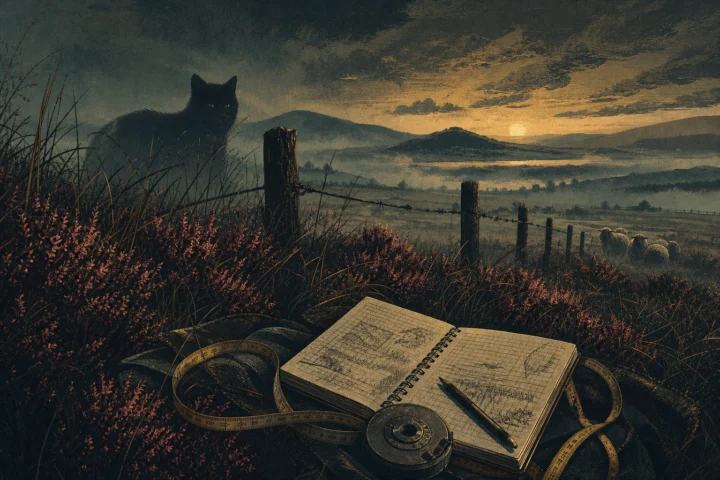
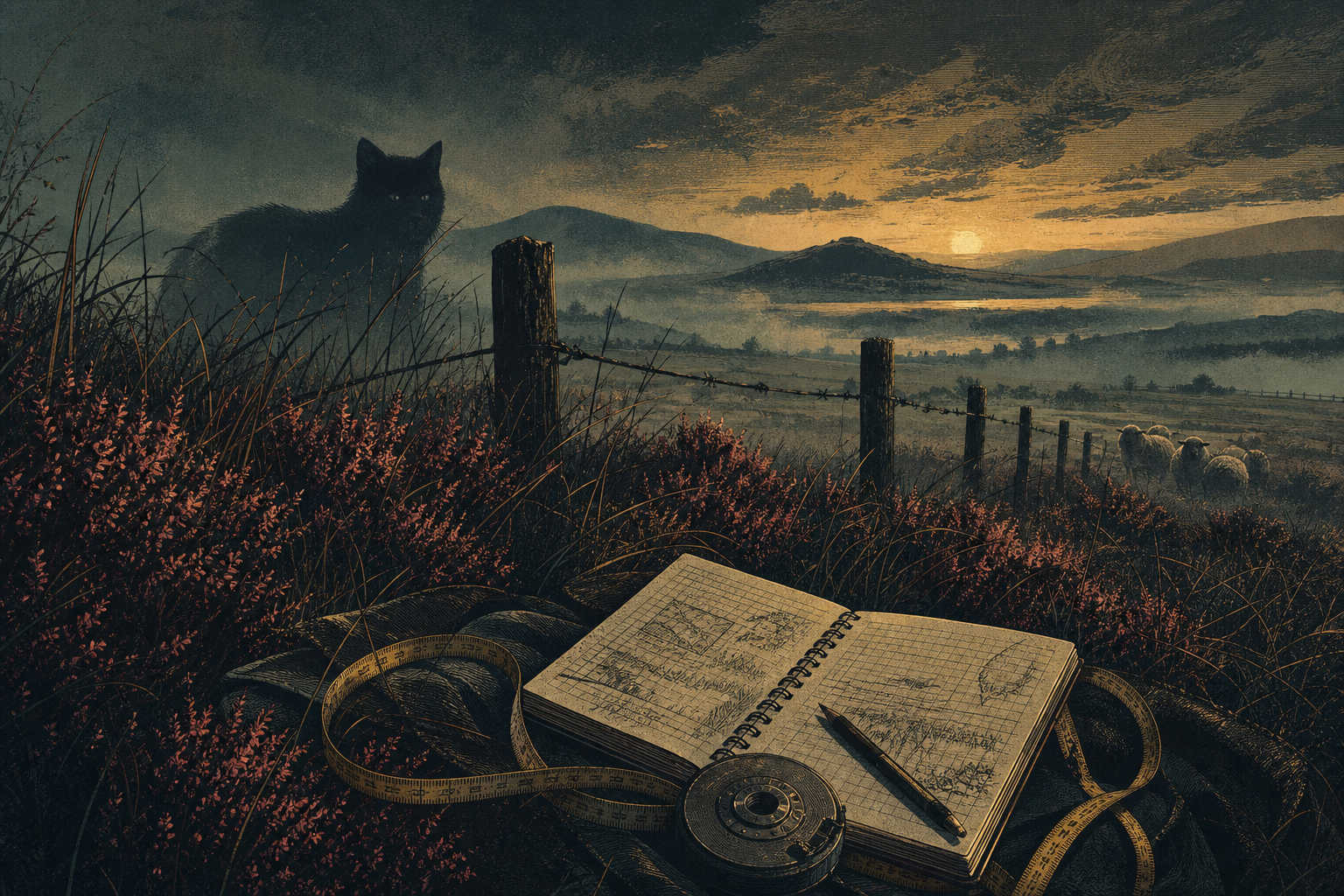
The Moorland Cat Reports sit in the half-light between wildlife record, rumour and landscape folklore. The basic claim is familiar across Britain and Ireland: a large black or tawny cat is seen crossing a lane, dropping into a hedge, moving along a field edge or watching from the rough ground beyond a farm. It is often described as a panther, puma, lynx or “beast”, but most reports arrive with the same problem. The animal is distant, brief, dark against dark ground, and gone before anyone can measure it.
That does not make every witness foolish. Rural sightings can be genuinely startling. A domestic cat seen at the wrong distance can look impossible; a fox, dog or deer partly hidden by grass can become something else for a second; and a real escaped exotic animal is not impossible in principle. The case is useful because it asks the archive to hold two ideas at once: some unusual cats have existed outside normal captivity, but most dramatic moorland reports still lack the physical evidence needed to prove a continuing wild population.
How the reports usually unfold
The typical report begins with a glimpse rather than a controlled observation. A driver sees a long-tailed animal cross a road at dusk. A walker notices a low black shape against a wall. A farmer finds disturbed livestock or tracks after bad weather. A local paper asks whether “the beast” has returned. A few older sightings are pulled into the same pattern, and suddenly a district has a creature story with a map.
Once that pattern exists, later sightings are easier to name. A witness may not say “large unidentified animal”; they may say “the moorland cat” because the local vocabulary is already waiting. That is how animal reports become folklore without becoming false. Folklore is not the opposite of observation. It is the social machinery that helps an observation travel.
The exotic-pet context
There is a serious historical reason these stories cannot be dismissed with a shrug. Britain has had private ownership of dangerous wild animals, regulated under the Dangerous Wild Animals Act 1976. Animals have escaped, been abandoned, or been found outside ordinary domestic settings. Individual cases of non-native cats being captured or recovered do not prove every moorland sighting, but they keep the category open.
The important distinction is between an individual animal and a breeding population. A released or escaped cat might explain a local run of sightings for a period of time. A stable population requires much stronger evidence: repeated physical remains, reliable photographs, DNA, prey patterns, breeding signs and ecological consistency. Most public “big cat” stories live in the gap between those two standards.
What is solid?
It is solid that people report large cat-like animals in rural Britain and Ireland, and that the reports have formed a durable modern legend. It is also solid that private exotic animal ownership and occasional escapes provide a plausible background for some sightings. The legal and animal-welfare record makes the idea of isolated non-native cats more grounded than many other creature claims.
It is also solid that photographs, tracks and carcass claims are often weaker than they first sound. A photograph taken at distance rarely gives scale. Tracks change as mud dries or collapses. Livestock injuries can be produced by dogs, foxes, scavenging or post-mortem damage. A convincing case needs a chain of evidence, not just a dramatic label.
What remains uncertain?
The unresolved question is not whether any unusual cat has ever been loose. The harder question is whether any particular report proves one, and whether repeated sightings in a region point to an animal, a rumour pattern, or a mixture of both. Most reports do not preserve enough information to decide: exact distance, light, weather, size reference, photographs with scale, tracks protected from contamination, or independent witness accounts.
There is also a psychological problem with scale. A small animal nearby and a large animal far away can trade places in memory, especially in low light. Once the mind has selected “big cat”, later details may arrange themselves around that interpretation.
How to read a moorland-cat report
- Was there a reliable size reference, such as a gate, road marking, fence post or livestock animal?
- How long was the sighting, and was the animal moving?
- What were the light, weather and distance conditions?
- Were photographs taken before the witness heard local rumours?
- Were tracks measured, photographed with scale and protected from later disturbance?
- Were livestock injuries examined by a vet or wildlife officer?
- Does the report stand alone, or is it being grouped with older local stories after the fact?
Why it still matters
Moorland-cat stories matter because they are not only about animals. They are about how rural uncertainty becomes public narrative. They join real wildlife, private ownership, local newspapers, fear for livestock, poor photographs, memory and the romance of empty country. The best reading is neither automatic belief nor easy mockery. It is patient sorting: what was seen, what was recorded, what was inferred, and what the landscape was already prepared to say.
Claim, Context and Cautions
Claim
A large dark feline was repeatedly seen crossing moorland and field boundaries in South West England during the 1980s and 1990s. Witnesses described a panther-sized animal with a long tail and a deliberate, low-slung gait. Some reports were accompanied by livestock kills attributed to a large predator.
Background
British big-cat reports increased sharply after the Dangerous Wild Animals Act 1976, which introduced licence requirements for exotic pets and may have prompted some private owners to release animals rather than comply. Rural communities in South West England had a pre-existing culture of mysterious livestock deaths and moorland folklore, which gave new sightings a ready narrative frame. Media coverage through the 1980s reinforced the vocabulary: once a district was known for panther reports, subsequent witnesses were more likely to interpret ambiguous shapes through that language.
Reported events
Sightings clustered around road edges, sheep fields and moorland tracks. Several photographs were taken over the years, but most were too distant or low-resolution to distinguish a large exotic cat from a big domestic animal. Paw-print casts and livestock injuries were examined in a handful of cases; results were either inconclusive or consistent with large domestic dog or fox predation rather than a felid.
Possible explanations
Escaped or released exotic animals are a real historical possibility given the legal and social context of the 1970s and 1980s. Misidentified large domestic cats or black Labradors seen at distance in poor light are the most common sceptical explanation, as size is routinely overestimated in open country. Rumour contagion between witnesses — where hearing a local story about a panther primes future observers to see one — is well documented in anomalous-animal research.
Sceptical view
No animal was ever caught, killed, or comprehensively photographed at close range across several decades of concentrated interest. Physical evidence consistently fell short of confident identification. The absence of a confirmed specimen does not rule out real animals, but it does mean that each individual sighting bears a high burden of proof that the available records do not meet.
Why it still interests people
The file sits at the boundary of ecology, wildlife law, rural media and folklore, which makes it richer than a simple yes-or-no question about an animal. It asks whether a cluster of sightings is an animal record, a misread shadow, a rumour pattern or a mixture of all three. That is exactly the kind of stubborn ambiguity the archive exists to hold without forcing a premature answer.
Contextual glossary
Terms used in this entry
Definitions are offered as reading aids, not as conclusions about the case.
- Rumour
- Unverified information circulated between people because it appears relevant or urgent. Repetition can make a rumour familiar without adding an independent source.
- Contamination
- The introduction of outside material or information into evidence. It may affect DNA, objects, recordings or witness accounts and must be considered before treating a match as independent.
- Uncertainty
- The stated limit on what a measurement, reconstruction or body of evidence can establish. Describing uncertainty is not indecision; it prevents a result from appearing more precise than the evidence allows.
Reference trail
Sources
- Dangerous Wild Animals Act 1976 (opens in a new tab)Primary legal text governing private keeping of listed dangerous wild animals in Great Britain.
- GOV.UK: Apply for a licence to keep a wild animal (opens in a new tab)Current licensing guidance, including wild cats and relevant hybrids.
- NatureScot: Illegally released lynx captured (opens in a new tab)Official 2025 statement documenting a real modern release without treating it as proof of a breeding population.
- University of Southampton: Exotic big cat research (opens in a new tab)Research summary for a verified historical lynx specimen and the need for case-by-case physical evidence.
Case Book
Photographs, Maps and Supporting Images
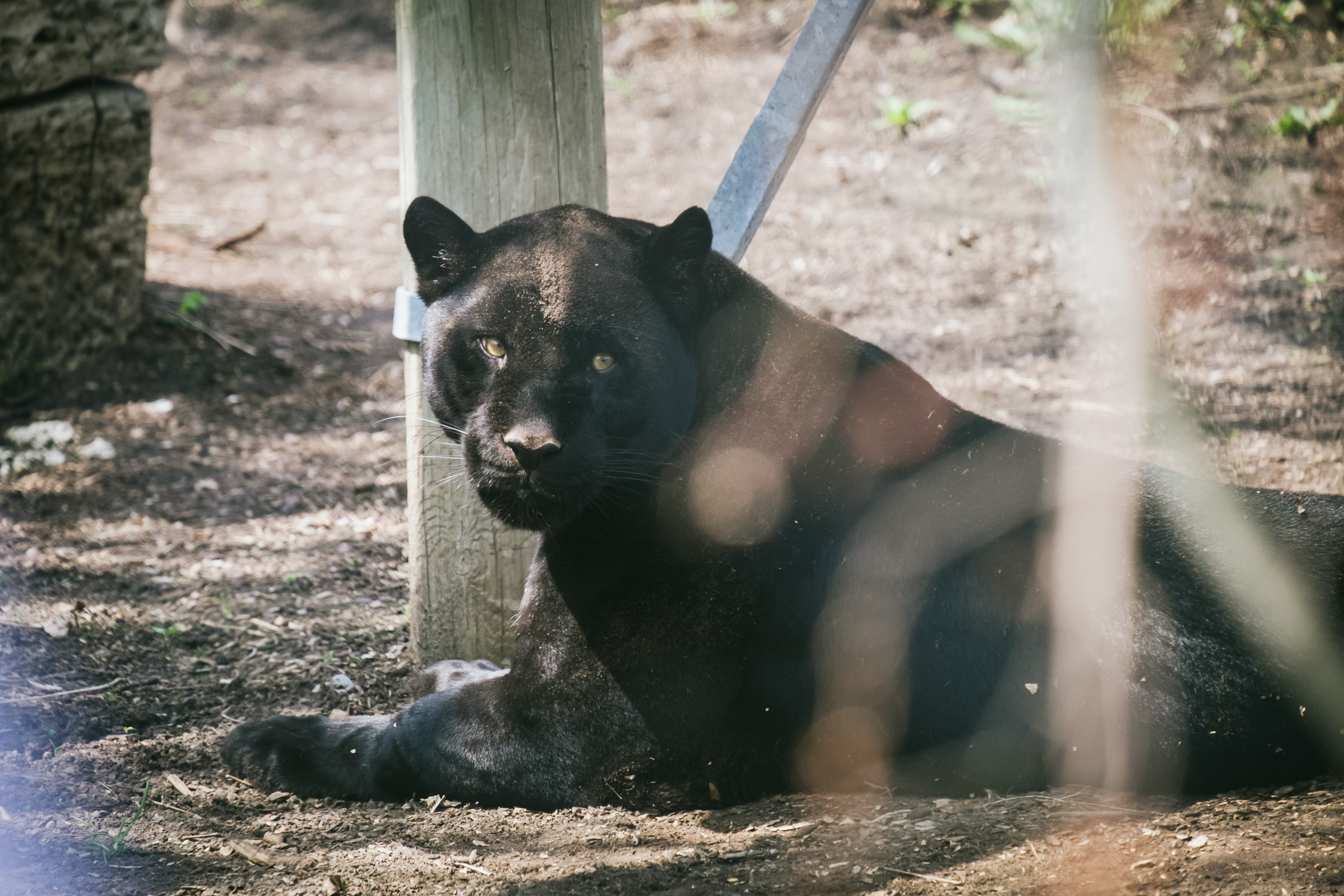
Supporting images provide documentary, geographic or visual context. Read each caption for its date, source and evidential limits.
Continue researching
Follow the evidence, context and comparisons
Curated connections
Selected editorially for this entry.
Black dog stories reveal how roads, boundaries, danger and memory gather into a repeated supernatural form.
Curated connection · Case fileThe Surgeon’s Photograph and the Shape of a MonsterThe famous Loch Ness image became a visual shorthand for lake monsters, then a lesson in scale, cropping and media appetite.