Folklore & Legends
The Vanishing Hitchhiker: Anatomy of a Travelling Legend
Vanishing-hitchhiker stories are documented folklore rather than one verified recurring event. Their changing details, local authentication and older supernatural motifs reveal how a modern legend acquires credibility.
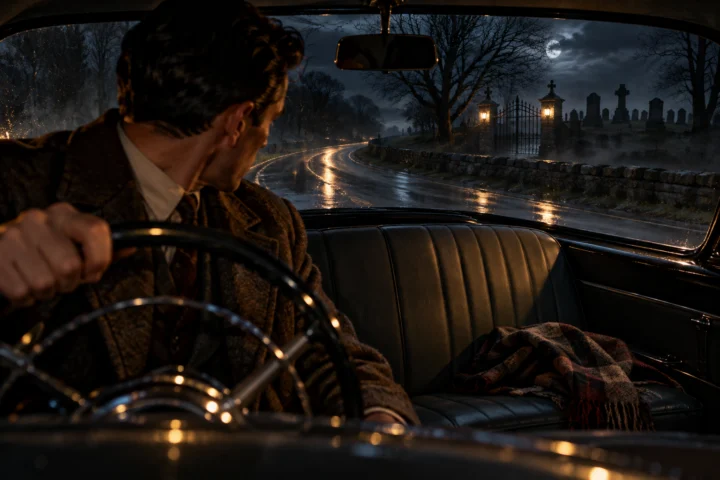
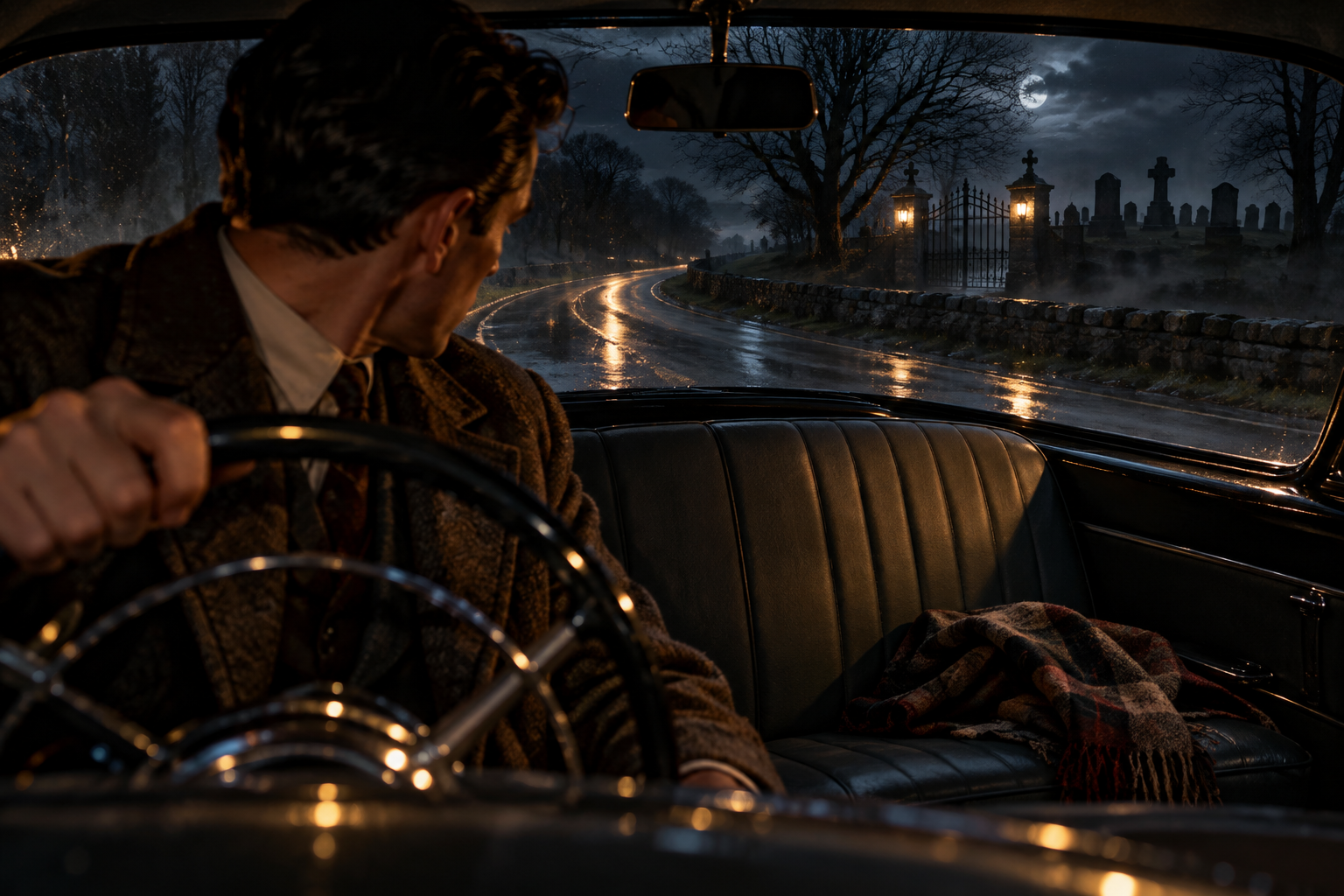
A motorist stops for a lone traveller, often a young woman in evening clothes. During the journey the passenger becomes silent or abruptly vanishes from the moving car. At an address supplied by the stranger, a parent or homeowner explains that the passenger died years earlier on the same road. Names and locations differ, but this sequence is instantly recognisable as the vanishing hitchhiker.
The tale is often introduced as something that happened to a friend, a relative or a trustworthy local driver. That social proximity is part of its construction, not independent verification. When folklorists follow the chain, the original witness commonly remains unavailable, unnamed or one step beyond the person telling it.
Richard Beardsley and Rosalie Hankey’s 1942-1943 study compared dozens of American versions and classified recurring forms. Their work showed both stability and change: a supernatural passenger, a disappearance and a later confirmation persist, while clothing, cause of death, destination and moral lesson move between communities.
Automobiles gave the legend a modern setting, but older stories already featured mysterious travellers, returning dead people and strangers who vanished after testing hospitality. The road tale combines those motifs with twentieth-century anxieties about cars, strangers, night travel and sudden death.
This pattern belongs beside the archive’s account of urban legends before the internet, its study of phantom black dogs, and the role of print in spreading strange tales.
Claim, Context and Cautions
A story that authenticates itself
The final visit to a grieving family appears to verify the passenger's identity inside the story. A returned coat, a recognised description or an anniversary date can add a physical-looking clue. Yet these elements generally arrive as part of the same narrative rather than as separately documented records.
The legend therefore contains its own proof scene. That device helps a supernatural event sound investigated even when the listener cannot inspect a police report, identify the driver or interview the family.
From motif to local ghost
Individual communities attach the plot to a dangerous bend, cemetery, dance hall or fatal crash. Chicago's Resurrection Mary is among the best-known local versions, associated with Archer Avenue and Resurrection Cemetery. Comparable stories have been collected in many countries under different names.
A representative map pin marks one tradition, not the birthplace or geographical range of the motif. Local detail gives a travelling plot emotional ownership and may also absorb memories of real road deaths.
What comparison can establish
Folklore archives preserve dated texts, collector information and variant details. Comparing them can show which elements predate a claimed encounter and how a version changes across retellings. It cannot demonstrate that every narrator is insincere; people may report a sincerely remembered experience through a familiar story pattern.
The evidential distinction is between a recorded narrative and the event it describes. Multiple similar accounts may reveal strong cultural transmission without supplying multiple independent observations of a ghost.
Why the passenger keeps returning
The tale compresses grief, unsafe travel and unfinished obligations into a short dramatic route. The passenger may seek home, warn the driver, attend a dance or repeat the journey of death. Each version offers a reason for returning while leaving the disappearance intact.
No single historical case explains the international tradition. Its durability is better accounted for by portable structure, local adaptation and repeated performance. The vanishing hitchhiker remains culturally real and historically traceable as folklore, even though the supernatural passenger has not been verified as a recurring physical phenomenon.
Contextual glossary
Terms used in this entry
Definitions are offered as reading aids, not as conclusions about the case.
- Oral history
- A recorded interview about remembered experience, usually created with attention to the speaker, context and purpose. It is a source to interpret, not a transcript of the past without mediation.
- Variant
- A particular version of a story, belief or custom recorded from one teller, place or occasion. Differences between variants show how tradition is adapted and transmitted.
Reference trail
Sources
- Beardsley and Hankey, A History of the Vanishing Hitchhiker (opens in a new tab)University-hosted copy of the foundational 1942-1943 comparative study of American variants.
- Brigham Young University, Vanishing Hitchhiker folklore archive record (opens in a new tab)University archive description showing continued collection and classification of the legend.
- Memorial University, The Vanishing Hitchhiker in Newfoundland (opens in a new tab)University thesis examining regional transmission, variation and the social setting of collected narratives.
Case Book
Photographs, Maps and Supporting Images
Supporting images provide documentary, geographic or visual context. Read each caption for its date, source and evidential limits.

Continue researching
Follow the evidence, context and comparisons
Curated connections
Selected editorially for this entry.
Chain letters, photocopies, local radio and schoolyard retellings show that viral folklore did not need a screen.
Curated connection · ArticleWhy Phantom Black Dogs Haunt So Many Local LegendsBlack dog stories reveal how roads, boundaries, danger and memory gather into a repeated supernatural form.
Curated connection · ArticleThe Role of Newspapers in Spreading Strange TalesOld newspapers preserved remarkable local reports, but they also shaped them for appetite, humour and alarm.
More through shared context
Additional routes based only on existing topics, themes and metadata.
Kenneth Arnold’s 1947 report helped launch the modern flying-saucer era. His observation was sincere and carefully timed, but distance and object identity were never independently secured.
Shared theme: Witness & memory · Same country or region · Case fileThe Battle of Los Angeles: Searchlights, Shells and Wartime NervesIn February 1942, Los Angeles saw searchlights, anti-aircraft fire and rumours of enemy aircraft in a case where fear, weather and uncertainty lit up the sky.