Scientific Anomalies & Natural Phenomena
Tunguska: The Morning the Forest Fell Flat
A 1908 blast over Siberia flattened forest without leaving a classic impact crater, making Tunguska a cornerstone case in anomaly, science and myth.
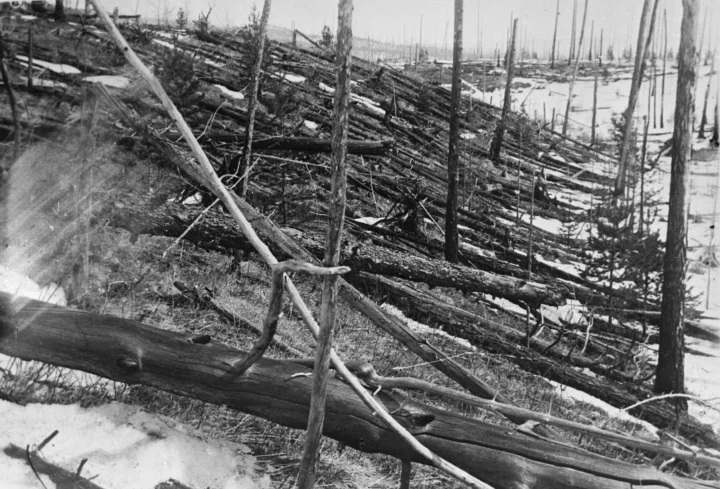
Tunguska is sometimes called an impact without a crater. That description makes the missing crater sound like a failure of explanation. In fact, the pattern of flattened forest is part of the explanation: the destructive object released most of its energy in the atmosphere.
30 June 1908
At about 7.15 in the morning local time, witnesses in central Siberia saw a brilliant fireball and flash, heard a series of violent sounds and felt heat and shock. People close enough to the event were knocked down, and seismic instruments hundreds of miles away recorded the disturbance.
The region near the Podkamennaya Tunguska River was remote and sparsely populated. Reports travelled through difficult geography and political upheaval, while the physical site remained largely unexamined for years.
Kulik reaches the forest
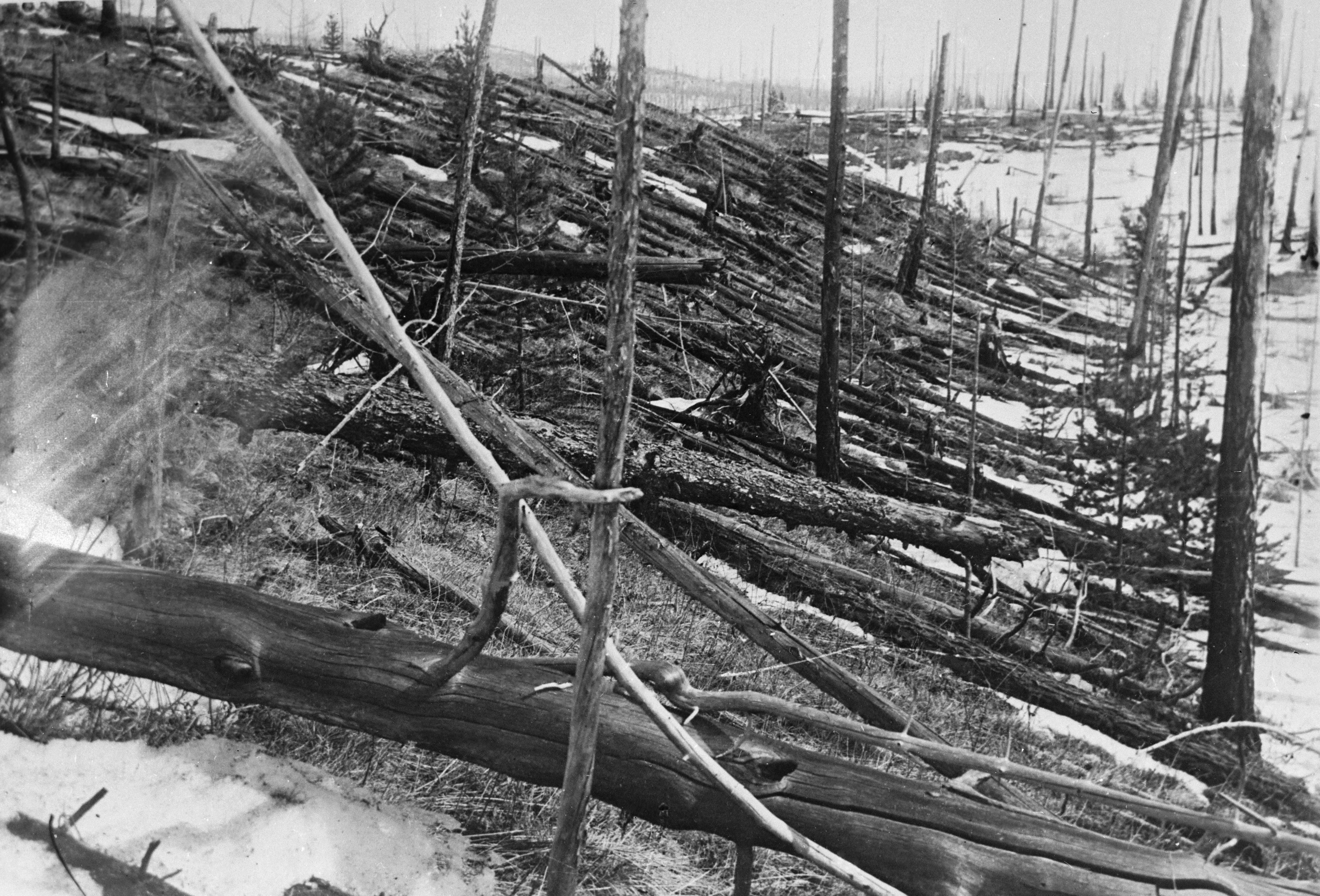
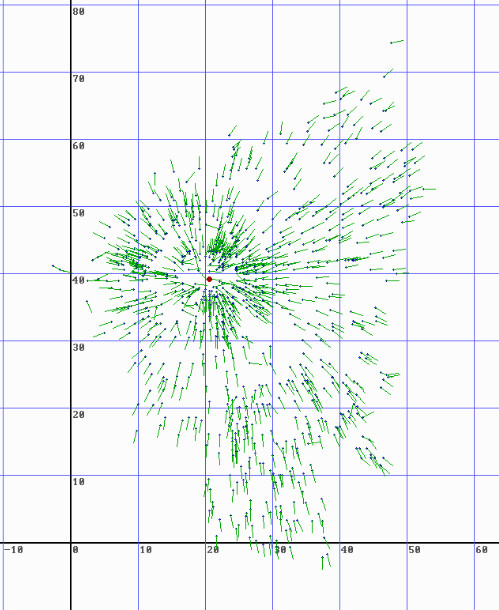
Leonid Kulik led the first major scientific expedition to the area in 1927. The party found an immense zone of fallen trees, many arranged radially around the blast region. Near the centre, some trunks remained standing but had been stripped of branches.
Kulik expected a meteorite crater and searched for one. Its absence encouraged later speculation, but the tree pattern and blast effects were consistent with energy released above the ground. Later expeditions mapped and sampled the area, turning a delayed witness event into a physical research problem.
How an airburst works
A space rock entering the atmosphere at high speed experiences intense pressure. If it fragments and explodes before reaching the surface, its shock wave can flatten a broad area without excavating one conventional crater. The 2013 Chelyabinsk airburst provided a modern, instrumented example on a smaller destructive scale.
Current models favour an asteroid as the Tunguska body, although cometary material has also been proposed. Estimates of size, entry angle, altitude and explosive energy vary because there was no direct instrument at the site and the first ground survey came nineteen years later.
What is solid?
The date, witness reports, atmospheric and seismic effects, delayed expedition and large radial tree-fall are well established. The damage is consistent with a powerful cosmic airburst.
What remains uncertain?
The object’s exact composition, dimensions, trajectory, breakup altitude and energy cannot be recovered as single precise values. Local environmental effects and the limits of old witness accounts leave ranges rather than one complete flight record.
Why exotic explanations persist
A remote site, no crater and delayed investigation created room for secret weapons, miniature black holes and alien craft. These proposals are memorable, but they do not explain the evidence better than a natural airburst and often add mechanisms for which no trace exists.
Tunguska is therefore the opposite of the pattern examined in Ordinary Lights and Extraordinary UFO Reports. The event was extraordinary, but its evidence points toward a known class of natural hazard.
Why it still matters
Tunguska changed from an anomaly into a planetary-defence case study. Its remaining uncertainty concerns the parameters of a real airburst, not whether the forest fell. It shows how an absent crater can become positive evidence once the right physical model is tested.
Claim, Context and Cautions
Claim
A vast area of Siberian forest was flattened in 1908 by an explosion that left no ordinary impact crater.
What is solid?
Witnesses reported light, heat and shock; instruments recorded the disturbance; and later expeditions mapped extensive radial tree-fall around the blast region.
What remains uncertain?
The body's exact composition, size, trajectory, breakup altitude and released energy remain modelled ranges rather than directly measured values.
Possible explanations
A natural asteroid airburst is the leading explanation. Cometary composition remains a historical alternative, while exotic proposals add no necessary evidence.
Sceptical view
The absence of a crater is expected when energy is released in the atmosphere and does not require a secret weapon or non-human craft.
Why it still matters
Tunguska is a real anomalous event that became intelligible through fieldwork, modelling and comparison with later airbursts.
Contextual glossary
Terms used in this entry
Definitions are offered as reading aids, not as conclusions about the case.
- Anomaly
- An observation or result that does not fit the current account. An anomaly identifies a question; it is not, by itself, evidence for any particular extraordinary explanation.
- Uncertainty
- The stated limit on what a measurement, reconstruction or body of evidence can establish. Describing uncertainty is not indecision; it prevents a result from appearing more precise than the evidence allows.
- UFO
- Unidentified flying object, historically used for an aerial observation that remains unidentified at the time of reporting. In popular culture it often implies a spacecraft, which is a separate claim.
Reference trail
Sources
- NASA: 115 Years Ago, the Tunguska Asteroid Impact Event (opens in a new tab)NASA chronology of eyewitness reports, the 1927 expedition and the airburst interpretation.
- NASA: Tunguska Revisited (opens in a new tab)Discussion of modern airburst modelling and planetary-defence significance.
- Encyclopaedia Britannica: Tunguska event (opens in a new tab)Reference overview of the event and investigation history.
- Wikimedia Commons: Tunguska expedition photograph (opens in a new tab)Public-domain expedition image record used by the case.
Case Book
Photographs, Maps and Supporting Images
Supporting images provide documentary, geographic or visual context. Read each caption for its date, source and evidential limits.
Continue researching
Follow the evidence, context and comparisons
Curated connections
Selected editorially for this entry.
Aircraft, satellites, planets, drones and atmospheric effects can become strange when context is missing.
Curated connection · ArticleOut-of-Place Artefacts and the Value of CautionWhy disputed objects need context, chain of custody and patient interpretation before becoming extraordinary evidence.
Curated connection · Case fileThe Battle of Los Angeles: Searchlights, Shells and Wartime NervesIn February 1942, Los Angeles saw searchlights, anti-aircraft fire and rumours of enemy aircraft in a case where fear, weather and uncertainty lit up the sky.
More through shared context
Additional routes based only on existing topics, themes and metadata.
Ball lightning is a label for rare luminous events reported near thunderstorms. Instrumental observations constrain some cases, while varied testimony and competing physical models leave its full scope unresolved.
Same primary topic · Shared theme: Atmosphere & optics · Case fileLake Nyos: The Night a Lake Released a Silent CloudThe Lake Nyos disaster was caused by a limnic eruption: deep water saturated with volcanic carbon dioxide overturned and released a dense, suffocating cloud.