UFOs & Aerial Phenomena
Tehran 1976: The F-4 Intercepts and the Message That Preserved Them
The Tehran incident rests on a contemporaneous military message reporting civilian observations, two intercepts and aircraft anomalies. The document is strong evidence that the episode was reported, but incomplete for reconstructing the lights or failures.
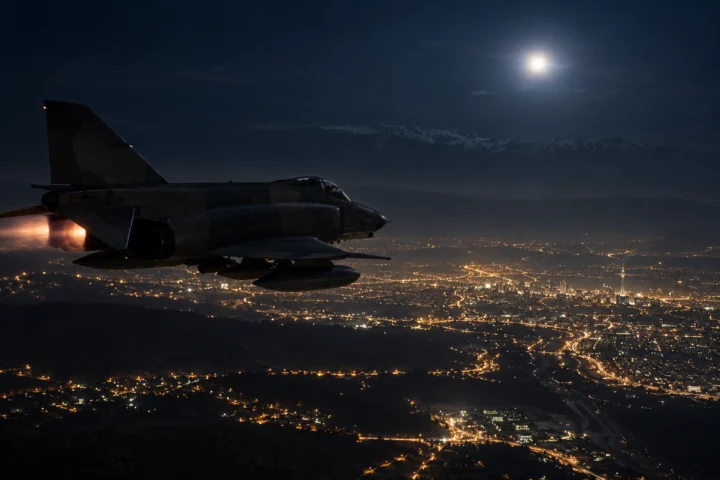
Shortly after midnight on 19 September 1976, the Imperial Iranian Air Force command post received calls from Tehran residents describing an unusually bright object. Brigadier General Yousefi reportedly looked outside, judged the light worth investigating and ordered an F-4 Phantom from Shahrokhi Air Base to intercept it.
A United States defence message says the first aircraft lost instrumentation and communications as it approached, then recovered them after turning away. A second F-4 crew reported a bright object, a radar return and smaller lights apparently separating from the main source. The crew also described a weapons-control failure while attempting an engagement.
The message is contemporaneous and detailed enough to establish that Iranian personnel reported an exceptional intercept. It is not raw radar data, maintenance documentation or a recording of cockpit communications. Much of its narrative passed from Iranian sources through a US defence attaché before distribution.
Astronomical objects, meteors, aircraft lights and equipment faults have been proposed for parts of the sequence. Critics have especially noted Jupiter’s brightness and the possibility that separate events were compressed into one account. Those suggestions must still explain the crews’ reported motion, radar and system behaviour rather than merely naming a bright planet.
Tehran belongs beside pilot reports and perception, the mixed radar record at Lakenheath-Bentwaters, and the capital-city alerts in Washington in 1952.
Claim, Context and Cautions
What the message records
The transmitted report gives times, approximate ranges and a sequence for two sorties. It says equipment returned to normal when the aircraft withdrew and describes an object descending near the ground before appearing to depart. Distribution to senior US agencies shows official interest, not official endorsement of an extraterrestrial explanation.
The wording distinguishes what the reporting officer received from what US personnel directly observed. That chain is essential when weighing precision.
Radar and avionics
A radar lock and simultaneous visual observation would normally strengthen an aerial report. The surviving public record does not include the scope film, calibration state or enough geometry to calculate a track. Similarly, coincident radio and weapons faults are notable but lack component examinations that could distinguish interference from ordinary failure.
Retellings often upgrade reported instrument behaviour into demonstrated hostile jamming. The document itself supplies correlation, not a measured source of interference.
Natural and operational alternatives
Jupiter was prominent, and atmospheric conditions can distort the apparent position and movement of lights. A meteor or separate aircraft could account for a smaller transient. Pilot pursuit at night also changes angles rapidly and makes distance difficult to judge.
No single conventional reconstruction has universal agreement. The case may contain more than one stimulus plus equipment trouble, but incomplete logs prevent a decisive simulation.
Why the case remains open
The witnesses included trained aircrew and the report was made close to the event, which makes it more substantial than a late anecdote. Training improves description without making distance estimates or causal interpretation infallible.
The defensible conclusion is limited: Iranian forces responded to unusual lights, two crews reported a complex encounter, and a declassified message preserves their claims. Without original sensor products and maintenance evidence, neither an extraordinary craft nor a complete conventional explanation is established.
Contextual glossary
Terms used in this entry
Definitions are offered as reading aids, not as conclusions about the case.
- Radar return
- Energy received by radar after a transmitted pulse interacts with a target or the environment. A plotted return requires interpretation and can represent an aircraft, weather, terrain, interference or anomalous propagation.
- Reconstruction
- A later model, image or account made to represent an event from surviving information. It can clarify a hypothesis but should remain visibly separate from contemporary evidence.
- Correlation
- A pattern in which two things vary together. Correlation can suggest a question to investigate, but it does not show that one caused the other.
- Meteor
- The streak of light produced when a small extraterrestrial body heats the atmosphere during entry. The object in space is a meteoroid; material that reaches the ground is a meteorite.
Reference trail
Sources
- Defense Intelligence Agency, Joint Chiefs message on the Iran sighting (opens in a new tab)Official declassified record of the civilian calls, F-4 sorties and reported equipment effects.
- National Security Agency, Iran UFO case PDF (opens in a new tab)Official NSA-hosted copy of the defence message.
- National Security Agency, Joint Chiefs report catalogue record (opens in a new tab)Agency catalogue entry identifying and contextualising the released report.
Case Book
Photographs, Maps and Supporting Images
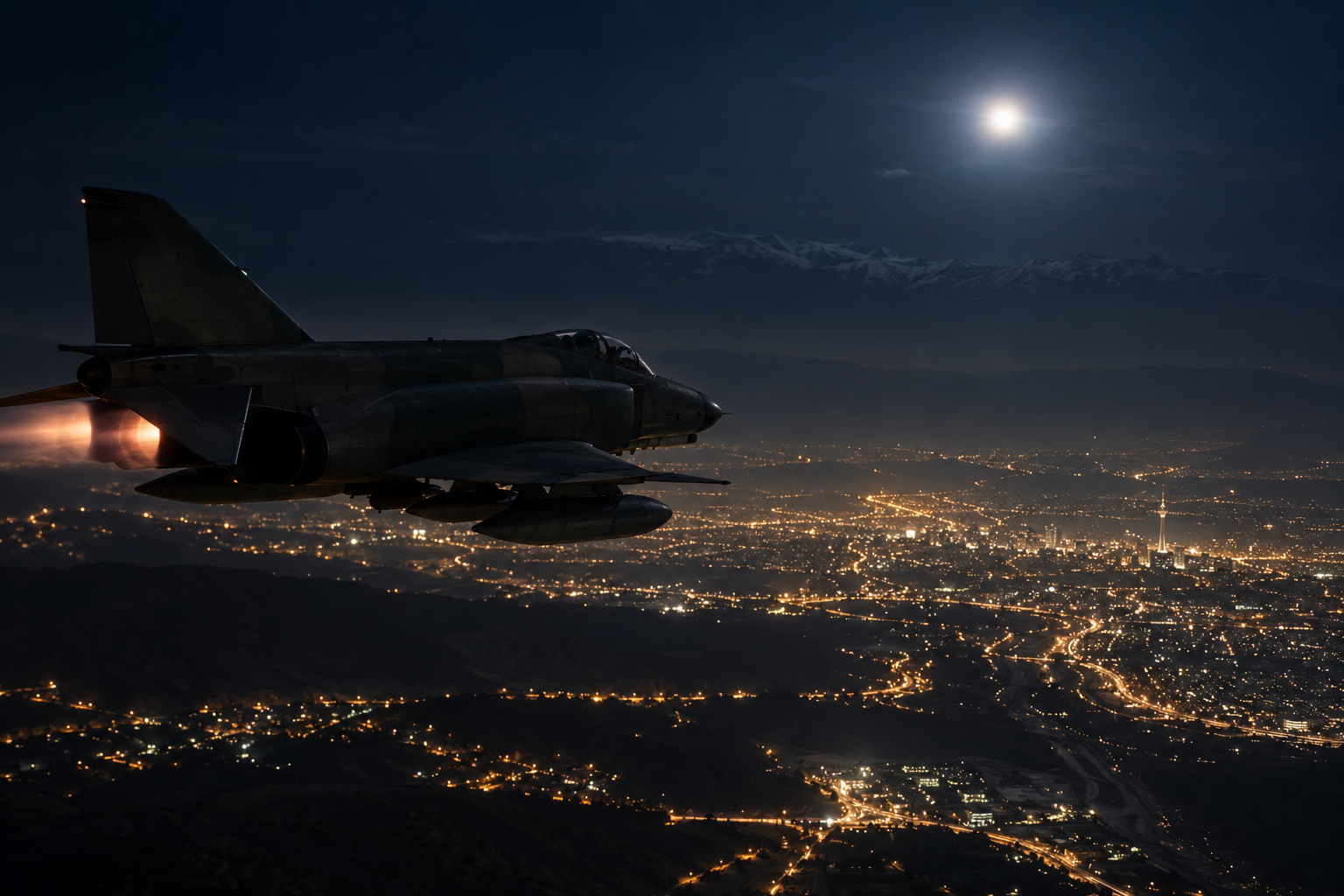
Supporting images provide documentary, geographic or visual context. Read each caption for its date, source and evidential limits.

Continue researching
Follow the evidence, context and comparisons
Curated connections
Selected editorially for this entry.
Trained observers matter, but expertise does not remove ambiguity from distance, speed, glare and surprise.
Curated connection · Case fileLakenheath–Bentwaters: Radar, Interceptors and an Unresolved NightThe Lakenheath–Bentwaters incident combines multiple radar reports and an interceptor account, yet gaps in timing, weather and original records prevent a secure identification or extraordinary conclusion.
Curated connection · Case fileWashington 1952: Radar Returns Over the CapitalThe Washington sightings combined radar returns, visual reports and official alarm. Temperature inversions offer a plausible mechanism for some returns, but the heterogeneous evidence does not support one neat solution.
More through shared context
Additional routes based only on existing topics, themes and metadata.
The crew’s visual report was real and professionally documented. Radar returns were intermittent and disputed, while darkness, cloud and uncertain distance made size estimates especially fragile.
Same primary topic · Shared theme: Aviation, Witness & memory · Case fileRendlesham Forest: Lights, Logs and the British UFO ArchiveRendlesham remains one of the most famous UFO cases in Britain because it produced sightings, notes and later arguments in the shadow of a military base.