Archaeology & Disputed Artefacts
The Nazca Lines: Huge Drawings Without Impossible Builders
The Nazca Lines are extraordinary landscape works, but careful archaeology explains them through human labour, ritual geography and desert preservation.
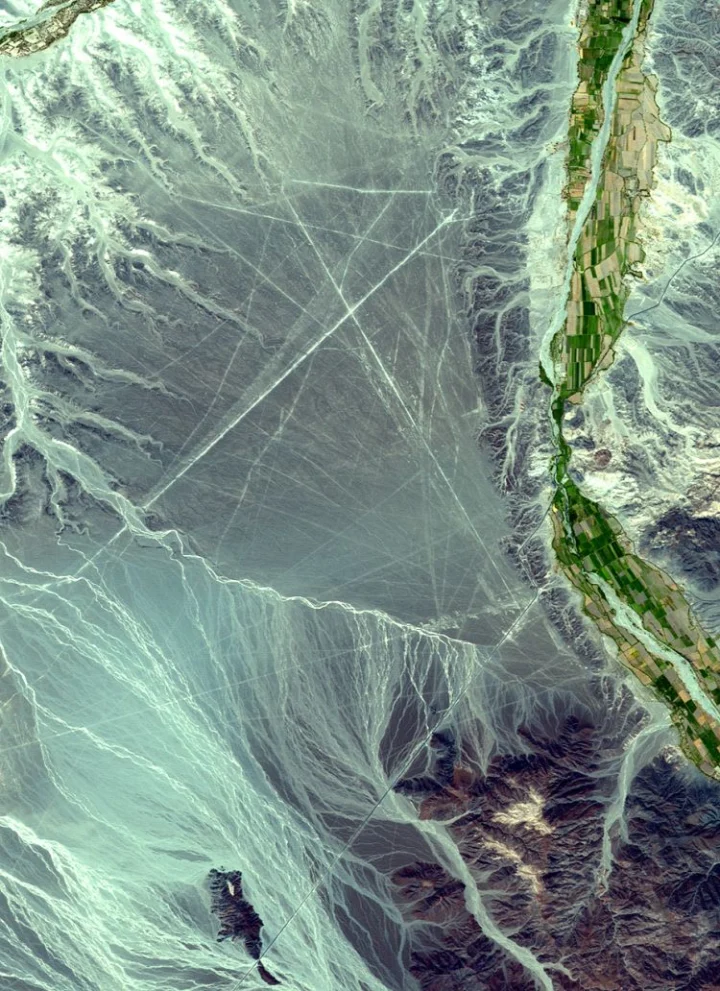
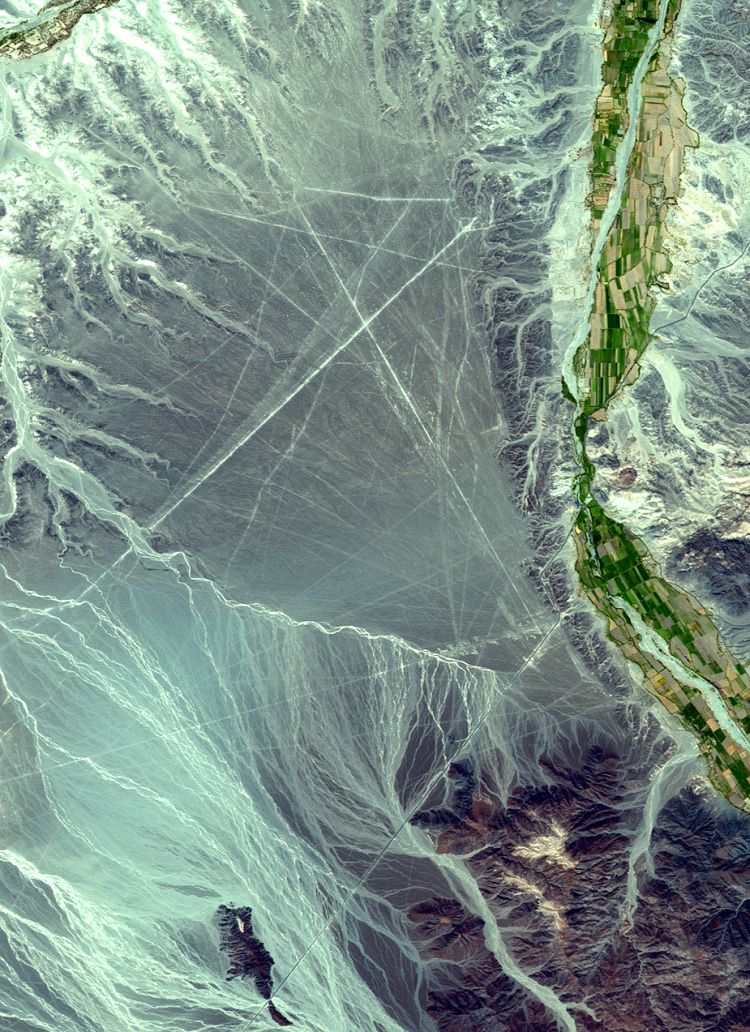
The Nazca Lines are extraordinary because people made them, not because people could not have made them. Across the desert plains of southern Peru, ancient communities turned the ground itself into lines, geometric fields and figures visible at a scale that modern aerial photographs made newly dramatic.
A landscape made by removal
The makers shifted dark, weathered stones from the surface to expose lighter earth below. The technique requires planning and labour but not impossible machinery. Stakes, cords, measured sightlines and repeated units can transfer a small design to a large surface. Nearby slopes and routes offer views of many forms, while lines can be experienced by walking them.
The desert helped preserve the work. Low rainfall, limited vegetation and stable ground allowed shallow contrasts to survive, though modern traffic, development and climate events remain serious threats. Preservation can make a rare survival look like an isolated invention when similar practices may have left fewer traces elsewhere.
Who made the lines?
The protected landscape contains works created over many centuries, associated especially with the Paracas and Nazca cultural traditions. UNESCO describes thousands of zoomorphic, anthropomorphic and geometric forms produced over nearly two millennia. That long duration warns against treating the entire landscape as one project with one purpose.
Figures such as the hummingbird, monkey and spider attract attention, but straight lines, trapezoids and pathways form much of the site. A theory that explains one animal outline may not explain every route or cleared area.
Purpose without one final answer
Researchers have considered processions, ritual movement, water, social gathering, cosmology and astronomical relationships. These explanations can overlap. A path can organise movement, connect places and carry ceremonial meaning. A landscape used by different communities over generations can acquire new functions without erasing earlier ones.
Maria Reiche’s decades of study and protection helped make the lines internationally known. Her astronomical interpretations were influential, but later work has tested and revised broad claims that the whole system was a single calendar. Preservation advocacy and final explanation are separate achievements.
The aerial-viewing mistake
Modern visitors first meet the lines through aircraft and satellite images, so it is tempting to assume their makers designed them for airborne observers. That reverses the evidence. A modern viewpoint does not establish an ancient requirement. Large ground designs can be laid out without seeing the complete image from directly overhead, just as roads, fields and monumental plans can be surveyed from the ground.
Claims of non-human construction often turn a gap in purpose into a gap in capability. The two are different. Archaeology may continue to debate why particular lines were made while having strong evidence that human communities possessed the organisation and techniques needed to make them.
Why the mystery survives
The Nazca landscape resists a single caption. It is vast, cumulative and only partly recoverable. That makes it a legitimate archaeological question. It does not make every proposed answer equally well supported.
Placed beside the Antikythera Mechanism, Nazca offers a useful lesson: ancient skill can exceed modern expectation without exceeding human ability. The responsible archive restores the builders to the story rather than using wonder to remove them.
Claim, Context and Cautions
Claim
The enormous Peruvian geoglyphs are sometimes presented as works that required aircraft, lost technology or non-human builders.
What is solid?
The lines are human-made surface clearings produced over many centuries. Their construction technique, landscape context and long cultural use are archaeologically documented.
What remains uncertain?
No single purpose explains every line, trapezoid and figure. Ritual movement, water, social gathering, cosmology and changing use remain active areas of interpretation.
Possible explanations
Stakes, cords, sightlines, measured grids and organised labour explain construction; desert conditions explain survival. Multiple ritual and social purposes may explain use.
Sceptical view
Seeing the lines most clearly from modern aircraft does not show that their makers needed flight. Aerial presentation has shaped the modern mystery more than the construction evidence.
Why it still matters
Nazca is a genuinely remarkable cultural landscape and a test of whether admiration can coexist with respect for ancient human knowledge.
Contextual glossary
Terms used in this entry
Definitions are offered as reading aids, not as conclusions about the case.
- Ritual
- A repeated, structured action carrying social, religious or symbolic meaning. Similar-looking actions can have very different meanings, so local and historical context is essential.
Reference trail
Sources
- UNESCO: Lines and Geoglyphs of Nasca and Palpa (opens in a new tab)World Heritage description, chronology, cultural landscape and protection context.
- Wikimedia Commons: NASA Nazca Lines image (opens in a new tab)Public-domain image record used by this case.
- Encyclopaedia Britannica: Nazca Lines (opens in a new tab)Reference overview of construction, research history and proposed functions.
Case Book
Photographs, Maps and Supporting Images
Supporting images provide documentary, geographic or visual context. Read each caption for its date, source and evidential limits.
Continue researching
Follow the evidence, context and comparisons
Curated connections
Selected editorially for this entry.
The Antikythera Mechanism is genuinely astonishing, but its lesson is ancient technical skill, not a shortcut to fringe claims.
Curated connection · ArticleOut-of-Place Artefacts and the Value of CautionWhy disputed objects need context, chain of custody and patient interpretation before becoming extraordinary evidence.
Curated connection · Case fileThe Baghdad Battery: A Jar, a Theory and a Long ShadowA classic strange-archaeology case in which a plausible object became a magnet for much larger claims than the evidence supports.
More through shared context
Additional routes based only on existing topics, themes and metadata.
Roman dodecahedra are genuine, technically demanding provincial objects. Their variable sizes, scattered contexts and missing textual record keep practical and ritual explanations provisional.
Same primary topic · Shared theme: Disputed artefacts · Case fileThe Plain of Jars: An Iron Age Mortuary Landscape in LaosThe Plain of Jars is not an archaeological void: burials, quarries and dating evidence support mortuary use over a long period. The exact sequence, social meaning and identity of its builders remain active research questions.