Occult & Psychical Research
The Hope Diamond Curse: A Jewel, a Rumour and a Sales Pitch
The Hope Diamond is real, spectacular and historically traceable; the curse attached to it is better read as media folklore and gem-market theatre.
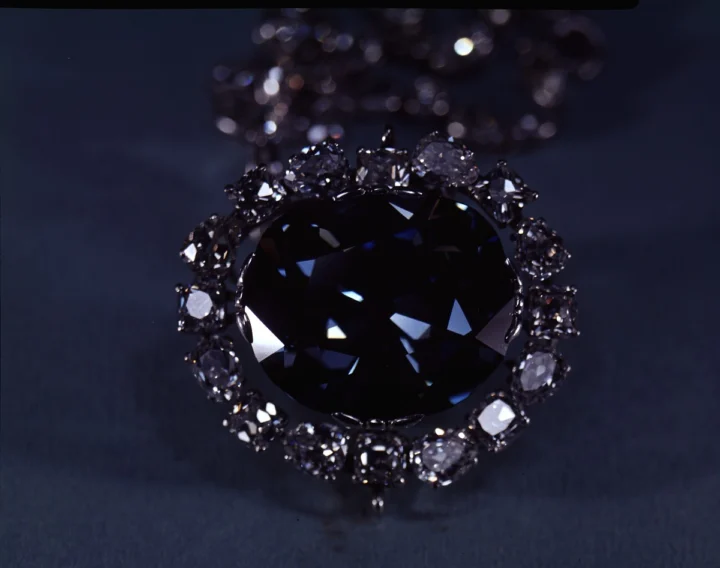
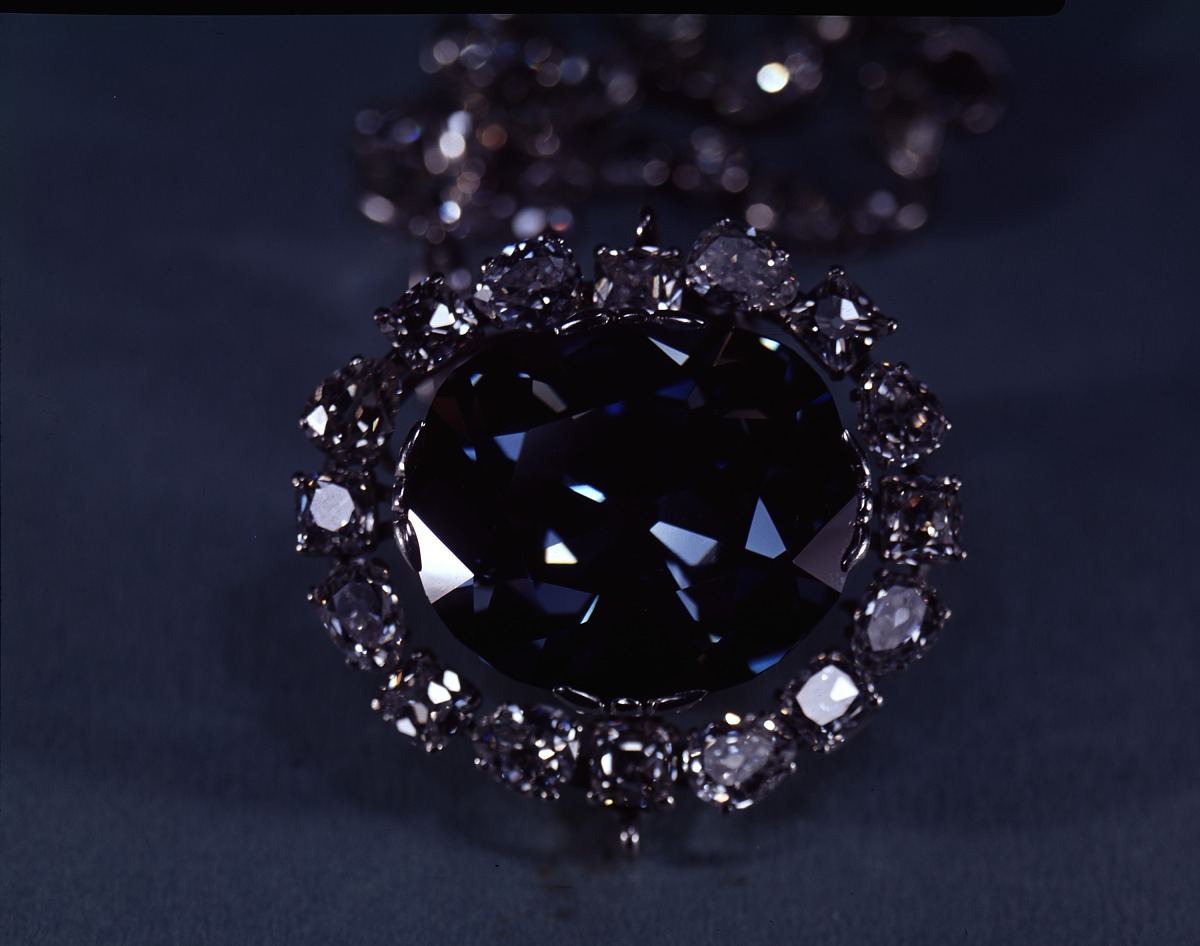
The Hope Diamond does not need a curse to have an extraordinary biography. It passed through royal collections, revolutionary theft, recutting, wealthy owners, jewellery marketing and finally the Smithsonian. The supernatural story arrived later and prospered because it made an already famous object easier to sell and remember.
The documented stone
In the seventeenth century, merchant Jean-Baptiste Tavernier obtained a large blue diamond in India and sold it to Louis XIV. It was recut as the French Blue and became part of the French Crown Jewels. During the theft of the jewels in September 1792, the stone disappeared.
A smaller deep-blue diamond was documented in London in 1812. Research, measurements and the later discovery of a lead model of the French Blue support the conclusion that the Hope was cut from the stolen royal stone. By 1839 it appeared in the catalogue of banker Henry Philip Hope, from whom it acquired its modern name.
From provenance to pitch
The diamond moved through dealers and owners before Pierre Cartier acquired it in 1910. Smithsonian research describes how Cartier drew on an existing trade in romantic gem stories and developed a dramatic curse narrative while courting American buyer Evalyn Walsh McLean. Misfortunes in the lives of owners could then be selected as confirmation, while uneventful periods disappeared from the story.
This is retrospective pattern-making. Wealthy families produce long public records containing illness, debt, relationship breakdown and death. Once a curse is proposed, ordinary tragedy becomes part of a supernatural sequence. Alleged owners with weak or invented links can be added because the story is more valuable than the chain of custody.
McLean, Winston and the museum
Evalyn Walsh McLean wore the diamond prominently. Her family experienced severe tragedies, including the death of her young son and later her daughter. Those events are real human losses, not controlled evidence of a property possessed by a jewel.
Jeweller Harry Winston bought McLean’s collection in 1949 and used the Hope in a touring exhibition. In 1958 he donated it to the Smithsonian, sending it by registered mail in an ordinary parcel. The mundane delivery has become part of the legend because the feared object completed its journey without a supernatural incident.
What a curse claim would require
A list of selected disasters cannot establish causation. A serious test would need a complete, accurate ownership history; a defined prediction; a comparison group; and a rule set before outcomes were known. The curse tradition has none of these. It expands to include dramatic events and ignores the periods that do not fit.
The same method applies to other stories considered in Cursed Objects and the Stories We Attach. Provenance establishes who owned an object and when. Folklore records what was said about it. Marketing may borrow both while respecting neither.
Why the legend matters
The curse is weak as a supernatural claim and strong as cultural evidence. It reveals how luxury goods acquire moral biographies: royal theft, excessive wealth, female celebrity, public tragedy and commercial storytelling all become facets of the stone.
The Hope Diamond remains a real 45.52-carat blue diamond with a traceable and still partly incomplete history. The curse is a second artefact made from selection, publicity and repetition. Keeping those objects separate makes both stories more interesting.
Claim, Context and Cautions
Claim
The Hope Diamond is said to bring ruin, illness or death to owners and people closely associated with it.
What is solid?
The gemstone, its physical properties, much of its ownership history and its connection to the French Blue are documented. The curse narrative became prominent in the early twentieth century.
What remains uncertain?
Some early ownership gaps and individual associations remain unresolved, but those gaps do not supply evidence of supernatural causation.
Possible explanations
Selective biography, hindsight, sensational journalism, jewellery salesmanship and the older cursed-treasure tradition explain the legend without requiring an active curse.
Sceptical view
A curse list selects memorable tragedies after the fact and lacks a comparison group or defined prediction. Provenance should not be replaced by dramatic association.
Why it still matters
The case shows how a genuine museum object can carry an equally durable but culturally manufactured supernatural biography.
Contextual glossary
Terms used in this entry
Definitions are offered as reading aids, not as conclusions about the case.
- Chain of custody
- The documented sequence showing who collected, stored, copied, tested and transferred an object or recording. Gaps make alteration, contamination or mistaken identity harder to rule out.
- Provenance
- The documented history of an object’s origin, ownership, location and handling. A dramatic claim with weak provenance cannot reliably establish where or when an object came from.
- Rumour
- Unverified information circulated between people because it appears relevant or urgent. Repetition can make a rumour familiar without adding an independent source.
- Artefact
- An object made, modified or used by people. Its material, manufacture, wear and archaeological context are evidence; an unusual appearance alone does not establish an unusual age or origin.
Reference trail
Sources
- Smithsonian National Museum of Natural History: History of the Hope Diamond (opens in a new tab)Detailed provenance, French Blue research and the twentieth-century construction of the curse story.
- Smithsonian National Museum of Natural History: Hope Diamond (opens in a new tab)Museum object, gemological measurements, collection history and gallery material.
- Smithsonian Sidedoor: The Curse of the Hope Diamond (opens in a new tab)Institutional discussion of the gem's history and curse folklore.
- National Postal Museum: Hope Diamond Package (opens in a new tab)The registered-mail package used for the 1958 Smithsonian donation.
Case Book
Photographs, Maps and Supporting Images
Supporting images provide documentary, geographic or visual context. Read each caption for its date, source and evidential limits.
Continue researching
Follow the evidence, context and comparisons
Curated connections
Selected editorially for this entry.
Why ordinary objects can gather blame, awe and dread when misfortune needs a visible container.
Curated connection · Case fileThe Cardiff Giant: America’s Stone Hoax and the Business of BeliefThe Cardiff Giant was a carved gypsum fake sold as a petrified ancient man, and it remains one of the cleanest lessons in spectacle, profit and belief.
Curated connection · Case fileThe Fiji Mermaid: A Fake That Made Barnum FamousThe Feejee Mermaid became an object lesson in showmanship because the hoax was never just the object; it was the lecture around it.
More through shared context
Additional routes based only on existing topics, themes and metadata.
Roswell began with recovered debris and a mistaken military press release. Project Mogul explains the material record; later alien-body narratives arose through retrospective testimony.
Shared theme: Media & rumour · Same country or region · Case fileThe Jersey Devil: From Pine Barrens Legend to Newspaper PanicThe Jersey Devil shows how regional folklore, landscape and newspaper appetite can turn a local creature story into a durable public monster.