Hauntings & Apparitions
The Brown Lady of Raynham Hall: A Ghost Photograph That Would Not Fade
The Brown Lady became famous because a single staircase image turned a house tradition into a visual ghost story that critics could never quite put back in the box.
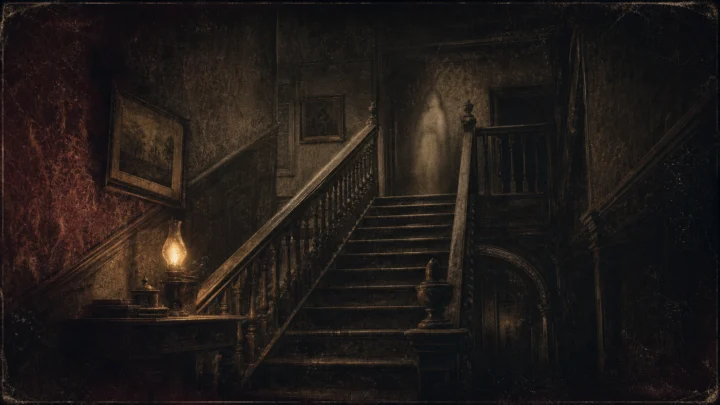
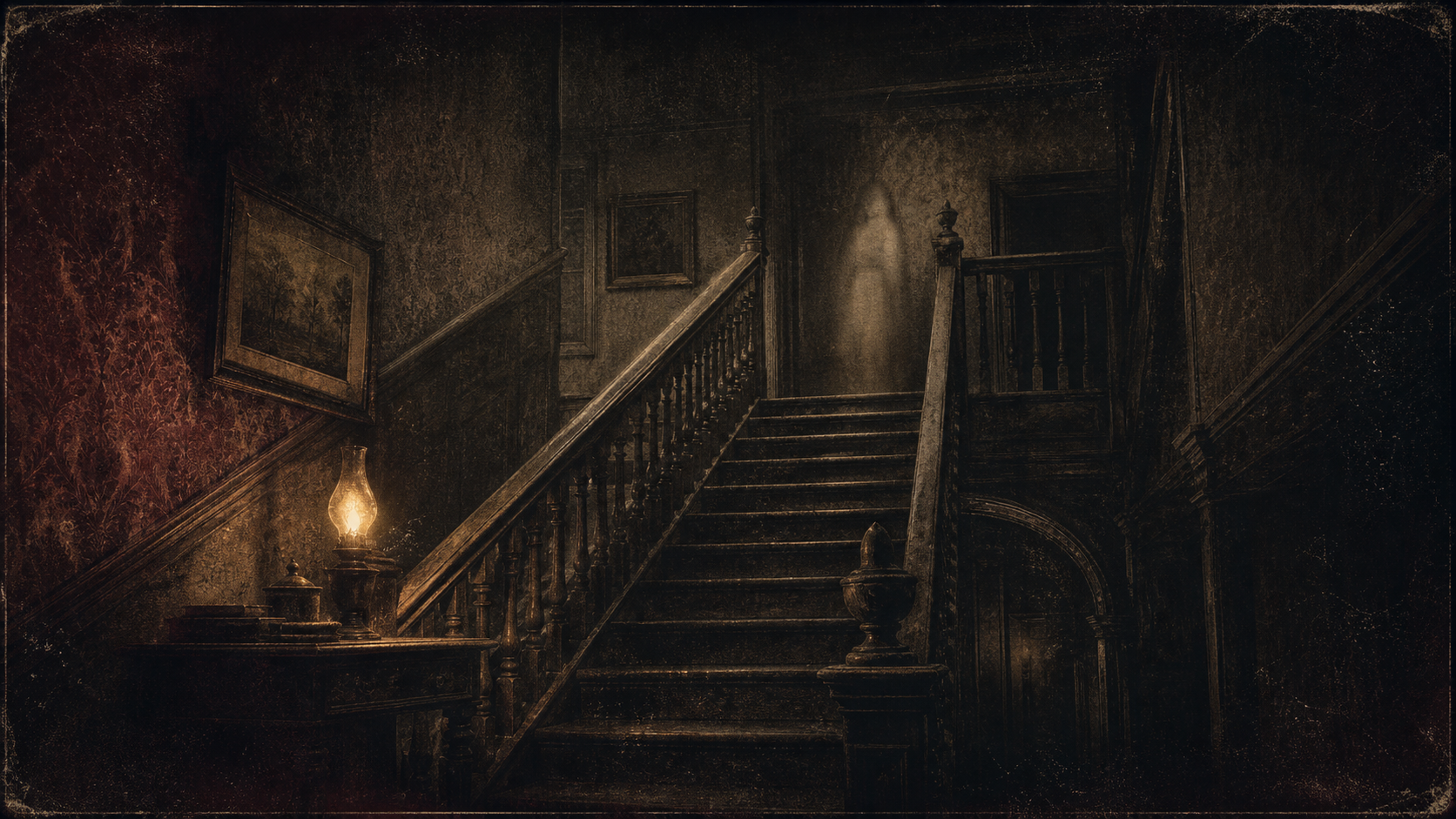
The Brown Lady of Raynham Hall is one of those cases where the photograph became more powerful than the supposed event. The story is old, the image is familiar, and the debate has never quite stopped. That makes it useful rather than annoying, because it shows how a ghost becomes a public object.
The famous photograph was published in 1936 after visitors to Raynham Hall reported seeing a vapoury female figure on the staircase. The image was compelling enough that readers had to choose between an apparition, a trick of the light or a deliberately dramatic composition. The photo itself did not settle the matter; it only made the argument visible.
Critics have long suggested ordinary explanations, including a statue, a blurred figure or an overexposed stairwell. Those suggestions are not exciting, but they are the right place to begin. Once a ghost photo circulates, every later version becomes slightly more polished than the original uncertainty.
The Brown Lady case matters because it exposes the alchemy of ghost media. Family history, house prestige, a photogenic staircase and a well-timed publication can create a cultural object that outlives the evidence behind it. The haunting becomes part of the building's brand.
For Devil's Hideout, the lesson is simple: a good ghost image is still not an answer. It is a prompt for provenance, context and the unglamorous work of checking what else could have been in the frame.
Claim, Context and Cautions
Claim
In 1936, Country Life magazine published a photograph taken at Raynham Hall in Norfolk that appeared to show a white vaporous figure descending the main staircase. The image was taken by photographers on a commission to document the house, and it became one of the most reproduced ghost photographs of the twentieth century. The claimed subject of the haunting is Dorothy Walpole, sister of Robert Walpole, commonly regarded as Britain's first prime minister, said to have died at Raynham in 1726 and to haunt the house wearing a brown dress from which the figure takes its name. Reports of a brown-gowned apparition at Raynham predate the photograph by at least a century, with written accounts in family histories and Victorian-era ghost story collections. The 1936 photograph gave that older legend a visual form that made it famous far beyond its regional context, and the image has never been explained away to universal satisfaction.
Background
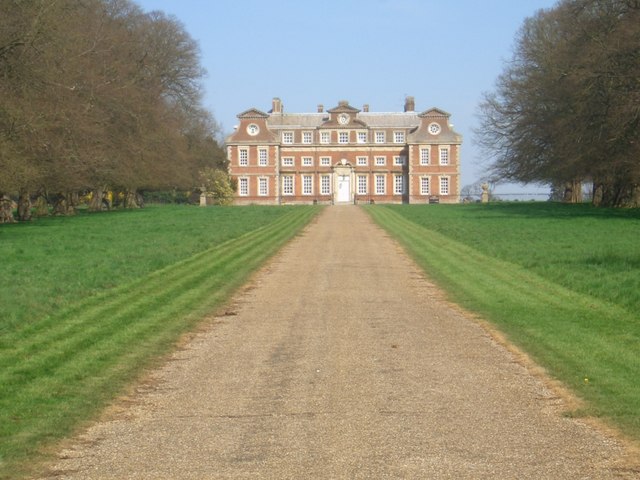
Dorothy Walpole's history as it is commonly told involves a troubled life, an unhappy marriage to Viscount Townshend and an early death. Some accounts claim she was imprisoned in her rooms, others that the marriage was violent, others that she died of smallpox, and still others that she was already dead before her official death was recorded. The more dramatic versions of this biography have little documentary support and appear to be embellishments that grew around the haunting legend rather than records of what actually happened. The house itself, a substantial Jacobean and baroque building in the Norfolk landscape, provides the ideal physical context for such a tradition: a long staircase, formal rooms, painted family portraits including one of Dorothy, a history of aristocratic occupation and the social and cultural prestige that makes a haunted country house more narratively interesting than a haunted cottage.
Reported events
Written accounts of the Brown Lady at Raynham Hall date from the early nineteenth century, with a commonly cited story involving guests at a shooting party who reportedly saw the figure during a visit in the 1830s. Further nineteenth-century accounts extended the tradition. The 1936 photograph was taken by Indre Shira and his assistant Captain Provand during a Country Life commission. Shira reported seeing a figure on the staircase and instructed Provand to photograph it; Provand reportedly did not see the figure himself and took the exposure on Shira's direction. The developed plate showed the form that was subsequently published. The photograph was examined at the time and declared genuine by the technical staff involved, with no obvious retouching found in the original negative. Country Life published it, and the image circulated internationally within weeks.
Possible explanations
Technical photographic explanations have been proposed since the photograph was published. Double exposure is the most frequently cited: if the glass plate had been partially exposed on a previous occasion, a residual image could combine with the new exposure to produce an unexpected form. Accidental or deliberate camera movement during the long exposure required in an interior setting could produce smearing, ghosting or fogging. Reflection from the staircase balusters or landing window catching the interior of the lens at a particular angle could introduce a bright form into the image. The original glass negative, which would permit the most decisive technical analysis, has not been available for independent examination in recent decades. The assessments made at the time of publication were conducted under conditions that would not satisfy modern evidentiary standards. None of this proves fabrication or accident, but it identifies the mechanisms that would need to be ruled out before the image could serve as evidence.
Sceptical view
The Brown Lady photograph has not been demonstrated to show a ghost. What it has been demonstrated to show is a form on a staircase that has not been definitively explained in mechanical photographic terms, which is a different claim. The conditions under which it was produced, a long interior exposure, two-person operation with one photographer not seeing the reported subject, an estate commission where a dramatic image had social and commercial value, and an era when photographic staging was well within the technical reach of an experienced operator, do not establish fabrication. They establish that fabrication was available. The pre-photograph tradition is a family and regional legend whose consistency across decades is more plausibly explained by the retelling culture of aristocratic households than by repeated genuine encounters with a historical ghost. Raynham Hall is a prestige property, and a named resident ghost is a prestige addition.
Why it still interests people
The Brown Lady photograph endures because it is visually striking, historically traceable and genuinely unexplained in its formation mechanism. Ghost photographs of this era are usually easy to dismiss technically on inspection; this one has resisted clean dismissal, which gives it unusual longevity in the archive. The figure's position on the staircase, apparently moving downward through a domestic interior, fits the spatial logic of haunting so precisely that the image almost illustrates the concept of a ghost rather than documenting one. That fit between expectation and image is itself worth examining: either the coincidence is fortunate for believers, or it reflects the fact that someone constructing a convincing ghost photograph would choose exactly this setting, this framing and this subject. For the archive, the photograph matters not because it resolves the question of haunting but because it shows how a single good image, however produced, can carry a tradition across a century.
Contextual glossary
Terms used in this entry
Definitions are offered as reading aids, not as conclusions about the case.
- Double exposure
- Two exposures recorded on the same photographic frame or combined to resemble one image. It may be accidental or deliberate and can create transparent figures or duplicated scenery.
- Long exposure
- A photograph made while the shutter remains open long enough for movement to be recorded as a trail or blur. Stars, vehicles, aircraft and hand movement can therefore create shapes not visible in a brief glance.
- Haunting
- A pattern of unusual experiences attributed to a place, including apparitions, sounds, movement or sensed presences. A location log is more informative than treating every incident as one cause.
- Apparition
- A reported figure or presence seen without an obvious physical person present. The word describes the experience without deciding whether its cause was environmental, psychological or unknown.
- Coincidence
- Two or more events occurring together in a way that attracts attention without a demonstrated causal connection. Its evidential weight depends on how the match was defined and how many opportunities existed for it to occur.
Reference trail
Sources
- Norfolk Record Office: The Brown Lady of Raynham Hall (opens in a new tab)Local archive discussion of the story, the families involved and the photograph.
- Country Life: The day its photographer captured an image of a ghost (opens in a new tab)The publication that printed the 1936 photograph revisits its original account and later interpretation.
- Historic England Archive: Raynham Hall photograph (opens in a new tab)A dated architectural record of Raynham Hall held by the Historic England Archive.
Case Book
Photographs, Maps and Supporting Images
Supporting images provide documentary, geographic or visual context. Read each caption for its date, source and evidential limits.
Continue researching
Follow the evidence, context and comparisons
Curated connections
Selected editorially for this entry.
Borley Rectory became a benchmark haunted-house case because witness claims, press attention, Harry Price's investigations and later criticism all gathered around one vanished building.
Curated connection · Case fileThe Window Face Photograph: Why the Brain Keeps Finding a Person in the GlassA face in a window is a useful archive case because it lets us talk about pareidolia, photography and the way expectation edits what we think we saw.
Curated connection · ArticleThe Anatomy of a Haunting ReportA practical guide to separating atmosphere, testimony, memory, environment and possible causes in a reported haunting.
More through shared context
Additional routes based only on existing topics, themes and metadata.
The Enfield case remains famous because it was recorded, argued over and repeatedly reinterpreted, which makes it a perfect archive for uncertainty.
Shared theme: Witness & memory · Same country or region · Case fileLakenheath–Bentwaters: Radar, Interceptors and an Unresolved NightThe Lakenheath–Bentwaters incident combines multiple radar reports and an interceptor account, yet gaps in timing, weather and original records prevent a secure identification or extraordinary conclusion.