Hoaxes, Misidentifications & Media
The Window Face Photograph: Why the Brain Keeps Finding a Person in the Glass
A face in a window is a useful archive case because it lets us talk about pareidolia, photography and the way expectation edits what we think we saw.

A face in a window is one of the fastest ways for an ordinary photograph to become a ghost story. The shape is small, the setting is domestic and the effect feels personal: someone, or something, seems to be looking back from behind the glass. That immediacy is exactly why the case is useful.
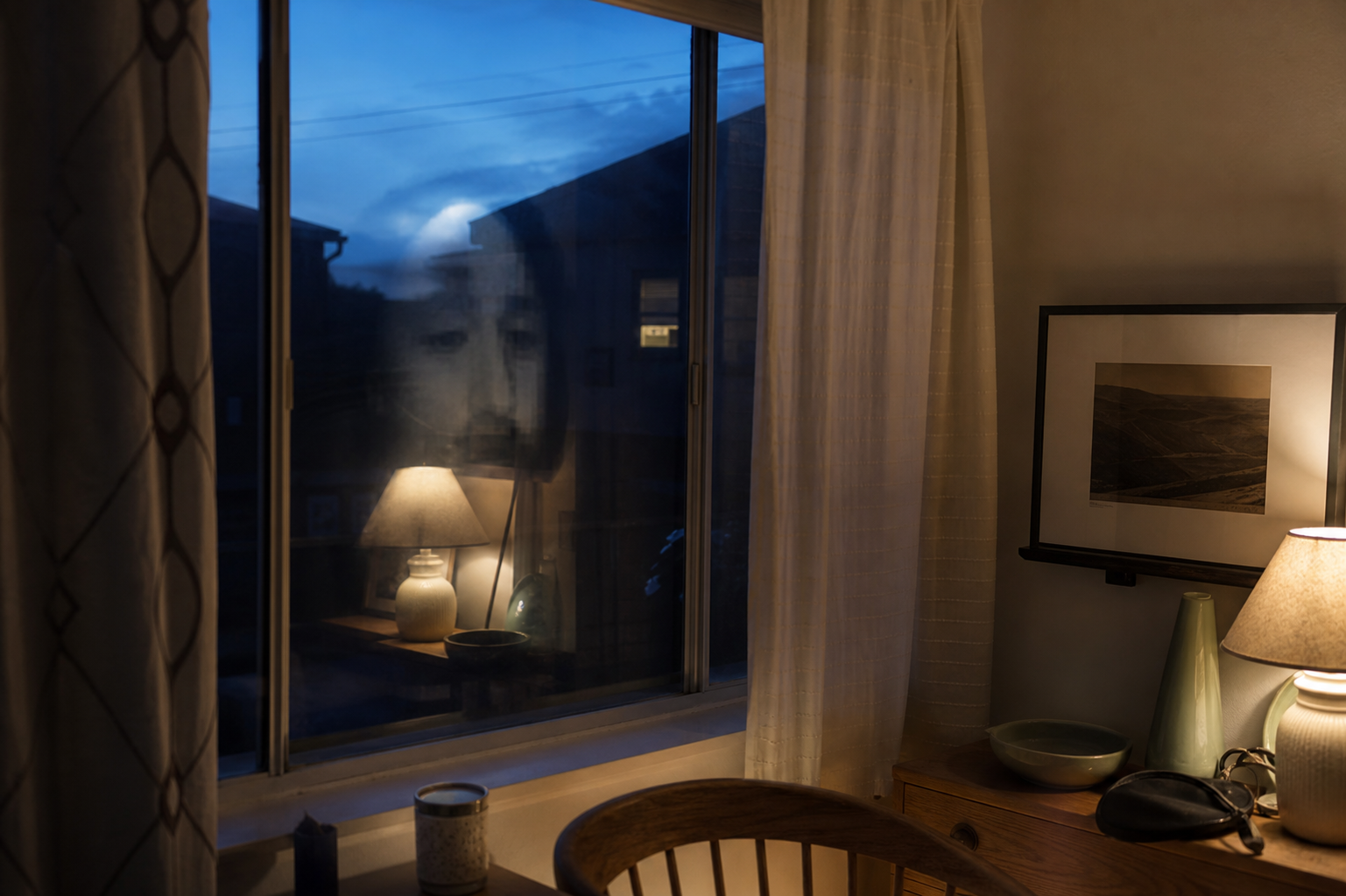
The report appears to show a face-like form in an upstairs window. In shared versions, the marks can read as eyes, mouth, hair or a head turned toward the camera. The stronger claim is that the image records a presence. The more cautious reading is that glass, shadow, reflection and digital processing have combined with a brain that is built to find faces quickly.
What the image appears to show
The important point is not that the witness saw nothing. Many image scares begin with a real surprise. A window can catch an interior reflection, a nearby shape or a second pane of glass at just the right angle. A curtain fold, lamp reflection, dark room, tree shadow or camera position can supply fragments that the eye then organises into a person.
Digital copies can make the effect stronger. When a photograph is resized, compressed or passed through messaging apps and social platforms, small tonal differences can become blocky edges. Shadows sharpen. Soft reflections turn into dark patches. Once those patches suggest eyes and a mouth, the viewer’s perception often completes the rest.
Why glass is so easy to misread
Glass rarely gives a clean record of one thing. It can show what is behind it, what is reflected in it and what is outside it at the same time. A photograph through or toward glass can therefore contain several layers of space flattened into one image. The result is perfect territory for pareidolia: the tendency to recognise meaningful forms, especially faces, in ambiguous patterns.
This does not make the viewer foolish. Face recognition is one of the brain’s most useful shortcuts. It is fast because it needs to be fast. In strange photographs, that useful shortcut can become overconfident.
What is solid?
What is solid is the interpretive problem. A face-like form can appear in a photograph without a face being present. Reflection, shadow, compression, cropping and expectation are all ordinary mechanisms that can produce a powerful impression. The original file matters more than a screenshot, repost or enlarged crop.
A responsible examination would preserve the first file, note where the camera was positioned, record the time and lighting, check whether the photograph was taken through another pane of glass, and compare other images from the same angle. Metadata, uncropped originals and repeat photographs are more useful than dramatic enlargements.
What remains uncertain?
Without the original file, camera position and scene reconstruction, certainty is limited. It may not be possible to identify the exact reflection or shadow that produced the face-like form. That uncertainty should not be inflated into a supernatural conclusion. It simply means the record is incomplete.
The case should therefore be treated as a perception and photography example, not as verified evidence of a haunting. The interesting question is how the image persuades, not how quickly it can be turned into a claim.
Why this kind of case matters
Window-face cases matter because image-led mysteries spread quickly. They are compact, emotional and easy to share. A single crop can travel farther than the context that would explain it. For the wider archive, this is a training case: keep originals, resist the crop, ask what glass and compression are doing, and remember that a vivid impression is not the same as a stable conclusion.
Claim, Context and Cautions
Claim
A window photograph appears to contain a human face, prompting the familiar question of whether the image captured something unseen.
Background
Faces are especially sticky to the brain, and reflections, contrast and partial occlusion can make ordinary domestic scenes feel haunted or meaningful.
Reported events
Once the image is circulated, viewers start to disagree about whether it shows a face, a reflection, a pattern or a story generated by suggestion.
Possible explanations
The best explanation is pareidolia sharpened by framing, lighting and the human tendency to treat faces as urgent information.
Sceptical view
The photo is a strong reminder that visual confidence is not the same as visual evidence. What feels immediate is often a collaboration between eyes and expectation.
Why it still interests people
It remains useful because many of the weirdest archive stories begin this way: one image, one face, and a whole argument about what counts as seeing.
Contextual glossary
Terms used in this entry
Definitions are offered as reading aids, not as conclusions about the case.
- Pareidolia
- The perception of a meaningful form, especially a face or figure, in ambiguous patterns. It is a normal feature of perception and becomes stronger when an expected shape has already been suggested.
- Reconstruction
- A later model, image or account made to represent an event from surviving information. It can clarify a hypothesis but should remain visibly separate from contemporary evidence.
- Uncertainty
- The stated limit on what a measurement, reconstruction or body of evidence can establish. Describing uncertainty is not indecision; it prevents a result from appearing more precise than the evidence allows.
- Suggestion
- Information or expectation that influences what a person notices, remembers or reports. Even a well-meant question can introduce details that were not in the first account.
- Haunting
- A pattern of unusual experiences attributed to a place, including apparitions, sounds, movement or sensed presences. A location log is more informative than treating every incident as one cause.
Reference trail
Sources
- Britannica: Pareidolia (opens in a new tab)Overview of face-finding in ambiguous visual stimuli.
- Britannica: Optical illusion (opens in a new tab)Context for visual misreadings and image-based misperception.
- PMC: Face pareidolia in the brain (opens in a new tab)Research article on face pareidolia and perceptual mechanisms.
Case Book
Photographs, Maps and Supporting Images
Supporting images provide documentary, geographic or visual context. Read each caption for its date, source and evidential limits.

Continue researching
Follow the evidence, context and comparisons
Curated connections
Selected editorially for this entry.
The Face on Mars became a classic anomaly because one low-resolution Viking image looked uncannily human until better imaging restored it to geology.
Curated connection · Case fileThe Brown Lady of Raynham Hall: A Ghost Photograph That Would Not FadeThe Brown Lady became famous because a single staircase image turned a house tradition into a visual ghost story that critics could never quite put back in the box.
Curated connection · ArticleThe Difference Between Evidence, Testimony and LegendA field guide to three words that often get tangled in mystery research.