Cryptids & Animal Reports
The Giant Squid: How a Sea Monster Became a Measured Animal
Giant squid demonstrate that extraordinary animals can be real while legendary behaviour remains unsupported. Specimens, anatomy, DNA and live imaging establish Architeuthis without validating ship-attacking kraken tales.
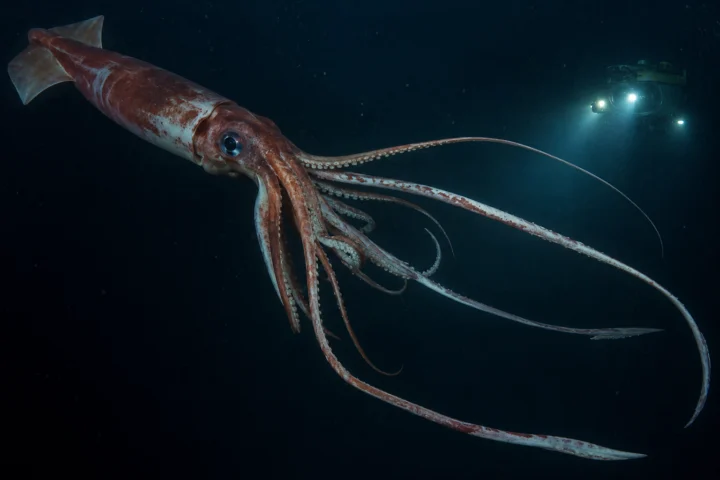
For centuries, enormous tentacled animals occupied the uncertain border between mariners’ testimony and sea-monster art. The scientific case for giant squid did not arrive through one perfect encounter. It accumulated through bodies and fragments stranded or caught in the North Atlantic during the nineteenth century.
In 1873–74, Newfoundland specimens allowed naturalists including A. E. Verrill to describe anatomy rather than infer it from stories. Beaks recovered from sperm-whale stomachs and circular sucker scars showed that large squid formed part of a deep-ocean predator relationship.
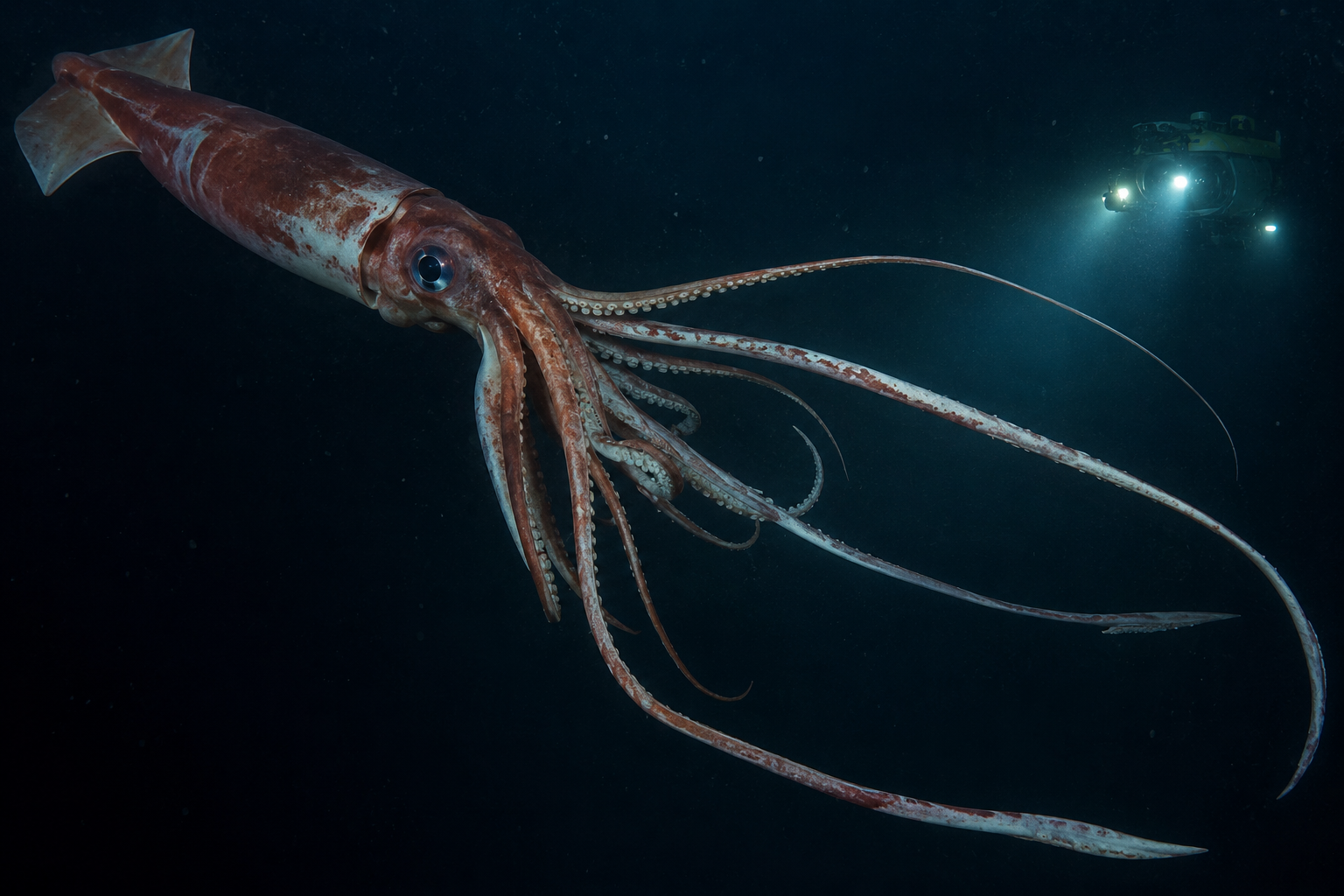
The animal remained elusive because healthy giant squid live far below ordinary observation. In 2004 a Japanese team photographed a living giant squid in its natural habitat. Later submersible footage showed colour, posture and movement unavailable from damaged carcasses.
Physical evidence corrected exaggeration. The two feeding tentacles greatly extend total length, so comparing end-to-end measurements can make a squid sound bulkier than it is. Preserved bodies shrink, stranded animals stretch, and old estimates often repeated maximum claims without a specimen.
This evidential transition complements the rediscovery of the coelacanth, the tissue identification of the Saint Augustine Monster, and the scale problem in the Surgeon’s Photograph.
Claim, Context and Cautions
From report to specimen
A carcass permits measurements, dissection and preservation. Multiple specimens show recurring structures: eight arms, two longer feeding tentacles, a beak and large eyes. That repeatability separates a biological species from descriptions that freely combine serpent, octopus and whale features.
Early specimens were often incomplete, so taxonomic names multiplied before later comparison and genetics clarified variation.
Evidence carried by whales
Sperm whales dive into the squid's habitat. Indigestible beaks remain in stomachs, while sucker rings can mark whale skin. These traces establish ecological contact even when people do not witness the encounter. They do not show cinematic battles or which animal initiated each interaction.
Diet samples also help map squid abundance indirectly, with biases created by whale feeding range and beak survival.
First images in the deep
Baited camera systems finally recorded a live animal in 2004, and later low-light approaches and submersibles improved observation. The sequence demonstrated active predation and flexible tentacles rather than a passive dying squid at the surface.
The rarity of footage reflects depth, ocean volume and disturbance by bright equipment, not absence of specimens.
A useful cryptid lesson
The giant squid is sometimes offered as proof that any reported monster may exist. Its actual history teaches a stricter lesson: acceptance followed diagnostic remains, expert description and repeatable anatomy, then live observation. Kraken stories were not accepted wholesale.
A creature can inspire folklore and still be zoologically real, but each claimed trait needs its own evidence. Architeuthis is established; routine attacks on ships and unlimited size are not. Museum preservation introduces its own limits. Formalin changes tissue and historical specimens may lack collection coordinates, yet curated bodies can be re-examined when new methods appear. DNA studies, beak measurements and modern video answer different questions, and agreement across them is stronger than any single spectacular encounter. Continuing environmental DNA surveys may reveal distribution without requiring another animal to strand, but detections still need contamination controls and taxonomic reference sequences. The squid's history is cumulative science: indirect traces led to bodies, bodies to anatomy, and anatomy to targeted observation in habitat.
Contextual glossary
Terms used in this entry
Definitions are offered as reading aids, not as conclusions about the case.
- Environmental DNA
- Genetic material collected from water, soil, air or another environment rather than directly from an organism. It can indicate that a species was present, but sampling controls and reference databases determine how specific the result is.
- Cryptid
- An animal or animal-like being reported in testimony or tradition but not established by accepted zoological evidence. The term covers very different claims and should not be treated as a biological category.
- Contamination
- The introduction of outside material or information into evidence. It may affect DNA, objects, recordings or witness accounts and must be considered before treating a match as independent.
Reference trail
Sources
- Smithsonian Ocean, How Big is the Giant Squid? (opens in a new tab)Institutional overview of historical specimens, anatomy, size and first photographs.
- Smithsonian National Museum of Natural History, The Giant Squid (opens in a new tab)Museum collection record and biological interpretation of preserved specimens.
- Natural History Museum, Giant squid: from the deep sea to display (opens in a new tab)Museum account of specimen preservation, tissue sampling and genetic work.
Case Book
Photographs, Maps and Supporting Images
Supporting images provide documentary, geographic or visual context. Read each caption for its date, source and evidential limits.

Continue researching
Follow the evidence, context and comparisons
Curated connections
Selected editorially for this entry.
The 1938 coelacanth was a genuine zoological surprise. Its rediscovery demonstrates gaps in sampling while modern genetics corrects the misleading idea of a species frozen in time.
Curated connection · Case fileThe Saint Augustine Monster: From Giant Octopus to Whale TissueThe Saint Augustine Monster was a real stranded carcass whose decayed form misled early observers. Preserved samples support degraded whale tissue, not a giant octopus.
Curated connection · Case fileThe Surgeon’s Photograph and the Shape of a MonsterThe famous Loch Ness image became a visual shorthand for lake monsters, then a lesson in scale, cropping and media appetite.
More through shared context
Additional routes based only on existing topics, themes and metadata.
The famous 1872 maritime mystery is less a ghost story than a stubborn problem of evidence, weather, cargo and missing people.
Shared theme: Maritime · Case fileThe Franklin Expedition: Wrecks, Testimony and a Fatal RetreatThe Franklin expedition was destroyed by a compound Arctic disaster rather than a single mysterious event. Inuit knowledge and archaeology have recovered its ships, while the exact movements and deaths of the crews remain incomplete.