Cryptids & Animal Reports
The Coelacanth: Rediscovery Without the “Living Fossil” Myth
The 1938 coelacanth was a genuine zoological surprise. Its rediscovery demonstrates gaps in sampling while modern genetics corrects the misleading idea of a species frozen in time.
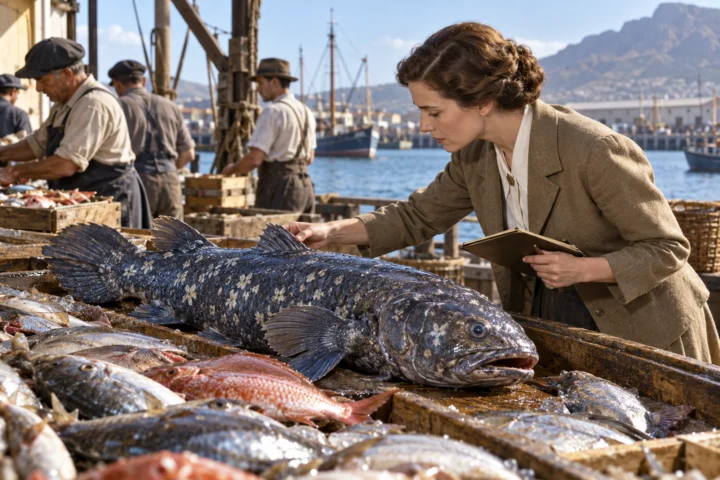
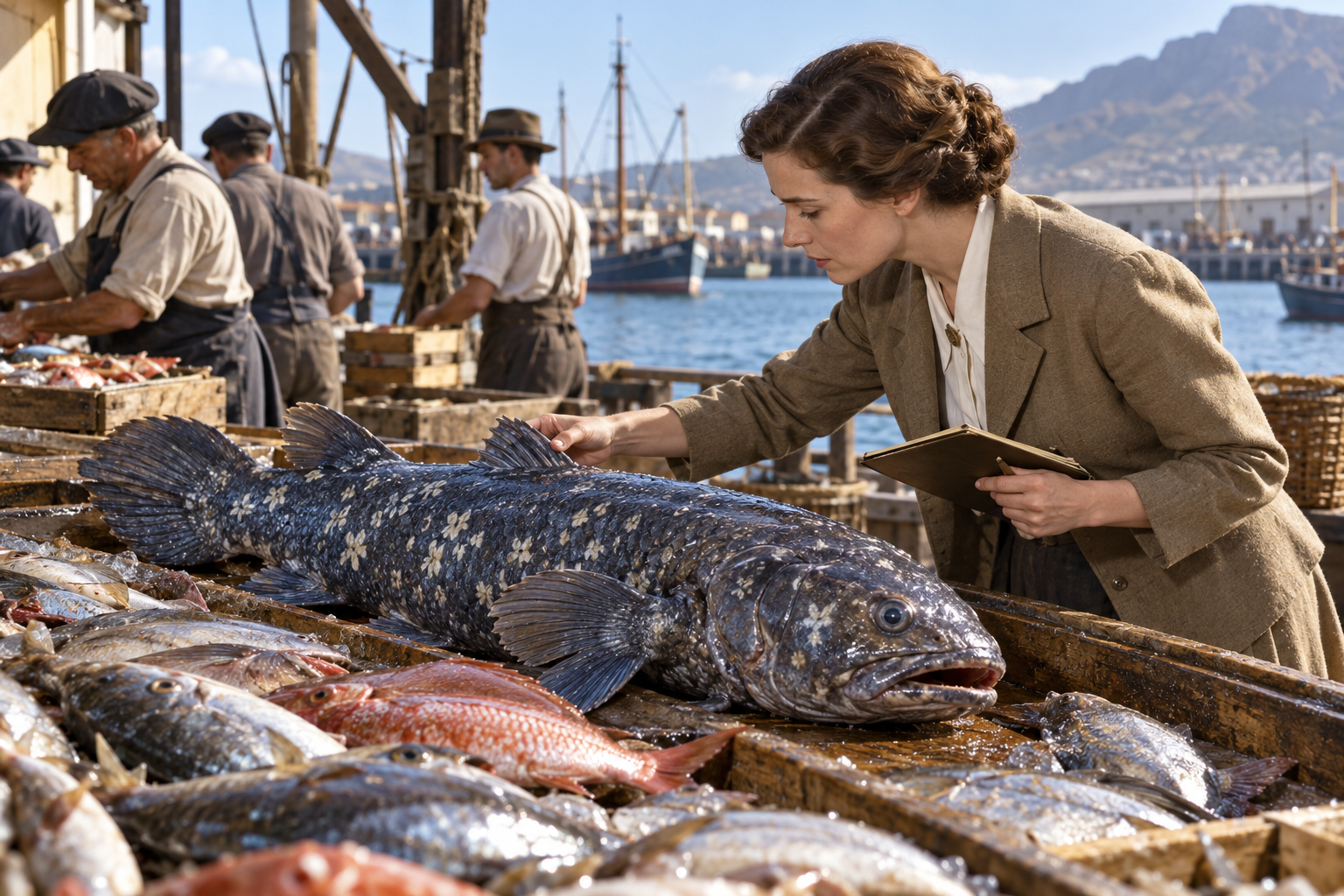
On 22 December 1938, Marjorie Courtenay-Latimer inspected the catch of the trawler Nerine at East London, South Africa. Among familiar fish lay a heavy blue animal with lobed fins and a distinctive three-part tail. The young museum curator made notes and a sketch, preserved the specimen as best she could in summer heat, and contacted ichthyologist J. L. B. Smith.
Smith recognised a coelacanth, a group known from fossils but then absent from the record for roughly 66 million years. He described the fish as Latimeria chalumnae in 1939. A second specimen was obtained near the Comoros in 1952, and later observations established living populations in the western Indian Ocean. A second living species was described from Indonesia.
The rediscovery was real and remarkable. The popular lesson drawn from it is often wrong. Coelacanths did not return from extinction, and the living species are not individual Mesozoic animals. Their lineage continued in deep, steep habitats where ordinary collecting rarely reached it, generation after generation, beyond the usual reach of research vessels.
The evidential lesson complements the Saint Augustine Monster, uncertain moorland cat reports, and the archive’s guide to evidence and testimony.
Claim, Context and Cautions
Why the specimen mattered
Fossil coelacanths were diverse and widespread, but none younger than the end of the Cretaceous was then known. The 1938 fish therefore extended the documented survival of the lineage by tens of millions of years. The physical specimen, drawing and taxonomic description made the claim testable in a way that a sighting alone could not.
Courtenay-Latimer's museum practice was decisive: she noticed an unfamiliar combination of features and preserved evidence before an expert supplied the name.
From one fish to populations
The first find did not immediately reveal where coelacanths lived. Smith's search for another specimen eventually led to the Comoros, where local fishers already knew the deep-water fish. Subsequent work used submersibles, genetics and additional captures to study distribution and behaviour.
This history is a warning against equating absence from scientific collections with absence from local knowledge or from the sea.
The limits of “living fossil”
The label suggests that a modern coelacanth is unchanged from a fossil ancestor. Evolution does not work that way. Living species have their own histories, and genomes accumulate change even when a body plan appears conservative. Genetic evidence also places lungfish, not coelacanths, as the closest living relatives of tetrapods.
Lobed fins remain important for understanding vertebrate evolution, but they are not half-formed legs and the fish is not a missing link waiting outside history.
What rediscovery can and cannot prove
Coelacanths show that large animals can escape formal scientific description when habitat, range and sampling make encounters rare. They do not show that every legendary creature is likely to survive. Claims about another animal still require appropriate habitat, breeding population, traces and recoverable specimens.
The evidential contrast is useful. One unusual fish was preserved, measured and described; more specimens followed, populations were located, and independent laboratories could study anatomy and DNA. A legend supported only by distant sightings has not crossed the same threshold, however sincere its witnesses.
The coelacanth is not a cryptid vindication. It is an unusually well documented correction to zoological knowledge.
Contextual glossary
Terms used in this entry
Definitions are offered as reading aids, not as conclusions about the case.
- Living fossil
- An informal label for a living organism that resembles relatives known from much older fossils. It does not mean the species stopped evolving or survived unchanged.
- Extinction
- The loss of the last living member of a species. Failure to detect a rare animal is not instant proof of extinction, but repeated, well-designed surveys can make continued survival increasingly unlikely.
- Cryptid
- An animal or animal-like being reported in testimony or tradition but not established by accepted zoological evidence. The term covers very different claims and should not be treated as a biological category.
Reference trail
Sources
- Natural History Museum, Coelacanths: the fish that outdid Loch Ness (opens in a new tab)Museum history of Courtenay-Latimer’s discovery, Smith’s identification and subsequent specimens.
- Australian Museum, Coelacanth, Latimeria chalumnae (opens in a new tab)Institutional species account covering anatomy, discovery history, later populations and the Indonesian species.
- Nature, The African coelacanth genome provides insights into tetrapod evolution (opens in a new tab)Peer-reviewed genomic study used to distinguish slow morphological change from evolutionary stasis and to assess tetrapod relationships.
Case Book
Photographs, Maps and Supporting Images
Supporting images provide documentary, geographic or visual context. Read each caption for its date, source and evidential limits.

Continue researching
Follow the evidence, context and comparisons
Curated connections
Selected editorially for this entry.
The Saint Augustine Monster was a real stranded carcass whose decayed form misled early observers. Preserved samples support degraded whale tissue, not a giant octopus.
Curated connection · Case fileThe Moorland Cat ReportsA careful look at Britain and Ireland large-cat reports, where escaped-animal context, distance errors and local rumour overlap.
Curated connection · ArticleThe Difference Between Evidence, Testimony and LegendA field guide to three words that often get tangled in mystery research.