Archaeology & Disputed Artefacts
The Shroud of Turin: An Evidence Problem Wrapped as a Relic
The Shroud of Turin is valuable to the archive because it forces every question about provenance, authentication and interpretation into the same room.
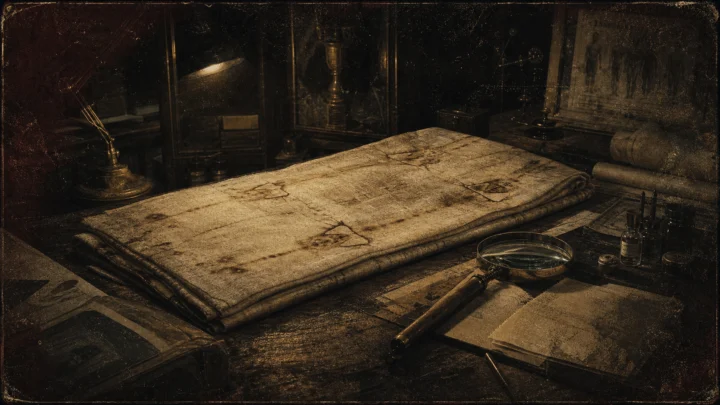
The Shroud of Turin is one of the most heavily studied objects in the religious archive, which is exactly why it belongs in a strange-archive project. Its importance comes from the collision between devotion, science and a very long argument about where the cloth came from and what its image means.
Britannica summarises the hard point plainly: the carbon-dating results pointed to a medieval origin. Later studies and counter-studies have continued to complicate the debate, but they have not removed the core problem of provenance. An object can be sacred and still be historically late.
That is the fascination. The shroud keeps forcing separate disciplines into the same room. Historians care about documentary appearance, scientists care about imaging and dating, and believers care about relic tradition. The archive has to record all three without pretending they are identical.
For Devil's Hideout, the Shroud of Turin is not a cheap debunking opportunity. It is an archive lesson in how a cloth can carry more than one truth at once, even when only one of them is historical.
Claim, Context and Cautions
Claim
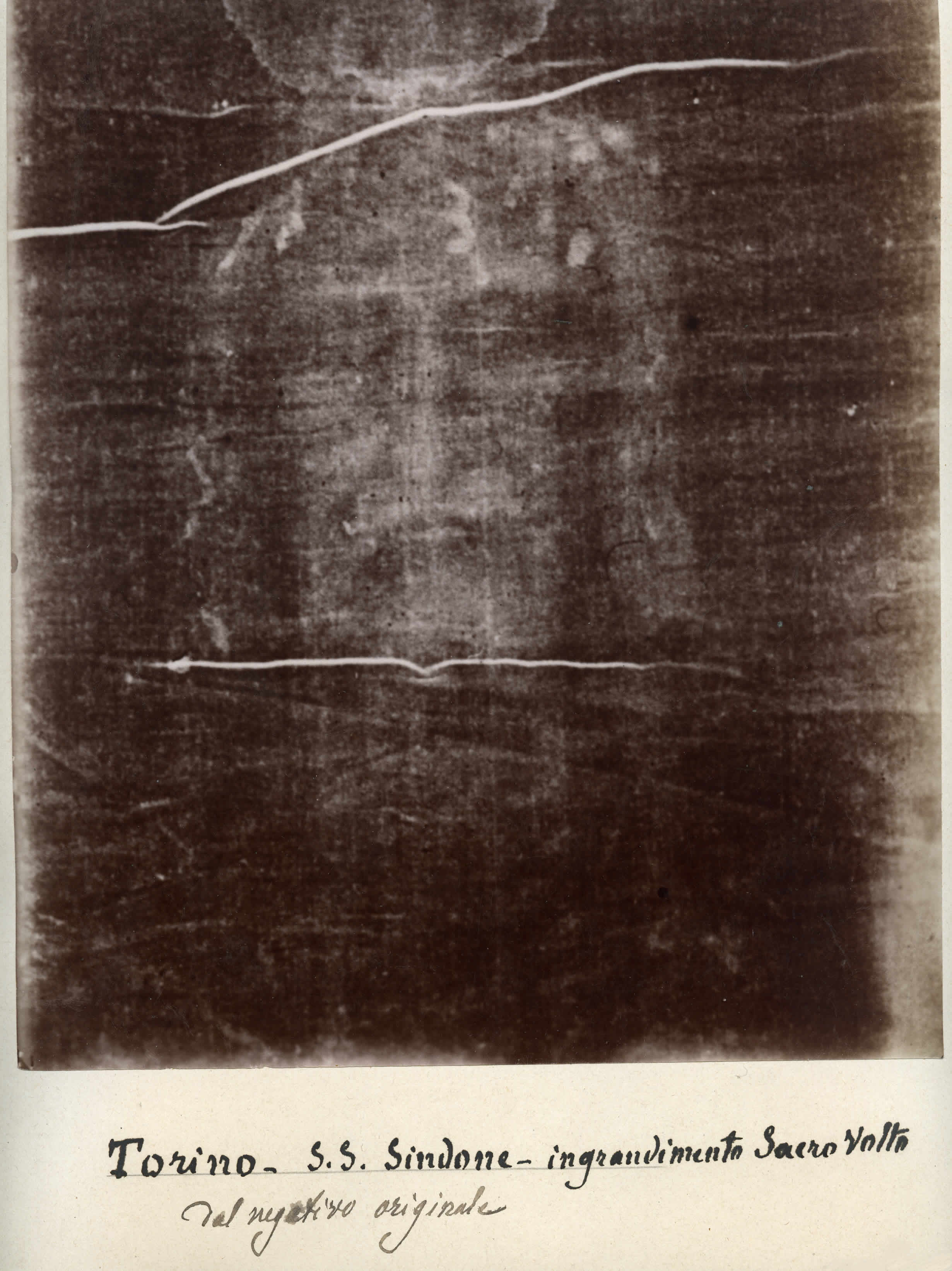
A linen cloth preserved in Turin bears the faint image of a man showing wounds consistent with crucifixion. For a substantial part of Christian history, the cloth has been venerated as the burial shroud of Jesus of Nazareth. The image is unusual in that it does not behave like a painted representation, a dyed textile or most known forms of medieval manufacture: it is superficial, lacks brushstroke patterns and appears as a photographic negative, a quality not understood until the nineteenth century when it was first photographed. These properties have made the shroud one of the most heavily studied objects in modern religious history, attracting scientific analysis from radiographers, forensic experts, botanists, textile specialists, microbiologists and photographers. The result is an object surrounded by a technical literature that is extensive, contested and still active. Its status as a genuine first-century relic or a medieval production remains unresolved to the satisfaction of all parties.
Background
The shroud's documented history begins in fourteenth-century Europe, when it appeared at Lirey in France in the possession of a knight named Geoffrey de Charny. A local bishop wrote to the Pope arguing the image was a painting and the exhibition a fraud intended to attract pilgrims. The cloth passed through several owners before the House of Savoy acquired it in the fifteenth century and moved it to Turin, where it has remained. Believers argue for a first-century origin based on the image's properties, claimed botanical traces and the type of weave identified in certain analyses. The gap between the first documented appearance in the fourteenth century and the claimed first-century origin is substantial and has never been bridged by a continuous provenance chain. The cloth was damaged by fire in 1532 and repaired with patches that complicated later material analysis. It has been displayed publicly at intervals, drawing millions of pilgrims and equally large bodies of investigators.
Reported events
The modern phase of scientific investigation began in the 1970s when American researchers were given access to the cloth. Results included findings about possible blood traces, pollen grains claimed to originate from the Middle East, and three-dimensional information apparently encoded in the image density. In 1988, samples were radiocarbon dated by three independent laboratories using accelerator mass spectrometry. All three dated the linen to approximately 1260 to 1390 CE, consistent with the cloth's first documented appearance at Lirey. Defenders of authenticity argued the samples came from a repaired section containing newer material, that contamination affected the results, or that biological events associated with the resurrection altered isotope ratios in ways conventional dating cannot account for. Later studies tested bloodstain mechanics, pollen distribution and image formation mechanisms, producing further contested findings. The original 1988 carbon dating result has not been overturned by any subsequent peer-reviewed analysis.
Possible explanations
The carbon dating result from 1988 represents the strongest single piece of physical evidence and places the cloth in the medieval period. No proposed mechanism for invalidating that result has gained acceptance in the broader scientific community. An artist or group working in the mid-to-late medieval period created an image with unusual properties that may reflect knowledge of contact printing, surface chemical treatment, or artistic methods not yet fully identified. The specific formation mechanism of the image is genuinely uncertain: several proposed methods including contact imprinting, chemical thermal treatment and surface oxidation have been tested with partial and disputed results. Whether blood traces are genuine human blood or a pigment applied to simulate it remains contested. These disputes do not change the provenance problem. A fourteenth-century cloth cannot have been manufactured in first-century Palestine, regardless of how interesting its image properties are.
Sceptical view
The strongest sceptical position does not require explaining every feature of the image in detail. The lack of provenance before the fourteenth century, combined with the radiocarbon dating result, places the burden of proof on those who claim a first-century origin. The objections raised against the 1988 carbon dating, particularly the repaired-section theory, were examined in later analyses and did not gain independent scientific support. The image's unusual properties are striking, but striking does not mean impossible for human manufacture. Medieval craftspeople produced highly sophisticated objects in materials that still puzzle modern analysts. The shroud is an important and genuinely interesting object that does not need to be a first-century relic to be historically valuable. It is already one of the most extraordinary surviving examples of medieval material culture and one of the most studied objects in the history of forensic science.
Why it still interests people
The shroud remains culturally important for at least two distinct reasons that operate independently of each other. For a large devotional audience, it is a sacred object whose significance does not depend on radiocarbon dates. For an evidence-focused archive, it is a case study in what happens when devotion, science and provenance all claim authority over the same object simultaneously. The technical literature is genuinely rich. The debates over blood traces, image formation and textile analysis are substantive, and the shroud has attracted more careful scientific attention than almost any other disputed object in history. That attention has not resolved the question to universal agreement, which makes the case useful for studying how evidence works when the stakes are high enough that parties on all sides have strong reasons to interpret results in their favour. It is one of the most honest mirrors the archive holds up to the limits of certainty.
Contextual glossary
Terms used in this entry
Definitions are offered as reading aids, not as conclusions about the case.
- Provenance
- The documented history of an object’s origin, ownership, location and handling. A dramatic claim with weak provenance cannot reliably establish where or when an object came from.
- Material culture
- The objects, buildings and physical environments through which people organise and express life. Researchers interpret these remains alongside their manufacture, use, deposition and social setting.
- Radiocarbon dating
- Dating once-living material by measuring radioactive carbon-14 remaining in it. Results are reported with uncertainty and calibrated against reference data; they date the sampled material, not every later use.
- Contamination
- The introduction of outside material or information into evidence. It may affect DNA, objects, recordings or witness accounts and must be considered before treating a match as independent.
- Debunking
- Testing a claim against evidence, source quality and ordinary explanations, particularly where a claim has been exaggerated or falsely presented. Good debunking explains the evidence rather than mocking the witness.
Reference trail
Sources
- Nature: Radiocarbon dating of the Shroud of Turin (opens in a new tab)The 1989 peer-reviewed report of independent radiocarbon measurements.
- Archaeometry: Image formation on a low-relief model (opens in a new tab)Peer-reviewed modelling study testing how contact with a three-dimensional form could produce the image.
- PLOS ONE: Statistical and scientific review of radiocarbon data (opens in a new tab)Open-access review of the dating measurements, sampling questions and statistical interpretation.
Case Book
Photographs, Maps and Supporting Images
Supporting images provide documentary, geographic or visual context. Read each caption for its date, source and evidential limits.
Continue researching
Follow the evidence, context and comparisons
Curated connections
Selected editorially for this entry.
The Hope Diamond is real, spectacular and historically traceable; the curse attached to it is better read as media folklore and gem-market theatre.
Curated connection · Case fileThe Voynich Manuscript: A Book That Refuses to Become PlainThe Voynich Manuscript is a real medieval codex filled with undeciphered writing, strange plants and diagrams that keep attracting scholars, codebreakers and dreamers.
Curated connection · Case fileThe Antikythera Mechanism: Ancient Gears Without Ancient AliensThe Antikythera Mechanism is genuinely astonishing, but its lesson is ancient technical skill, not a shortcut to fringe claims.
More through shared context
Additional routes based only on existing topics, themes and metadata.
Nan Madol remains archaeologically challenging, but its builders and broad chronology are not unknowable. Local oral histories, settlement evidence and scientific dating converge on Pohnpeian construction and Saudeleur power.
Same primary topic · Shared theme: Disputed artefacts · Case fileCrystal Skulls: Modern Tools Behind an Ancient LegendScientifically examined crystal skulls do not support claims of ancient or paranormal origin. Tool marks, quartz provenance and sales records place prominent examples in the modern era.