Hoaxes, Misidentifications & Media
The Fiji Mermaid: A Fake That Made Barnum Famous
The Feejee Mermaid became an object lesson in showmanship because the hoax was never just the object; it was the lecture around it.
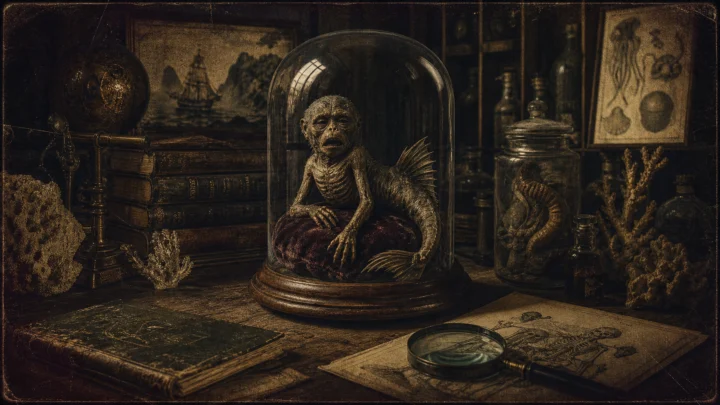
The Feejee Mermaid is one of the most perfect hoaxes in archive history because it does not try to be subtle. It was displayed as a marvel, circulated as a curiosity and then became more famous precisely because it was a fraud. P. T. Barnum understood that the admission of fakery could be as attractive as the claim of authenticity.
The object itself belonged to a longer tradition of mermaid-like curiosities, but Barnum turned it into a lecture on human gullibility. He could sell a fake and then sell the story of how the public had been fooled. That is a better business model than mere deception.
The case is useful because it separates three different things: the object, the claim and the performance. The object was real enough as a handmade exhibit. The claim that it was a natural mermaid was false. The performance around it was the actual engine of the spectacle.
For Devil's Hideout, the Feejee Mermaid belongs on the debunking shelf as a reminder that a hoax can be historically important without being true.
Claim, Context and Cautions
Claim
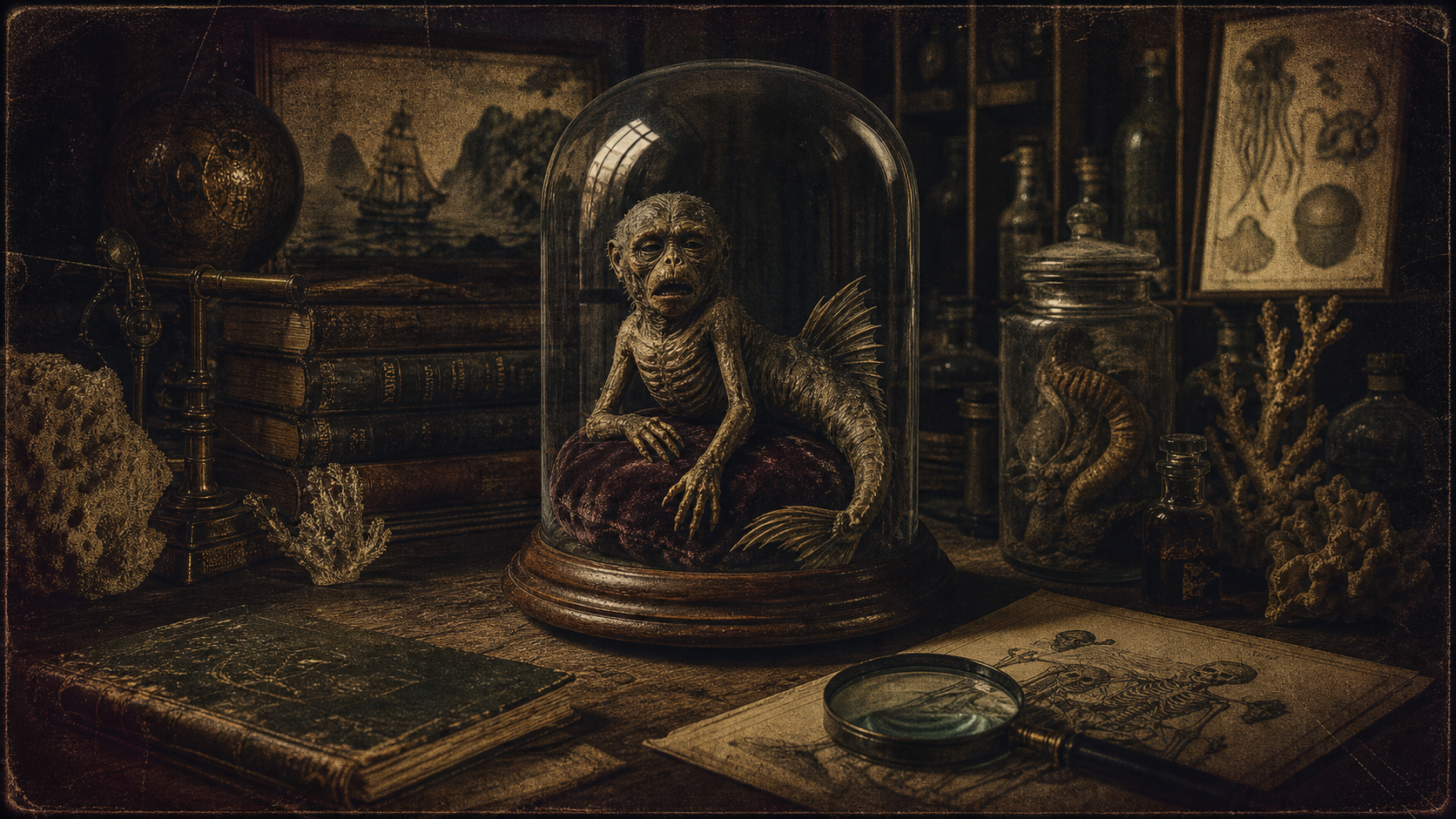
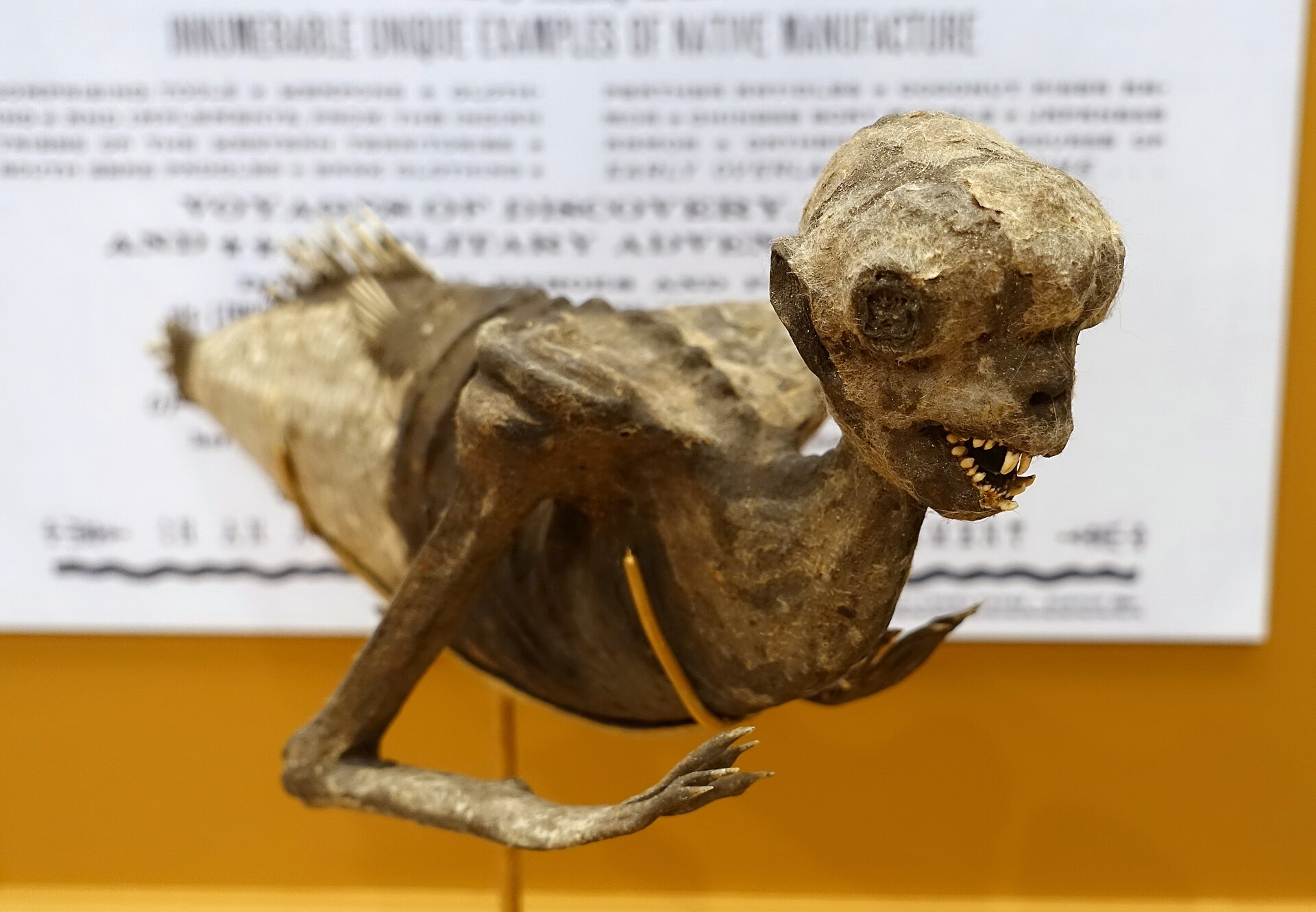
An exhibit advertised as a mummified mermaid was displayed publicly in the United States in the 1840s, most famously under the management of P. T. Barnum. The object was presented as a natural curiosity: the preserved body of a genuine mermaid recovered from Fiji. In reality it was a composite assemblage, probably of Japanese origin, constructed by joining the upper body of a monkey or small ape to the lower body of a fish and treating the whole thing to achieve a dried, hardened appearance convincing enough at a distance to attract paying crowds. The claim was false, the object was manufactured, and several natural scientists said so publicly at the time. Nevertheless the exhibit drew substantial attention and profit. Barnum incorporated controversy around it into the show itself. The Feejee Mermaid, as it became known, is now one of the best-documented examples of nineteenth-century sideshow fabrication.
Background
Composite curiosities of this type had a history in Japan before they entered the western exhibition market. Japanese craftspeople produced ningyo, fish-human figures used in religious and gift contexts, some of which were sold to or acquired by Dutch and other European traders from the seventeenth century onward. At least one such object was brought to London and exhibited as a mermaid in the early nineteenth century before the version associated with Barnum appeared. The appetite for natural curiosities in the nineteenth century was shaped by genuine scientific excitement about the diversity of life and by public fascination with the edges of the known world. Cabinets of curiosity, museum collections and travelling exhibitions occupied a space between science and entertainment that made it easy for fabrications to present themselves alongside genuine specimens. A mermaid on a shelf beside real shells and bones could borrow authority from its context even when the object itself was constructed.
Reported events
Barnum's exhibit was promoted with newspaper illustrations, pamphlets and a coordinated publicity campaign that created the appearance of scientific controversy before the mermaid went on public display. Barnum used the technique of planting competing stories in different newspapers to generate discussion without revealing his own involvement, manufacturing a debate about authenticity that drew readers who might otherwise have ignored the show. The exhibit opened in New York in 1842, where it drew large crowds. Coverage appeared across multiple newspapers, and although natural scientists who examined it described it as a fabrication, public interest was not diminished. The object toured as part of Barnum's operations and entered his American Museum. It survived in various forms until the museum burned in 1865, after which the original object may have been destroyed, though replicas and similar composites continued appearing in exhibitions for years afterward.
Possible explanations
The object is best understood as a deliberate fabrication for commercial purposes, drawing on Japanese craft traditions and exploiting European and American appetite for natural marvels. The construction technique was sophisticated enough to deceive viewers who did not examine it closely, especially under exhibition lighting and at the distance typical of a fairground display. The promotional campaign Barnum used was itself a component of the deception: by generating apparent scientific controversy, he made the question of whether it was real seem open, which was more commercially valuable than either a confident endorsement or an outright denial. The audience's uncertainty was the product Barnum was selling. The public did not necessarily believe fully in the mermaid; many visitors came precisely to decide for themselves, which is a different kind of engagement from simple credulity. Spectacle and doubt can coexist productively in an exhibition audience, and Barnum understood this better than almost any contemporary.
Sceptical view
The Feejee Mermaid is not a biological specimen. Its fabrication is not in scientific dispute, and the object itself is no longer the interesting question. What remains interesting is the degree to which fabrication and commercial success coexisted openly in the mid-nineteenth century. Barnum was not operating in a world without scepticism. Natural scientists called it a fake in public, and those calls were reported. The continued paying audience knew it might be false and came anyway. This tells us something important about what exhibitions were for: they were not primarily about establishing truth but about sharing an experience of astonishment and argument. The mermaid is a sceptical case not because there is doubt about the object but because its cultural success demonstrates that the relationship between evidence and audience interest is more complicated than a simple true-or-false model allows.
Why it still interests people
The Feejee Mermaid endures because it captures something permanently true about the relationship between spectacle, commerce and belief. Barnum's insight, that people pay to be amazed and to argue, did not become obsolete with the nineteenth century. The same pattern of promoted doubt, manufactured controversy and profitable attention appears in viral media, paranormal television and the commercial strange-history industry. For the archive, the case is useful precisely because it is not about an honest mistake or genuine uncertainty. It is about a knowingly constructed false claim that succeeded commercially, continued to succeed after exposure, and generated a cultural afterlife out of proportion to the object's modest physical reality. That afterlife is the real mystery the case poses: not what the object was, which is clear enough, but why demonstration of its falsehood was not sufficient to stop the crowd.
Contextual glossary
Terms used in this entry
Definitions are offered as reading aids, not as conclusions about the case.
- Hoax
- A deliberate attempt to make false evidence or a false story appear genuine. A hoax can still become culturally important, but its later influence should not be confused with the original claim.
- Uncertainty
- The stated limit on what a measurement, reconstruction or body of evidence can establish. Describing uncertainty is not indecision; it prevents a result from appearing more precise than the evidence allows.
- Debunking
- Testing a claim against evidence, source quality and ordinary explanations, particularly where a claim has been exaggerated or falsely presented. Good debunking explains the evidence rather than mocking the witness.
Reference trail
Sources
- Encyclopaedia Britannica: Feejee Mermaid (opens in a new tab)Reference overview of the object and its place in P. T. Barnum's career.
- Harvard Gazette: The Feejee Mermaid at Harvard (opens in a new tab)Museum-backed account of the composite object, its history and conservation.
- Peabody Museum: Harvard's Feejee Mermaid (opens in a new tab)Collection resource describing the specimen, materials and documented museum context.
Case Book
Photographs, Maps and Supporting Images
Supporting images provide documentary, geographic or visual context. Read each caption for its date, source and evidential limits.
Continue researching
Follow the evidence, context and comparisons
Curated connections
Selected editorially for this entry.
The Cardiff Giant was a carved gypsum fake sold as a petrified ancient man, and it remains one of the cleanest lessons in spectacle, profit and belief.
Curated connection · Case fileThe Hope Diamond Curse: A Jewel, a Rumour and a Sales PitchThe Hope Diamond is real, spectacular and historically traceable; the curse attached to it is better read as media folklore and gem-market theatre.
Curated connection · Case fileThe Great Moon Hoax and the Machinery of WonderIn 1835, newspaper readers met moon forests, lunar animals and winged people in a celebrated lesson about media, science and appetite.