Hauntings & Apparitions
The Enfield Poltergeist: Noise, Narrative and the Council House on Green Street
The Enfield case remains famous because it was recorded, argued over and repeatedly reinterpreted, which makes it a perfect archive for uncertainty.
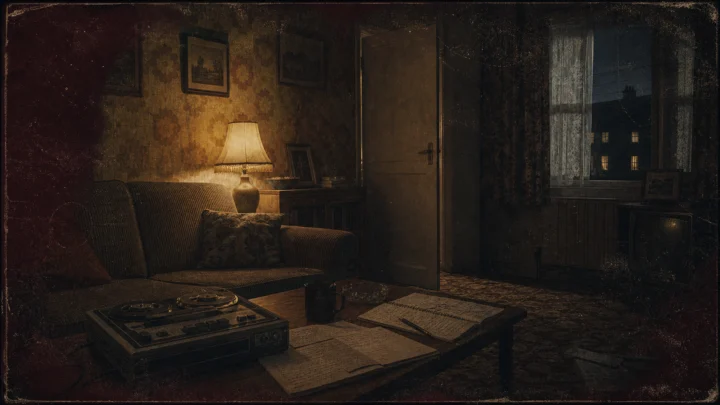
The Enfield Poltergeist is one of the best-known modern haunting cases, and that fame is part of the evidence problem. A council house in north London became the centre of a long dispute over knocks, voices, objects moving and the behaviour of the Hodgson family, especially Janet Hodgson.
The case gained traction because people were there to record it. Maurice Grosse and Guy Lyon Playfair documented incidents, journalists followed the story and skeptics pointed to the possibility of performance and suggestion. That overlap between research and spectacle makes the case unusually rich, and unusually slippery.
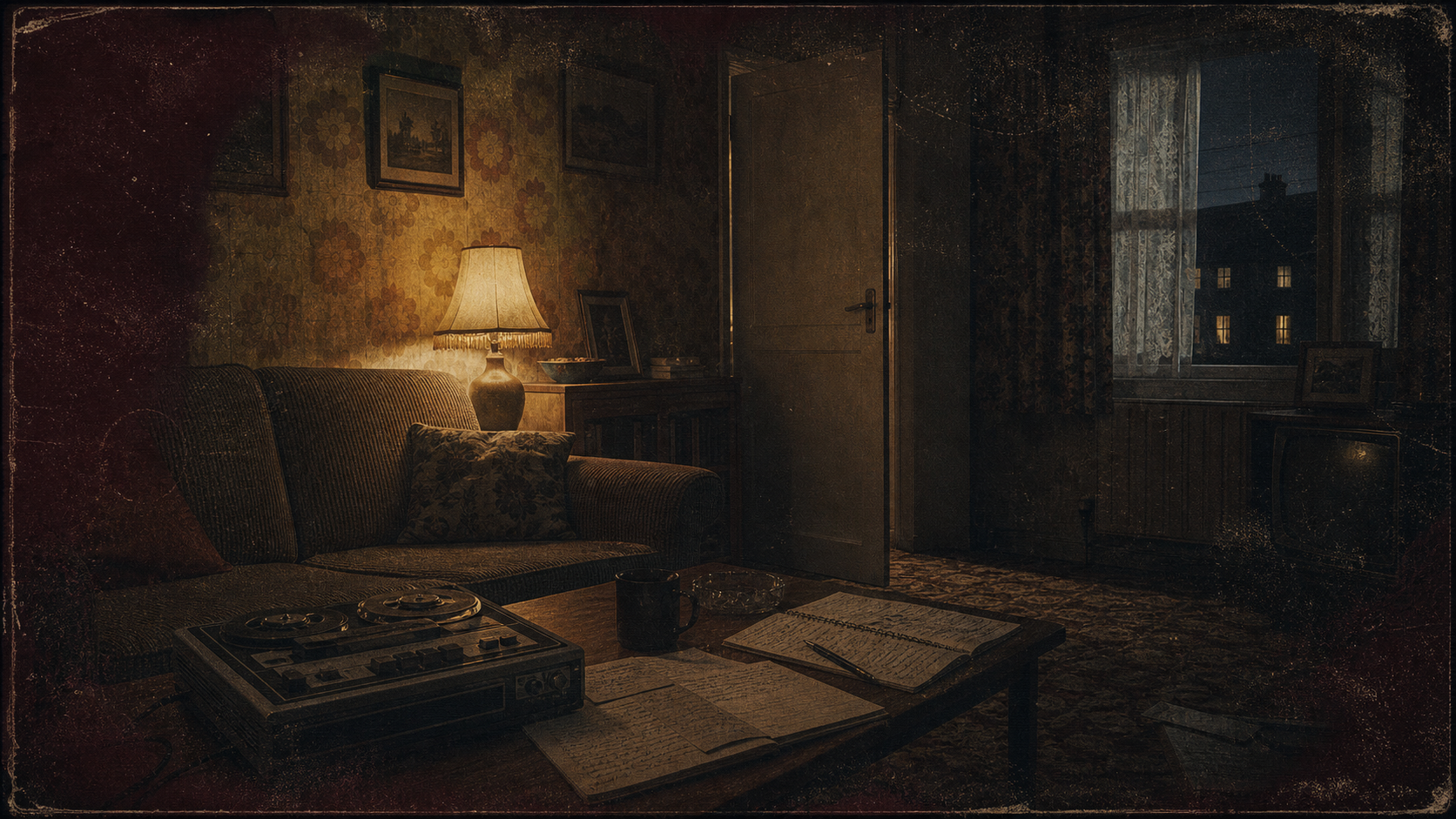
The strongest lesson is that recording a claim does not resolve it. Audio tapes, photographs and testimony preserve the atmosphere of a disturbance, but they do not automatically identify its cause. A noisy house can be a noisy house, a stage, a family stress point or some mix of all three.
Enfield still matters because it shows how quickly a modern haunting becomes an archive of interpretations. Each book or documentary does not merely describe the case; it reshapes the case into a different kind of certainty.
For Devil's Hideout, this is exactly the sort of material that belongs in the files: claims, counterclaims and a body of records that make the dispute itself historically important.
Claim, Context and Cautions
Claim
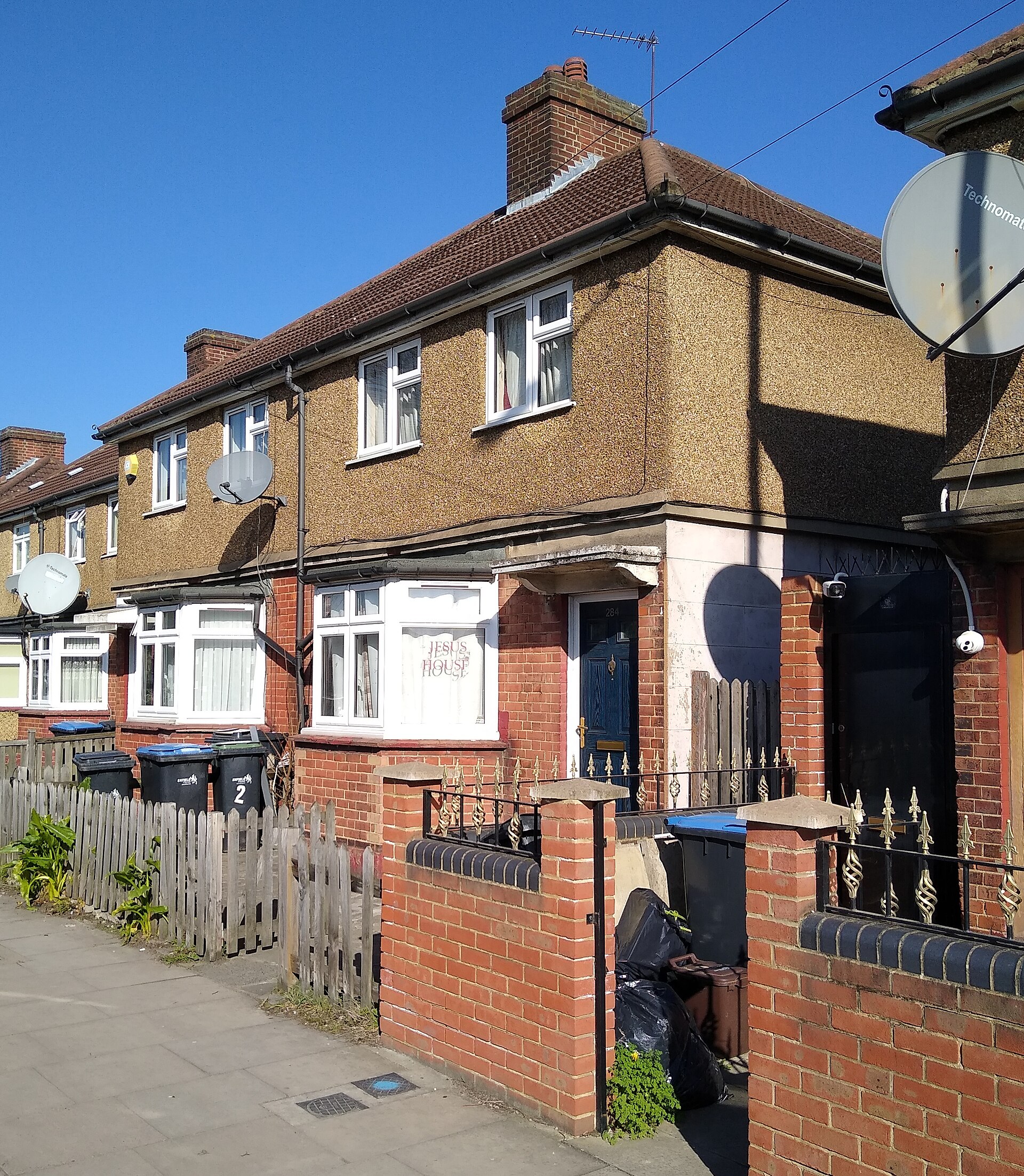
In August 1977, the Hodgson family in a council house in Green Street, Enfield, north London, reported the beginning of what became one of the most documented poltergeist cases of the twentieth century. Reported phenomena included knockings, thrown objects, furniture moving, beds shaking and voices, with the most dramatic incidents centring on Janet Hodgson, then aged eleven, who appeared in photographs apparently levitating and who produced or was alleged to produce a deep gruff voice claiming to be a previous resident named Bill. The case attracted investigators from the Society for Psychical Research, extensive press and television coverage, and a long involvement from researchers Maurice Grosse and Guy Lyon Playfair, who documented events in detail over more than a year. Subsequent investigators, journalists and sceptics raised serious questions about performance, suggestion, investigator expectation and the conditions under which the phenomena were recorded.
Background
The Hodgson household in 1977 consisted of single mother Peggy Hodgson and her four children. The family were not prosperous, the house was small and the circumstances of life in a north London council estate in the mid-1970s provided a context of stress, noise, crowding and social pressure that researchers have associated with poltergeist reports in other cases. Previous residents of the house had included an elderly man named Bill who had died there, a detail that became significant once voices claiming his identity began to appear on recordings. Maurice Grosse, assigned to the case by the Society for Psychical Research, had personal reasons for believing in the possibility of survival after death, having recently lost a daughter. Guy Lyon Playfair was an author already invested in paranormal phenomena. Both men had genuine emotional and professional stakes in the investigation's conclusions, which is a standard condition of bias worth noting in any evaluation of their documentation.
Reported events
The phenomena began with knockings and furniture movement that the family reported to the police, one officer of whom later stated she had seen a chair slide on the floor unaided. Investigators documented hundreds of claimed incidents over more than a year, including objects thrown across rooms, Lego bricks hurled at witnesses, curtains tangling around Janet, and the gruff voice episodes recorded on audio tape. Photographs were taken of Janet apparently in mid-air above her bed, images that became some of the most reproduced paranormal photographs of the era. The press arrived early and stayed long; a Daily Mirror photographer was in the house during several claimed events. Two SPR investigators who visited separately witnessed Janet and Margaret bending spoons and were later told by the girls that they had done it themselves to see if they could get away with it.
Possible explanations
Children in stressful domestic circumstances have been observed in other poltergeist cases to produce phenomena through deliberate action, sometimes motivated by a desire for attention, relief from household tension or simple play that escalated. Janet's own admission about the spoon-bending is documented. The photographed levitation images are consistent with jumping from the bed rather than supernatural elevation; the shutter speeds used are sufficient to freeze a jump at its peak. The gruff voice can be produced by deliberately tensing the false vocal folds, a technique generating exactly the quality heard on recordings. A speech therapist who later examined Janet concluded this was the likely mechanism. Investigator expectation is a well-documented factor in anomalous-phenomena cases: researchers who expect to witness something extraordinary are more likely to interpret ambiguous events as extraordinary. The press involvement created an additional sustained incentive to maintain a dramatic narrative.
Sceptical view
The sceptical reading of Enfield does not require that nothing unusual happened in the house. It requires only that the documented evidence is insufficient to establish a non-human cause for what was reported. Children perform, deceive and sometimes deceive investigators who want to be deceived. Adults in stressful domestic situations can misinterpret ordinary events and attribute them to extraordinary causes. The investigators had professional, personal and financial stakes in the outcome. The press had commercial stakes. None of these observations proves that every incident was fabricated, but they establish that fabrication was available, motivated and partially documented by the participants themselves. The case is most honestly described as heavily reported, substantially disputed and ultimately unresolved with respect to its extraordinary claims. A crowded household with an attention-seeking family and investigators who very much wanted to find a poltergeist is not a controlled environment.
Why it still interests people
Enfield endures in popular culture because it represents a modern, documented version of a very old story type: an entity in a domestic space, a vulnerable young person at its centre, witnesses in conflict about what they saw, and a record extensive enough to argue about indefinitely. It sits at the exact crossing point of childhood psychology, family stress, investigator belief, media performance and traditional haunting narrative that makes a poltergeist case culturally productive. Each book, documentary and dramatisation reshapes the evidence slightly, emphasising different witnesses, different incidents, different interpretations. For the archive, Enfield is most valuable not as evidence of a poltergeist but as a case study in how modern documentation, rather than closing questions, can multiply them. More record does not always mean more resolution. Sometimes it means more versions of what the record says.
Contextual glossary
Terms used in this entry
Definitions are offered as reading aids, not as conclusions about the case.
- Poltergeist
- A cluster of reported noises, object movement or disruption traditionally attributed to an unseen agency. Cases require attention to household dynamics, access, building conditions and witness timing.
- Psychical research
- The organised investigation of claimed telepathy, apparitions, mediumship and related phenomena, particularly from the late nineteenth century. Its history includes field enquiries, experiments and persistent disputes over method.
- Uncertainty
- The stated limit on what a measurement, reconstruction or body of evidence can establish. Describing uncertainty is not indecision; it prevents a result from appearing more precise than the evidence allows.
- Haunting
- A pattern of unusual experiences attributed to a place, including apparitions, sounds, movement or sensed presences. A location log is more informative than treating every incident as one cause.
- Suggestion
- Information or expectation that influences what a person notices, remembers or reports. Even a well-meant question can introduce details that were not in the first account.
Reference trail
Sources
- Psi Encyclopedia: The Enfield Poltergeist (opens in a new tab)Detailed research overview from the Society for Psychical Research archive.
- Skeptical Inquirer: The Enfield Poltergeist (opens in a new tab)A critical reconstruction of testimony, recordings, press involvement and known deception.
- Society for Psychical Research: Review of The Enfield Poltergeist Tapes (opens in a new tab)A research-society review addressing the surviving recordings and competing interpretations of the case.
Case Book
Photographs, Maps and Supporting Images
Supporting images provide documentary, geographic or visual context. Read each caption for its date, source and evidential limits.
Continue researching
Follow the evidence, context and comparisons
Curated connections
Selected editorially for this entry.
The Brown Lady became famous because a single staircase image turned a house tradition into a visual ghost story that critics could never quite put back in the box.
Curated connection · ArticleThe Anatomy of a Haunting ReportA practical guide to separating atmosphere, testimony, memory, environment and possible causes in a reported haunting.
Curated connection · ArticleSleep Paralysis, Ghosts and the Edge of WakingA terrifying human experience sits at the crossroads of neurology, folklore, bedroom architecture and belief.
More through shared context
Additional routes based only on existing topics, themes and metadata.
The Lakenheath–Bentwaters incident combines multiple radar reports and an interceptor account, yet gaps in timing, weather and original records prevent a secure identification or extraordinary conclusion.
Shared theme: Witness & memory · Same country or region · Case fileRendlesham Forest: Lights, Logs and the British UFO ArchiveRendlesham remains one of the most famous UFO cases in Britain because it produced sightings, notes and later arguments in the shadow of a military base.