Scientific Anomalies & Natural Phenomena
Sleep Paralysis, Ghosts and the Edge of Waking
A terrifying human experience sits at the crossroads of neurology, folklore, bedroom architecture and belief.
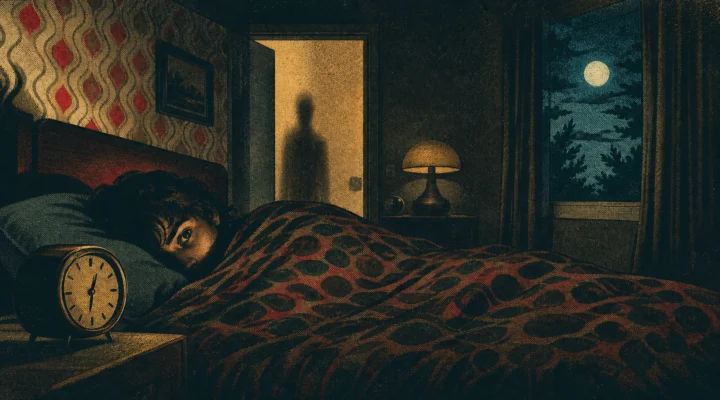
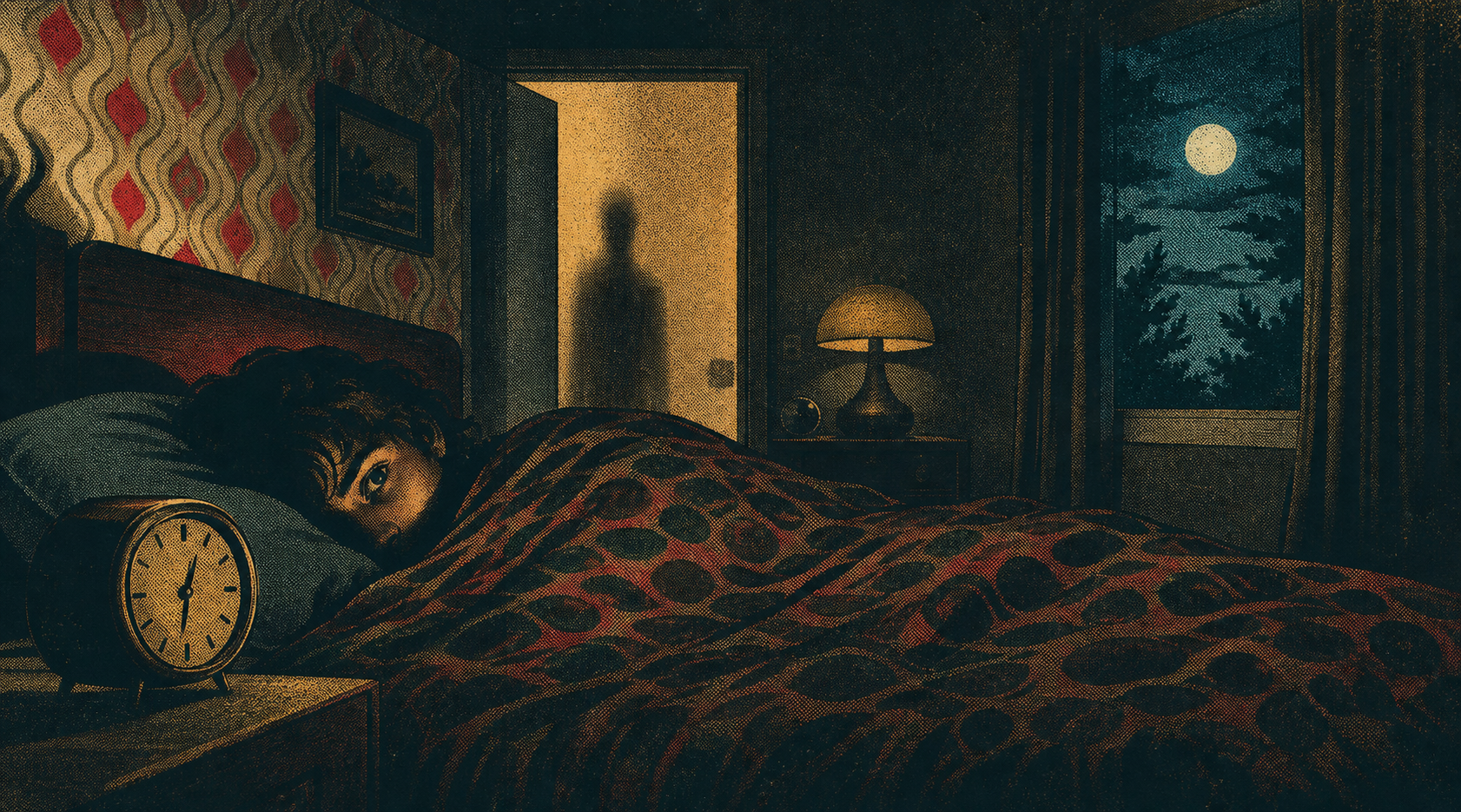
Sleep paralysis sits in one of the most frightening rooms of human experience: the edge between waking and dreaming. A person becomes aware, cannot move, senses a presence and may see a figure, hear a sound or feel pressure on the chest. It can feel external, deliberate and deeply personal.
A neurological explanation does not make the experience trivial. If anything, it explains why the event can feel so convincing. The body is waking while elements of dream physiology and dream imagery have not fully released their grip.
The edge of waking
During normal sleep, the body can enter a state that prevents most dream movement from being acted out. In sleep paralysis, awareness returns before that immobility has lifted. The result can be terrifying: the mind is awake enough to notice the room, while the body does not respond as expected.
The sensed presence is especially powerful. Many people report the feeling that someone is in the room, near the bed or pressing close. Visual experiences can include shadows, figures, faces, animals, intruders, demons or indistinct watchers. The content often borrows from the person’s culture, fears and surroundings.
Culture gives the experience a face
Different communities have named similar experiences in different ways: night visitors, crushing spirits, witches, demons, ghosts, aliens, shadow figures or hostile presences. Those interpretations should not be mocked. They are attempts to explain a state that feels intensely real before a person has medical language for it.
This is why sleep paralysis belongs in a strange archive. It lives at the crossing of body, bedroom, folklore and belief. It can help explain some apparition reports without reducing every ghost story to a sleep event.
How to record a possible episode
- Time of night or morning.
- Sleep position and whether waking was sudden.
- Whether movement or speech was impossible.
- Presence, pressure, sound or visual impressions.
- Stress, sleep loss, illness, alcohol, medication or disrupted routine.
- Whether similar episodes have happened before.
- What cultural or personal interpretation came first.
Interpretation caution
Sleep paralysis should be handled with respect. A person who reports a bedroom apparition may be describing one of the most frightening moments of their life. The responsible response is not ridicule. It is careful separation: what was experienced, what state the body may have been in, what the person believed, and what remains unexplained after the sleep context is considered.
Claim, Context and Cautions
What sleep paralysis is
Sleep paralysis is a state in which a person is mentally awake but physically unable to move. It occurs at the boundary between sleep and waking — most often when falling asleep or in the moments before waking — when the muscle atonia that prevents the body from acting out dreams briefly persists into conscious awareness. The experience typically lasts between a few seconds and several minutes. It is not rare. Estimates suggest that between eight and fifty percent of people will experience at least one episode, with rates higher among people with disrupted sleep schedules, shift workers, and those under sustained psychological stress.
The edge between waking and dreaming
At the boundary between REM sleep and full waking consciousness, the brain does not transition cleanly. Fragments of dream imagery — shapes, sounds, sensations — can persist into the opening seconds of conscious awareness, overlaid on the real visual field of the room. This is called hypnopompic imagery. Its counterpart, hypnagogic imagery, occurs in the opposite direction, as a person is falling asleep. Both are normal neurological events. The difficulty is that they are not experienced as fragments or overlays. They are experienced as things that are actually present in the room. The body cannot move to test the perception, which compounds the terror considerably.
Sensed presence, pressure, immobility and fear
The classic sleep paralysis episode involves three elements beyond immobility: a strong and specific sense that another person or entity is present in the room; a physical sensation of pressure on the chest or throat; and an overwhelming feeling of fear or dread. The sensed presence is not a vague impression — it is a specific, located feeling that something is there, often behind or beside the person, and that it is not neutral in its intentions. The pressure sensation is likely linked to partial awareness of the body's altered breathing pattern during the transition from sleep. Together these elements — presence, pressure, paralysis, fear — produce an experience that is fully convincing while it is happening, even to people who know exactly what sleep paralysis is.
Why it becomes ghost, demon or visitation folklore
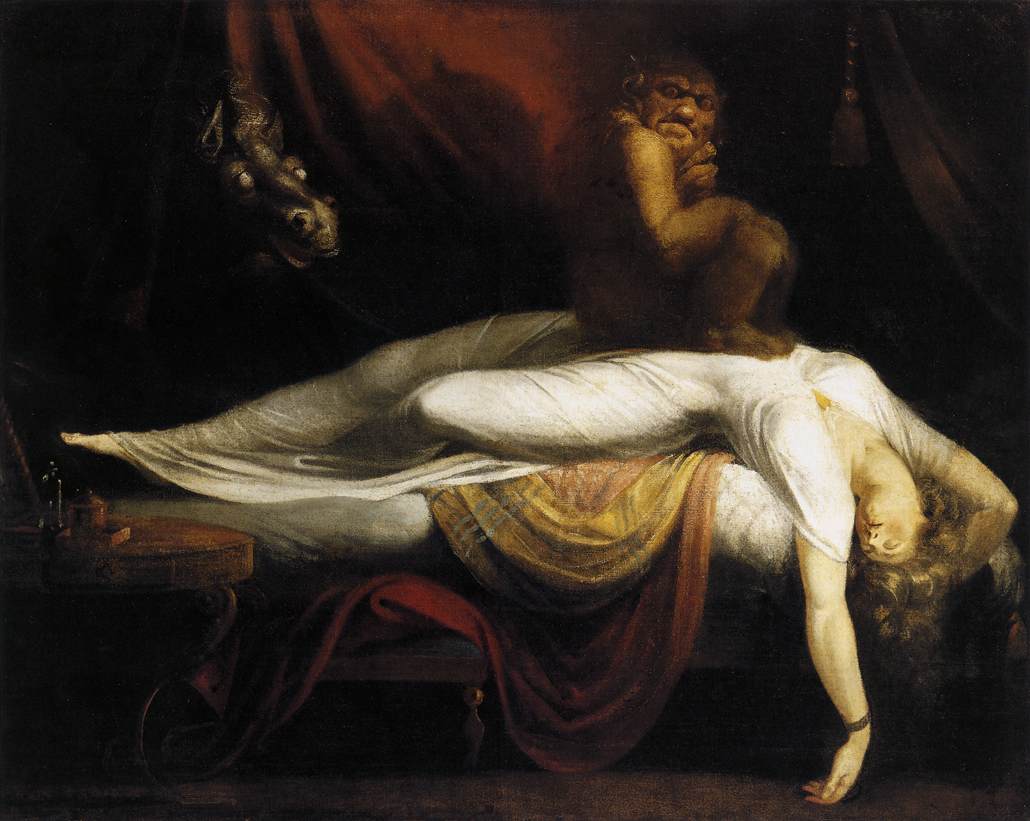
An experience this vivid, this physical, and this frightening demands an explanation. In the absence of a neurological vocabulary, the most available explanation in almost every pre-modern culture was a visiting entity: a ghost, a demon, a spirit, a dead relative, or a local supernatural figure with a specific and named character. The entity theory fits the experience well. Something was felt to be present. The body could not respond. There was pressure, fear and a sense of hostile attention. When these experiences were reported repeatedly within a community, and when the entity description converged across reports, the result was a stable supernatural narrative attached to a specific place, figure, or cultural frame. The experience was real. The entity explanation was the best available model for it.
Cultural interpretation
The cross-cultural record of sleep paralysis is remarkably consistent in structure and remarkably variable in content. The underlying phenomenology — presence, pressure, paralysis, fear — appears across documented traditions from West Africa, North America, Northern Europe, Japan, China and the Caribbean. The entity perceived varies entirely by cultural context: in Newfoundland it is the Old Hag; in Japan, kanashibari; in parts of West Africa, a witch pressing down on the sleeping body. In contemporary Western accounts the figure is often described as a grey shape, a shadow, or a standing intruder — language drawn from modern cultural sources rather than classical folklore. The experience generates the folklore that the experience then uses to interpret itself.
When a normal explanation is enough
For the archive, sleep paralysis is not a disputed phenomenon. It is explained. The neurological mechanism is documented, testable, and consistent with the reported experience in its broad features. What is not fully explained is the specific content of any particular episode: the exact shape of the figure, the precise language of the fear, the details that give each account its individuality. The normal explanation is enough to account for the class of experience. It does not account for why that experience, in that form, at that moment, carries such weight. That gap between the class and the instance is where the archive's interest lies.
How to record an experience without overstating it
If you want to record a sleep paralysis episode — for the archive, for a researcher, or for your own record — the useful information is in the specifics. When did it happen: falling asleep or waking? What time, what position, how long had you slept? What was the quality of the presence: located, directional, embodied, hostile? Was there visual imagery, and if so, what type — human, non-human, formed, shadowy? What did the pressure feel like, and where? Was this a first episode or one of many? The explanation does not require that level of detail. The record does. An account that can be read carefully by someone who was not there is always more useful than one that states what something was rather than what it was like.
Contextual glossary
Terms used in this entry
Definitions are offered as reading aids, not as conclusions about the case.
- Sleep paralysis
- A temporary inability to move while falling asleep or waking, sometimes accompanied by pressure, fear, vivid imagery or a sensed presence. Cultural expectations influence how the episode is interpreted.
- Sensed presence
- The strong impression that another being is nearby despite limited or absent sensory evidence. It can occur in sleep transitions, isolation, stress and some neurological conditions without settling the meaning of an individual experience.
- Apparition
- A reported figure or presence seen without an obvious physical person present. The word describes the experience without deciding whether its cause was environmental, psychological or unknown.
Reference trail
Sources
- NHS: Sleep paralysis (opens in a new tab)Clinical overview of symptoms, causes and when to seek help.
- PMC: Lifetime Prevalence Rates of Sleep Paralysis (opens in a new tab)Peer-reviewed systematic review of prevalence and common experience patterns.
- PMC: Relationships between sleep paralysis and sleep quality (opens in a new tab)Review of sensed presence, chest pressure, fear, REM intrusion and sleep-quality associations.
Case Book
Photographs, Maps and Supporting Images
Supporting images provide documentary, geographic or visual context. Read each caption for its date, source and evidential limits.
Continue researching
Follow the evidence, context and comparisons
Curated connections
Selected editorially for this entry.
A practical guide to separating atmosphere, testimony, memory, environment and possible causes in a reported haunting.
Curated connection · ArticleThe Difference Between Evidence, Testimony and LegendA field guide to three words that often get tangled in mystery research.
Curated connection · Case fileThe Brown Lady of Raynham Hall: A Ghost Photograph That Would Not FadeThe Brown Lady became famous because a single staircase image turned a house tradition into a visual ghost story that critics could never quite put back in the box.
More through shared context
Additional routes based only on existing topics, themes and metadata.
A calm checklist for writing down unusual events before memory, excitement and online feedback reshape them.
Shared theme: Witness & memory · Same country or region · ArticleHow Ordinary Lights Become Extraordinary UFO ReportsAircraft, satellites, planets, drones and atmospheric effects can become strange when context is missing.