Hoaxes, Misidentifications & Media
The Great Moon Hoax and the Machinery of Wonder
In 1835, newspaper readers met moon forests, lunar animals and winged people in a celebrated lesson about media, science and appetite.
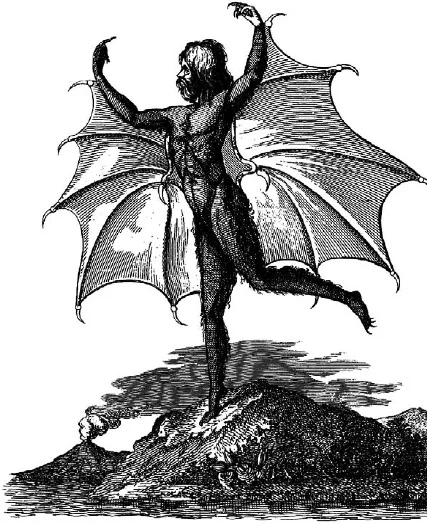
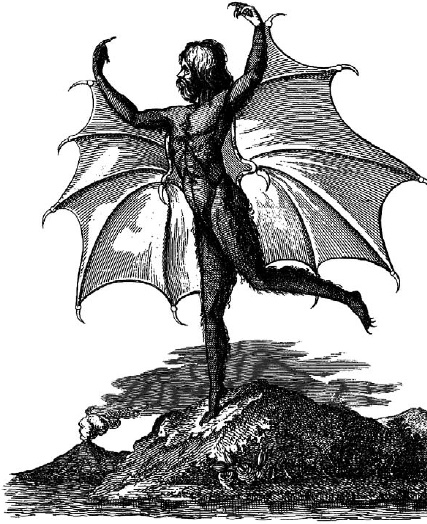
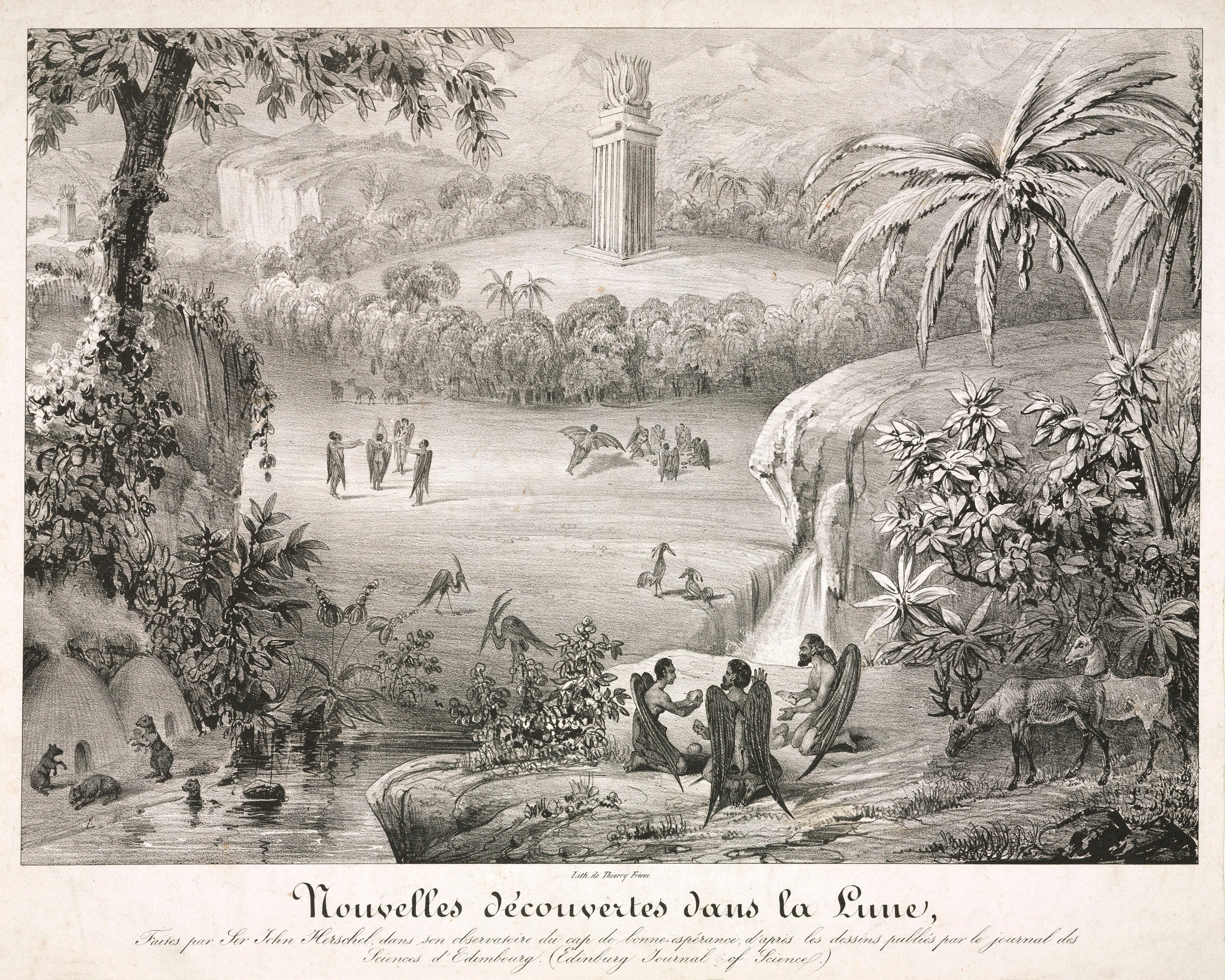
In August 1835, readers of the New York Sun were offered a Moon crowded with beaches, forests, bison-like animals and winged humanoids. The discoveries were invented, but the series understood something real: technical detail can make wonder feel observed.
A scientific costume
The articles claimed to report discoveries by astronomer John Herschel using an immense new telescope at the Cape of Good Hope. Herschel was real and astronomy was rapidly expanding the public imagination. The supposed source, the Edinburgh Journal of Science, sounded authoritative even though the publication trail was false.
The writer, generally identified as Richard Adams Locke, built credibility gradually. Lunar geology and optical explanation prepared readers for plants, animals and finally intelligent beings. Each instalment made the next extravagance feel like one further observation rather than a new invention.
The penny press
The Sun belonged to a changing newspaper market built around low price, street sales and broad readership. Sensational material could increase circulation while the serial format kept the audience returning. Entertainment and information shared the same columns.
Readers did not all respond alike. Some believed, some doubted, and some enjoyed the performance. Later statements that an entire public was fooled flatten this range just as later accounts of media panics often do.
How the source trail fails
The first check is attribution. Herschel did not issue the reports. The claimed journal source did not support them. No independent observatory reproduced the observations. The elaborate telescope description supplied plausibility without a verifiable instrument or data trail.
This is why an old printed page is not self-authenticating. It proves that a claim appeared in print by a date. It does not verify the Moon described inside it. The method in The Role of Newspapers in Spreading Strange Tales follows precisely this distinction.
Why the hoax worked
The story borrowed a trusted name, used a live scientific subject and offered observations in increasing doses. It rewarded curiosity before asking for belief. By the time the winged people appeared, readers had already crossed several plausible-looking steps.
The pattern remains current. A dramatic online claim can borrow an institution’s logo, cite a paper that says something narrower and release cropped evidence in episodes. Correction arrives later and rarely travels with the same imaginative force.
What remains after exposure
The lunar life was fictional. The newspaper series is genuine evidence about science communication, commercial media and nineteenth-century wonder. It also helped develop a form that sits between hoax, satire and speculative fiction.
The Great Moon Hoax deserves to remain in the archive because it does not merely show that people can be deceived. It shows how authority is constructed sentence by sentence, and why an impossible story can become culturally true long after it is factually dead.
Claim, Context and Cautions
Claim
A newspaper series claimed that John Herschel's telescope had revealed lunar landscapes, animals and winged humanoids.
What is solid?
The New York Sun published the serial in August 1835, using Herschel's real reputation and a fabricated scientific source trail.
What remains disputed?
The degree and manner of public belief are difficult to quantify; readers included believers, sceptics and people enjoying the performance.
Possible explanations
The episode was a deliberate literary and commercial newspaper hoax structured through serial escalation and borrowed scientific authority.
Sceptical view
Attribution, publication history and independent observation fail immediately. Technical language cannot substitute for a verifiable source.
Why it still matters
The series is an early, unusually complete lesson in how media format and audience desire can make invented science travel.
Contextual glossary
Terms used in this entry
Definitions are offered as reading aids, not as conclusions about the case.
- Hoax
- A deliberate attempt to make false evidence or a false story appear genuine. A hoax can still become culturally important, but its later influence should not be confused with the original claim.
Reference trail
Sources
- Library of Congress: Belief, Legend, and the Great Moon Hoax (opens in a new tab)Folklife analysis of scientific authority, belief and the serial newspaper event.
- Encyclopaedia Britannica: The Great Moon Hoax of 1835 (opens in a new tab)Historical overview of the series, authorship and newspaper setting.
- Wikimedia Commons: Great Moon Hoax illustration (opens in a new tab)Public-domain image record used by this case.
Case Book
Photographs, Maps and Supporting Images
Supporting images provide documentary, geographic or visual context. Read each caption for its date, source and evidential limits.
Continue researching
Follow the evidence, context and comparisons
Curated connections
Selected editorially for this entry.
Old newspapers preserved remarkable local reports, but they also shaped them for appetite, humour and alarm.
Curated connection · ArticleThe Difference Between Evidence, Testimony and LegendA field guide to three words that often get tangled in mystery research.
Curated connection · Case fileThe War of the Worlds Panic: Radio, Rumour and the Shape of FearA classic media panic case showing how a drama, late tuning and newspaper repetition turned a radio play into a durable legend.
More through shared context
Additional routes based only on existing topics, themes and metadata.
Claims made after the Lutz family’s 1975 stay became a bestselling book and film franchise. The murders in the house were real; evidence for the subsequent haunting is not reliable.
Same primary topic · Shared theme: Media & rumour · Case fileThe Mad Gasser of Mattoon: Odours, Fear and a Wartime TownThe Mad Gasser episode combined sincere symptoms, ordinary odours, rumour and alarming press coverage. A coordinated chemical assailant was never established.