Hoaxes, Misidentifications & Media
The War of the Worlds Panic: Radio, Rumour and the Shape of Fear
A classic media panic case showing how a drama, late tuning and newspaper repetition turned a radio play into a durable legend.
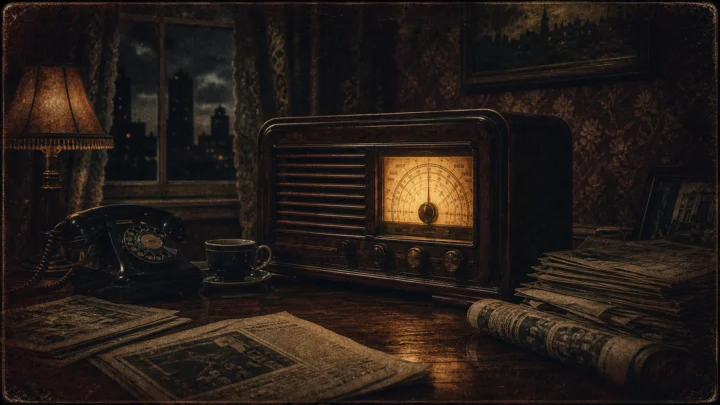
The 1938 War of the Worlds broadcast is often remembered as a night when radio proved it could frighten a nation. The better version is more interesting. It shows how format, timing, trust, newspapers and later retelling can turn a broadcast into a legend about broadcasting.
On October 30, 1938, Orson Welles and the Mercury Theatre on the Air presented a radio adaptation of H. G. Wells’s The War of the Worlds. The programme used a dramatic news-bulletin style for parts of the story, interrupting ordinary-sounding music and announcements with reports of strange events. Heard from the beginning, it was a drama. Heard in fragments, especially by someone tuning in late, it could sound much more unstable.
Sequence of events
The broadcast aired on CBS on the evening before Halloween. Its opening identified it as a Mercury Theatre production, but the drama soon adopted the rhythm of urgent reports. In the story, astronomical observations gave way to a landing, then to escalating reports of destruction. That structure mattered because radio news already had a public authority. The performance borrowed the habits of information and used them as theatre.
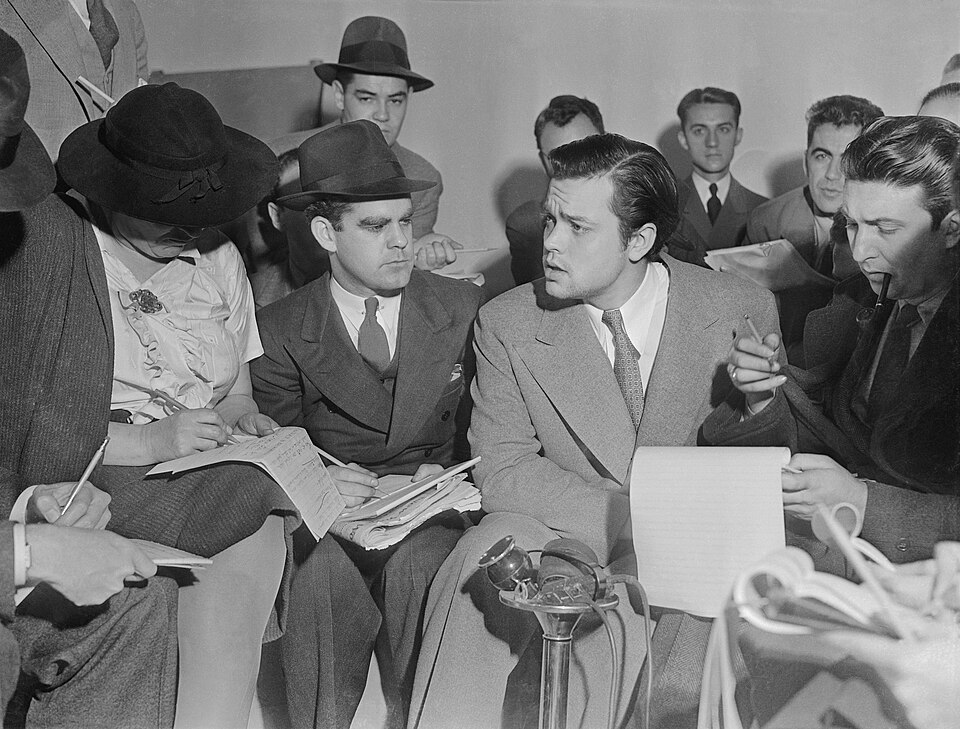
Some listeners were alarmed. Some contacted police, newspapers or neighbours. Some later accounts describe people fleeing, praying, calling family or preparing for disaster. Newspapers then had their own role in enlarging the story. Print media had reasons to warn readers about the power of radio, a rival medium, and the most dramatic versions of the panic were easy to repeat.
The legend hardened quickly. Welles became attached to the idea of the broadcast as a media earthquake. The episode became a classroom example, a journalism anecdote and a warning about mass credulity. Over time, scholars and media historians have pushed back against the simplest version, arguing that the panic was real in places but often exaggerated in scale.
What is solid?
The broadcast happened, its format was unusually persuasive, and some listeners did mistake all or part of it for real news. The Mercury Theatre style, Welles’s performance and the news-bulletin framing are all central to the case. It is also solid that newspapers and later commentary helped make the panic famous.
The case is not simply about foolish listeners. Radio was an intimate medium. It entered kitchens and parlours with voices that sounded official, immediate and shared. In a tense late-1930s world, reports of catastrophe did not arrive in an emotional vacuum.
What remains disputed?
The disputed question is scale. How many listeners were genuinely frightened? How many merely heard about the panic afterward? How many newspaper accounts selected the most dramatic incidents and made them stand for the whole country? The answer matters because the legend of the panic can itself become a misleading media story.
There is also a difference between confusion and mass hysteria. A listener briefly wondering whether a bulletin is real is not the same as a city in terror. Responsible accounts should keep those degrees separate.
Why it still matters
The War of the Worlds panic remains useful because it is a case study in media folklore. It shows how a story can travel in layers: first as performance, then as public reaction, then as newspaper narrative, then as cultural shorthand. Every generation gets a new technology that supposedly makes people easier to fool. This case asks a better question: what conditions make a story feel authoritative before it has been checked?
Source note
Useful source trails include the Library of Congress discussion of the broadcast, Smithsonian Magazine’s historical overview, recordings and scripts where available, and later media-history scholarship on how the scale of the panic was reported and revised.
Claim, Context and Cautions
Claim
A 1938 radio drama was widely believed by some listeners to be a real news bulletin about an invasion.
Background
The broadcast sat inside a larger media environment where newspapers, radio schedules and audience habits all mattered.
Reported events
Listeners who tuned in late, missed the introduction or heard fragments through interruption could easily misread the format. Later reports and newspaper coverage amplified the sense of universal panic.
Possible explanations
Selective memory, newspaper rivalry, dramatization and uneven audience attention all help explain why the story outgrew the event.
Sceptical view
The panic was real for some people, but the scale was often exaggerated after the fact.
Why it still interests people
It remains useful because it shows how a modern media event becomes a cultural myth almost immediately.
Contextual glossary
Terms used in this entry
Definitions are offered as reading aids, not as conclusions about the case.
- Rumour
- Unverified information circulated between people because it appears relevant or urgent. Repetition can make a rumour familiar without adding an independent source.
- Medium
- A person who claims to communicate with the dead or other non-ordinary agents. Historical study distinguishes mental mediumship from physical performances involving objects, sounds or material effects.
Reference trail
Sources
- Smithsonian Magazine: The Infamous War of the Worlds Broadcast Was a Magnificent Fluke (opens in a new tab)Production history and contemporary reaction to the Mercury Theatre broadcast.
- National Archives: “Jitterbugs” and “Crack-pots” (opens in a new tab)Archival history of the broadcast, official response and early panic research.
- National Archives: Radio Broadcast of a “Catastrophe” (opens in a new tab)A contemporary FCC letter and context for separating documented reaction from later nationwide-panic claims.
Case Book
Photographs, Maps and Supporting Images
Supporting images provide documentary, geographic or visual context. Read each caption for its date, source and evidential limits.
Continue researching
Follow the evidence, context and comparisons
Curated connections
Selected editorially for this entry.
Old newspapers preserved remarkable local reports, but they also shaped them for appetite, humour and alarm.
Curated connection · Case fileThe Great Moon Hoax and the Machinery of WonderIn 1835, newspaper readers met moon forests, lunar animals and winged people in a celebrated lesson about media, science and appetite.
Curated connection · ArticleUrban Legends Before the InternetChain letters, photocopies, local radio and schoolyard retellings show that viral folklore did not need a screen.
More through shared context
Additional routes based only on existing topics, themes and metadata.
The Mad Gasser episode combined sincere symptoms, ordinary odours, rumour and alarming press coverage. A coordinated chemical assailant was never established.
Same primary topic · Shared theme: Media & rumour · Case fileThe Amityville Horror: A Haunting Built for PrintClaims made after the Lutz family’s 1975 stay became a bestselling book and film franchise. The murders in the house were real; evidence for the subsequent haunting is not reliable.