Hoaxes, Misidentifications & Media
The Mad Gasser of Mattoon: Odours, Fear and a Wartime Town
The Mad Gasser episode combined sincere symptoms, ordinary odours, rumour and alarming press coverage. A coordinated chemical assailant was never established.
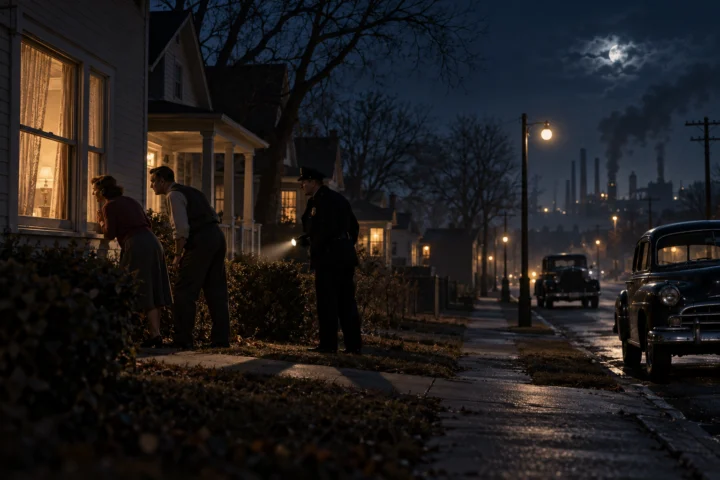
In early September 1944, residents of Mattoon, Illinois, began reporting a prowler who supposedly released a sweet-smelling gas through bedroom windows. Victims described nausea, weakness, numbness or temporary inability to move. Police received repeated calls, armed residents watched the streets, and newspapers named a “mad anesthetist”.
No suspect was caught, no delivery device was recovered and no consistent chemical was identified. Descriptions of the prowler were sparse and sometimes second-hand. Mattoon also had industrial and household odours capable of becoming threatening once the public had been told what a gas attack should smell like.
A 1945 field study classified the episode as mass hysteria, a period term now better approached through collective anxiety and mass psychogenic illness. That does not mean witnesses invented symptoms. Expectation, fear and hyperventilation can produce real distress, while ordinary smells or isolated prowlers may have acted as triggers.
Mattoon can be read with the media feedback examined in the War of the Worlds panic, the archive’s history of newspaper amplification, and its field-recording guide.
Claim, Context and Cautions
Reports become a pattern
A small number of earlier odour incidents were retrospectively linked to the September wave. Once the local paper described a gas prowler, new callers could compare weakness, smells and shadows with a shared model. Reports clustered over roughly two weeks.
Similarity after publicity is not the same as independence. Each report still needs its own time, setting, ventilation, medical findings and witness chain.
What investigators did not find
Police and state authorities searched for an attacker but recovered no sprayer, gas residue or physical trace connecting the incidents. Witness descriptions did not converge on a securely identified person.
Absence of evidence cannot prove that nobody ever approached a house. It weighs strongly against one organised attacker carrying out the entire public narrative.
Symptoms without a secret weapon
Anxiety can produce dizziness, tingling, weakness, breathlessness and a feeling of paralysis. Odours from factories, cleaning products, plants or animals can supply a real sensation around which fear develops. Wartime concern about chemical attack raised the stakes.
This model respects the reported distress while separating it from the proposed cause.
How the wave ended
Public officials and the newspaper increasingly described the affair as imagination or hysteria, and the intensive reporting stopped. The apparent attacks then ceased rather than yielding a captured gasser.
The best-supported explanation is a social episode built from ambiguous stimuli and collective anxiety. A few initiating events remain unrecoverable, but they do not require a city-wide chemical criminal.
A diagnosis that also needs caution
Donald Johnson’s 1945 study is indispensable because it was close in time and compared the sequence of reports with press attention. Its language and social assumptions are dated, however, and later scholars have questioned whether it dismissed witnesses too readily. “Mass hysteria” can become a label that ends investigation instead of explaining a mechanism.
A stronger account separates several layers: reported odours, physical symptoms, sightings of shadows or people, newspaper framing, and the absence of forensic confirmation. Industrial emissions may explain some smells; anxiety may explain or intensify some symptoms; pranksters or ordinary prowlers may account for isolated movement. These possibilities can coexist.
What the record does not support is the single figure created by headlines—a technically equipped attacker repeatedly paralysing households across Mattoon. The episode is considered explained at that larger level while remaining incomplete at the level of every caller’s experience.
Contextual glossary
Terms used in this entry
Definitions are offered as reading aids, not as conclusions about the case.
- Mass psychogenic illness
- The spread of real symptoms through a group without an identified physical cause sufficient to explain the pattern. Stress, observation and social communication can influence how symptoms travel.
- Rumour
- Unverified information circulated between people because it appears relevant or urgent. Repetition can make a rumour familiar without adding an independent source.
Reference trail
Sources
- University of Illinois Library, “The Mad Gasser of Mattoon” (opens in a new tab)University newspaper-history account linking the reports to contemporary Illinois press coverage.
- Eastern Illinois University, Mattoon local-history project (opens in a new tab)Local archival project preserving chronology, locations and newspaper material; used as a record guide rather than a verdict.
- Johnson, “The Phantom Anesthetist of Mattoon” (opens in a new tab)Contemporary peer-reviewed field study proposing mass hysteria and documenting the relationship between reports and publicity.
Case Book
Photographs, Maps and Supporting Images
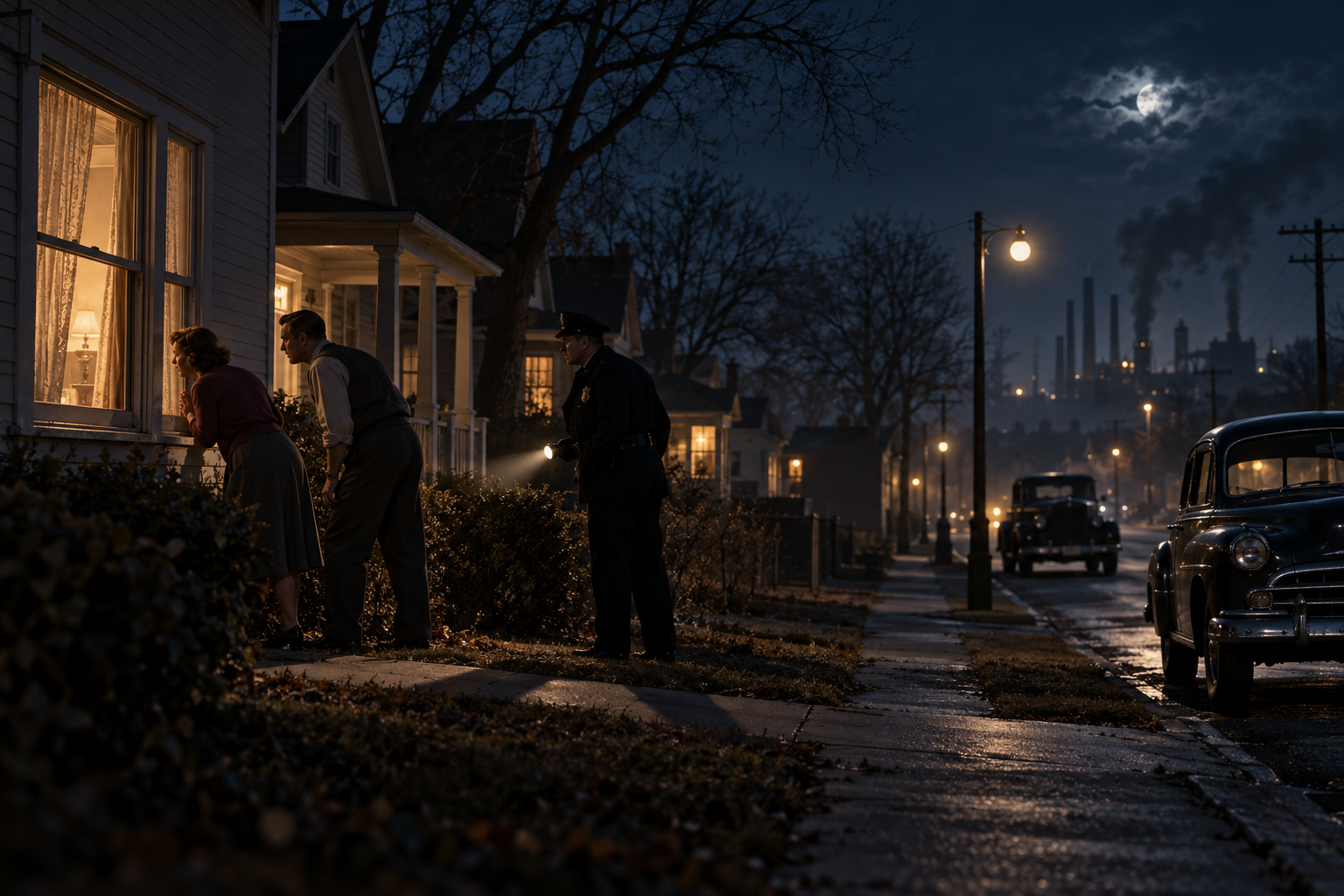
Supporting images provide documentary, geographic or visual context. Read each caption for its date, source and evidential limits.

Continue researching
Follow the evidence, context and comparisons
Curated connections
Selected editorially for this entry.
A classic media panic case showing how a drama, late tuning and newspaper repetition turned a radio play into a durable legend.
Curated connection · ArticleThe Role of Newspapers in Spreading Strange TalesOld newspapers preserved remarkable local reports, but they also shaped them for appetite, humour and alarm.
Curated connection · ArticleA Field Guide for Recording Strange Experiences ResponsiblyA calm checklist for writing down unusual events before memory, excitement and online feedback reshape them.
More through shared context
Additional routes based only on existing topics, themes and metadata.
Claims made after the Lutz family’s 1975 stay became a bestselling book and film franchise. The murders in the house were real; evidence for the subsequent haunting is not reliable.
Same primary topic · Shared theme: Media & rumour · Case fileThe Great Moon Hoax and the Machinery of WonderIn 1835, newspaper readers met moon forests, lunar animals and winged people in a celebrated lesson about media, science and appetite.