Disappearances & Unresolved Identities
USS Cyclops: The Collier That Never Reached Baltimore
The disappearance of USS Cyclops is a major United States Navy loss without a recovered wreck. Structural, loading, weather and wartime explanations remain constrained by missing evidence.
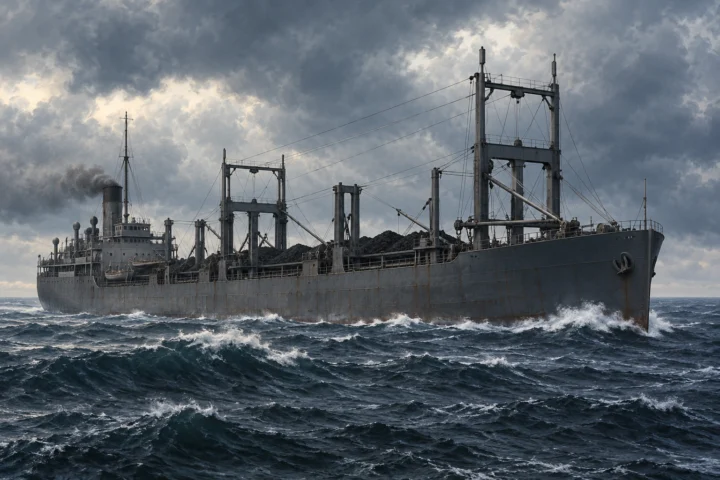
USS Cyclops, a 165-metre United States Navy collier, departed Barbados for Baltimore on 4 March 1918 carrying manganese ore. There were 309 people aboard. The ship did not arrive, and no verified distress call or debris field established when or where it was lost.
The disappearance occurred during the First World War, so enemy action was examined. German records disclosed after the war did not provide a claim or submarine account that matched the loss. The absence of wreckage also encouraged later placement of the ship inside the Bermuda Triangle legend, although that label was created decades afterwards and supplies no mechanism.
Cyclops was heavily laden, had reported engine difficulties, and belonged to a class later affected by structural concerns. Weather, cargo behaviour, machinery failure and hull weakness are therefore serious possibilities. Without a wreck, each remains a reconstruction rather than a demonstrated sequence.
Its evidential shape resembles the empty Mary Celeste, the unresolved fate of the Carroll A. Deering, and the record gaps surrounding the Flannan Isles keepers.
Claim, Context and Cautions
The last documented voyage
The collier sailed from Rio de Janeiro with manganese ore, stopped at Barbados and continued north. Its commanding officer, George Worley, had altered the planned route and reported a disabled cylinder, but the vessel was not treated as being in immediate danger when it left port.
Later sightings and radio stories have circulated, yet none supplies a secure final position. The documentary trail effectively ends after Barbados.
A difficult cargo in a large ship
Manganese ore is dense. Loading distribution, shifting material and water entering a hold could affect stability and stress a hull, especially in heavy seas. The ship's high cargo capacity did not remove the need for careful trim and structural integrity.
These factors make a rapid foundering plausible, but plausible is not proven. No survey of a recovered hull has identified a failure point.
War, weather and machinery
A German attack was an obvious wartime suspicion. Surviving German naval records have not confirmed it, and no distress message described an enemy. Mechanical trouble and rough weather require fewer hidden actors but still lack a dated chain of events.
The loss may have been sudden enough to prevent a signal. That inference explains silence; it does not choose among causes.
The sister-ship warning
Two sister ships, <em>Proteus</em> and <em>Nereus</em>, disappeared in 1941 while carrying bauxite. Their losses renewed questions about design, ageing, cargo and sea conditions. Similarity is useful engineering context but not direct evidence about <em>Cyclops</em>.
A class pattern can guide a search without establishing that all three ships failed identically.
Outside the triangle
The Bermuda Triangle framing adds a geographic myth after the fact. Ships and aircraft disappear for traceable reasons in heavily travelled waters, and a boundary drawn around selected losses does not create a causal force.
USS <em>Cyclops</em> remains genuinely unresolved because its wreck and final messages are absent. Its mystery is maritime and evidential, not evidence for a supernatural region.
Contextual glossary
Terms used in this entry
Definitions are offered as reading aids, not as conclusions about the case.
- Reconstruction
- A later model, image or account made to represent an event from surviving information. It can clarify a hypothesis but should remain visibly separate from contemporary evidence.
Reference trail
Sources
- U.S. National Archives Catalog, USS Cyclops records search (opens in a new tab)Federal catalogue route to photographs and records associated with the ship and its service.
- U.S. Naval Institute, “What Sank the USS Cyclops?” (opens in a new tab)Naval-history analysis weighing cargo, structural, mechanical, weather and wartime hypotheses.
- History, “The Mysterious Disappearance of the USS Cyclops” (opens in a new tab)Secondary chronology used for the voyage, complement and later Bermuda Triangle association.
Case Book
Photographs, Maps and Supporting Images
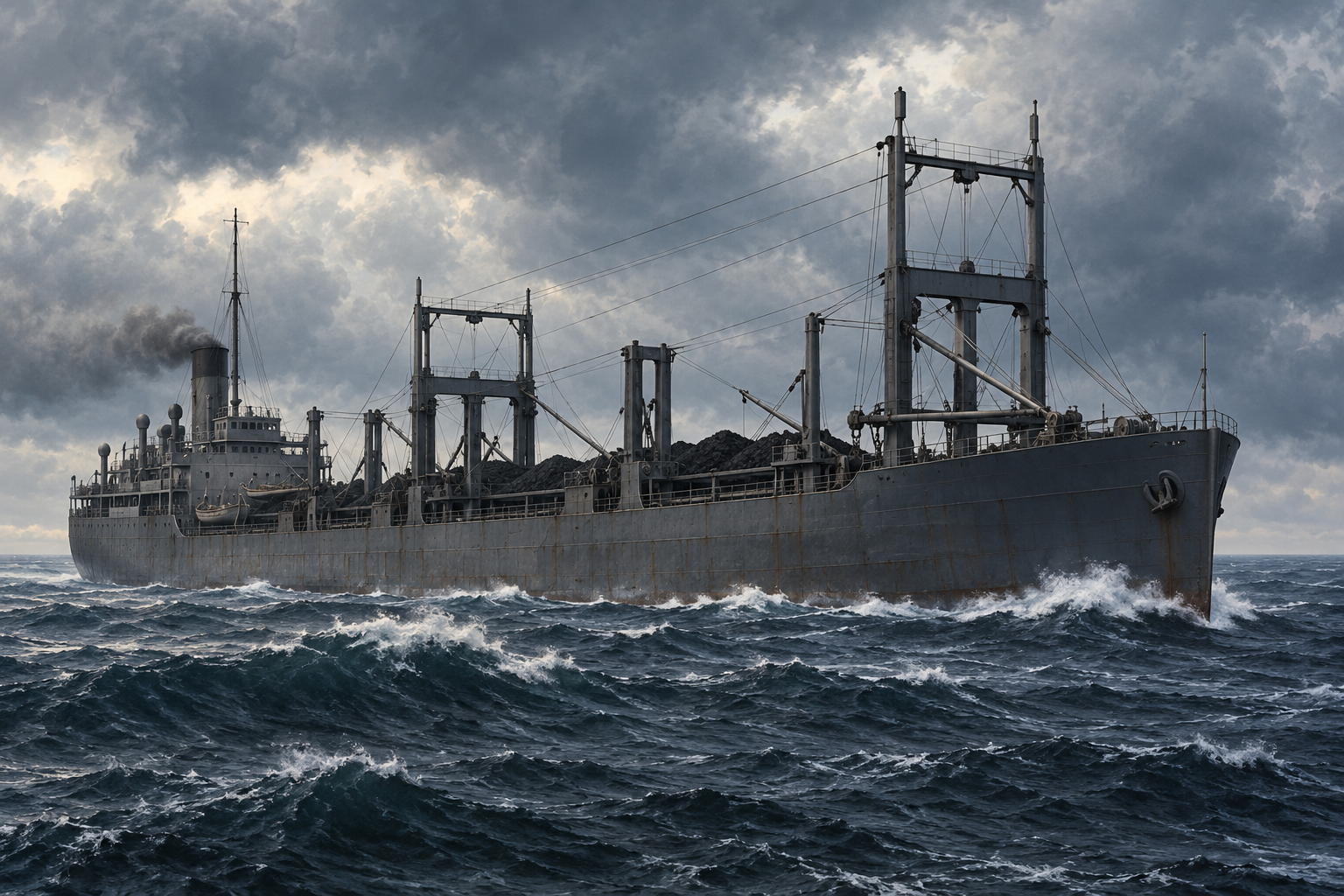
Supporting images provide documentary, geographic or visual context. Read each caption for its date, source and evidential limits.

Continue researching
Follow the evidence, context and comparisons
Curated connections
Selected editorially for this entry.
The famous 1872 maritime mystery is less a ghost story than a stubborn problem of evidence, weather, cargo and missing people.
Curated connection · Case fileThe Carroll A. Deering: An Empty Schooner on Diamond ShoalsThe Carroll A. Deering was found abandoned on Diamond Shoals in January 1921. Missing boats, papers and crew suggested an organised departure, but its cause remains unknown.
Curated connection · Case fileThe Flannan Isles Lighthouse Keepers: A Vanishing at the Edge of WeatherThree lighthouse keepers disappeared from Eilean Mor in 1900, leaving a mystery where official records point toward sea, weather and working risk rather than fantasy.
More through shared context
Additional routes based only on existing topics, themes and metadata.
Joyita’s seaworthiness problems and failed communications explain how an emergency could develop. The decision to abandon a buoyant vessel, and what happened afterward, remain unresolved.
Same primary topic · Shared theme: Maritime · Case fileThe Franklin Expedition: Wrecks, Testimony and a Fatal RetreatThe Franklin expedition was destroyed by a compound Arctic disaster rather than a single mysterious event. Inuit knowledge and archaeology have recovered its ships, while the exact movements and deaths of the crews remain incomplete.