Historical Mysteries
The Dancing Plague of 1518
In Strasbourg, reports of compulsive dancing became one of history's strangest examples of body, belief, stress and record colliding.
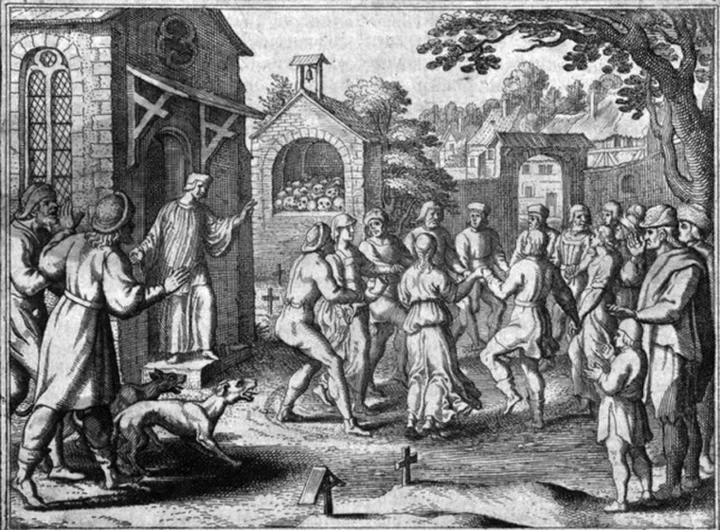
In the summer of 1518, Strasbourg authorities confronted a public disorder that did not fit an ordinary category. People were dancing unwillingly or compulsively, and the city’s first response may have intensified the very behaviour it was meant to cure.
The outbreak in the record
Chronicles and municipal material describe a woman, commonly called Frau Troffea in later accounts, beginning to dance in a street in July. Others joined. The episode was not simply a festival: the movement was represented as distressing, difficult to stop and serious enough to demand official action.
Modern retellings often state an exact crowd of 400 and a daily death toll. Those numbers are less secure than the existence of the outbreak. Contemporary and later sources do not agree on scale, duration or fatalities, and the most dramatic totals should be presented as reported estimates rather than a census.
When treatment follows the theory
Local medical opinion reportedly attributed the problem to overheated blood and advised that sufferers should continue dancing. Space and musicians were provided. If movement was being shaped by expectation and observation, concentrating dancers and giving the behaviour a public rhythm could have helped it spread.
The civic response later changed. Dancing was restricted and sufferers were taken toward a shrine associated with St Vitus. In the religious world of the participants, a saint’s curse and a saint’s cure formed an intelligible explanation. The ritual may also have changed setting, expectation and group behaviour.
Ergot, illness and stress
Ergot poisoning is frequently offered as a neat material cause because contaminated rye can produce convulsions and hallucinations. It does not comfortably explain prolonged, coordinated dancing across a growing social group, and no direct evidence connects a contaminated food supply to the Strasbourg episode.
Historian John Waller argues for a stress-related psychogenic outbreak shaped by famine, disease, hardship and belief in St Vitus. This explanation treats symptoms as real rather than performed, while recognising that distress can travel through a community without an infectious pathogen.
Other historians caution against forcing an early modern event into one modern diagnostic label. Religious practice, medical categories, civic policy and later storytelling all affect what the records call dancing. The case may preserve several kinds of behaviour under one name.
What is solid?
A substantial dancing outbreak occurred in Strasbourg in 1518 and prompted municipal and religious responses. It belongs to a wider European history of choreomania rather than appearing as an isolated internet legend.
What remains uncertain?
The number involved, the exact duration, whether and how many people died, and the clinical experience of individual dancers cannot be established precisely. Even the familiar name of the first dancer depends on how later reconstructions read the sources.
Why it still matters
The episode is useful because it resists a choice between ‘real illness’ and ‘mere belief.’ Bodies, expectations and institutions can interact. Like sleep paralysis, the experience can be genuine while the explanation supplied by a culture changes what it means and how people respond.
A responsible account keeps the well-documented core and marks the uncertain numbers. Strasbourg is strange enough without turning every later detail into a contemporary fact.
Claim, Context and Cautions
Claim
A large group in Strasbourg danced compulsively during the summer of 1518, with later accounts describing exhaustion, injury and deaths.
What is solid?
Chronicles and civic material support a real outbreak and official attempts to manage it, first through continued dancing and later through restriction and religious treatment.
What remains uncertain?
Exact participant numbers, duration, fatalities and individual symptoms vary across sources and cannot be recovered as a precise clinical dataset.
Possible explanations
A stress-related psychogenic outbreak shaped by hardship, group observation and religious expectation is stronger than the popular ergot theory, though modern labels remain imperfect.
Sceptical view
The event is historically grounded, but later numerical certainty and dramatic death claims should not be repeated without source qualification.
Why it still matters
Strasbourg shows that real bodily distress can be influenced by shared expectation and by the institutions attempting to explain and treat it.
Contextual glossary
Terms used in this entry
Definitions are offered as reading aids, not as conclusions about the case.
- Sleep paralysis
- A temporary inability to move while falling asleep or waking, sometimes accompanied by pressure, fear, vivid imagery or a sensed presence. Cultural expectations influence how the episode is interpreted.
- Ritual
- A repeated, structured action carrying social, religious or symbolic meaning. Similar-looking actions can have very different meanings, so local and historical context is essential.
Reference trail
Sources
- John Waller: In a spin, the mysterious dancing epidemic of 1518 (opens in a new tab)Peer-reviewed historical analysis using contemporary chronicles and Strasbourg archival material.
- Encyclopaedia Britannica: Dancing plague of 1518 (opens in a new tab)Reference chronology and overview of the main explanatory theories.
- Heidelberg University repository: La danse de 1518 a l'epreuve des sources (opens in a new tab)Recent source-critical scholarship on how the Strasbourg episode has been reconstructed.
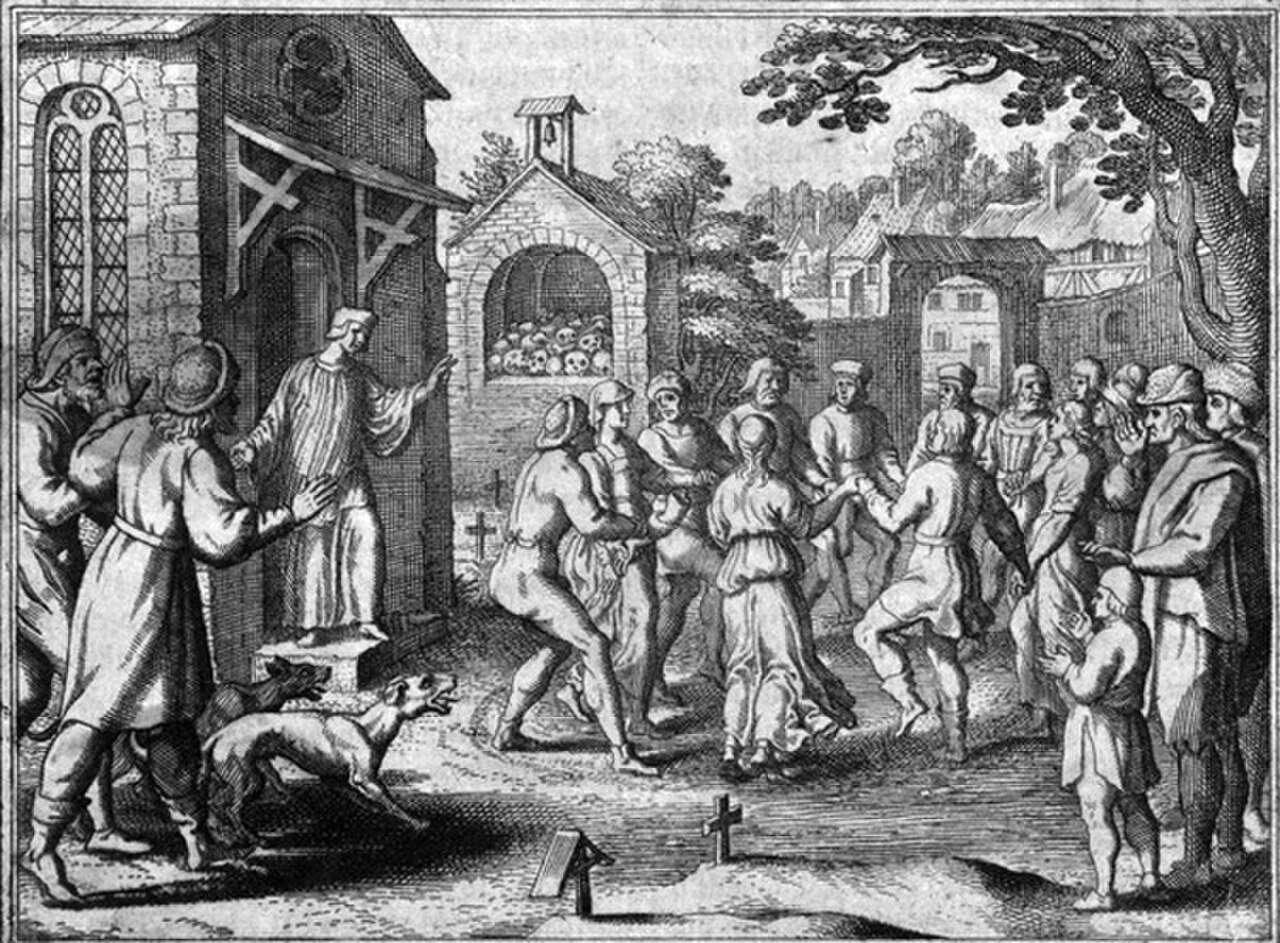
- Wikimedia Commons: Dancing plague illustration (opens in a new tab)Public-domain image record used by the case.
Case Book
Photographs, Maps and Supporting Images
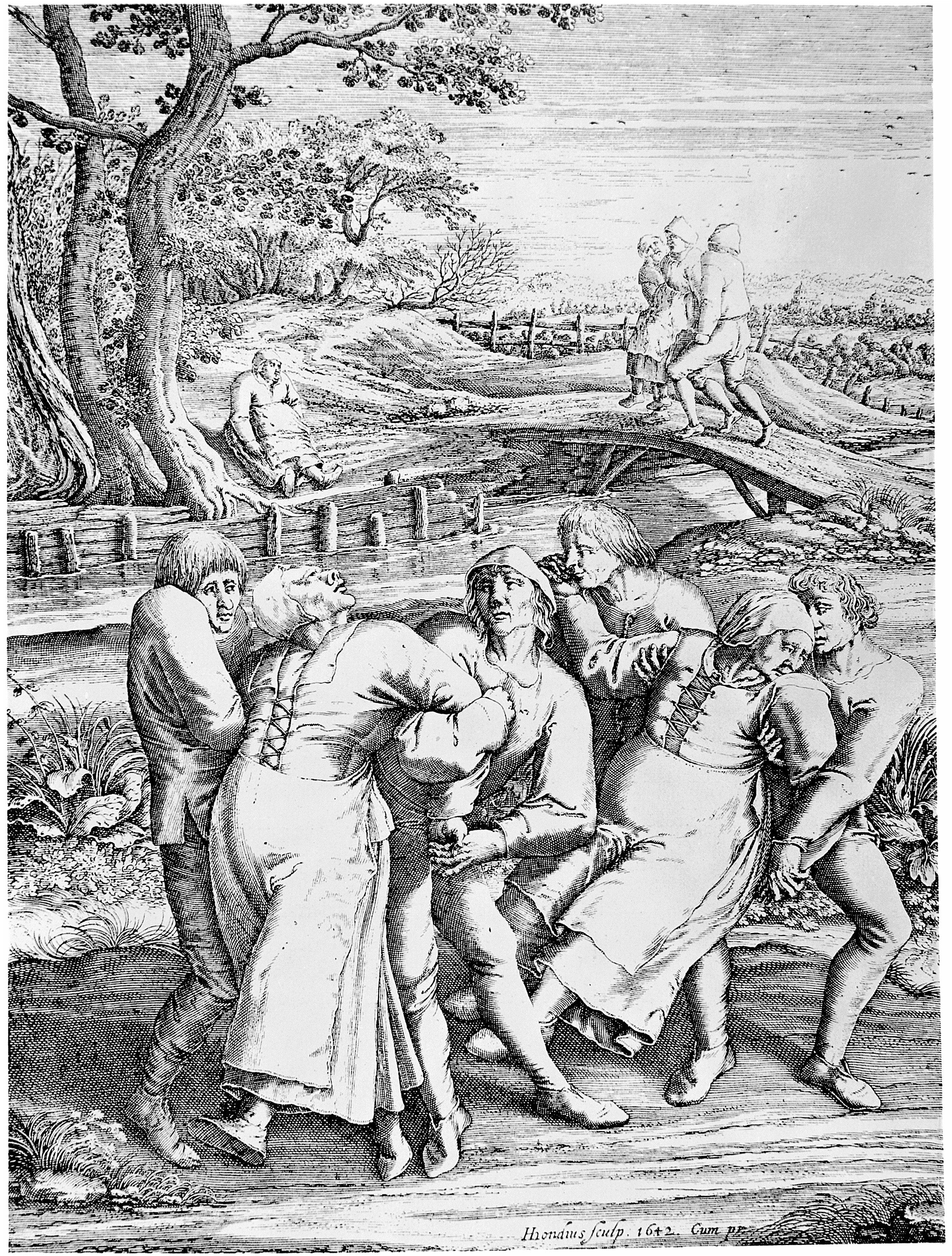
Supporting images provide documentary, geographic or visual context. Read each caption for its date, source and evidential limits.
Continue researching
Follow the evidence, context and comparisons
Curated connections
Selected editorially for this entry.
A terrifying human experience sits at the crossroads of neurology, folklore, bedroom architecture and belief.
Curated connection · ArticleThe Difference Between Evidence, Testimony and LegendA field guide to three words that often get tangled in mystery research.
Curated connection · Case fileSalem and Spectral Evidence: When Fear Became ProcedureThe Salem witch trials remain a severe lesson in how fear, theology, testimony and legal process can combine into a lethal accusation system.