Historical Mysteries
Salem and Spectral Evidence: When Fear Became Procedure
The Salem witch trials remain a severe lesson in how fear, theology, testimony and legal process can combine into a lethal accusation system.
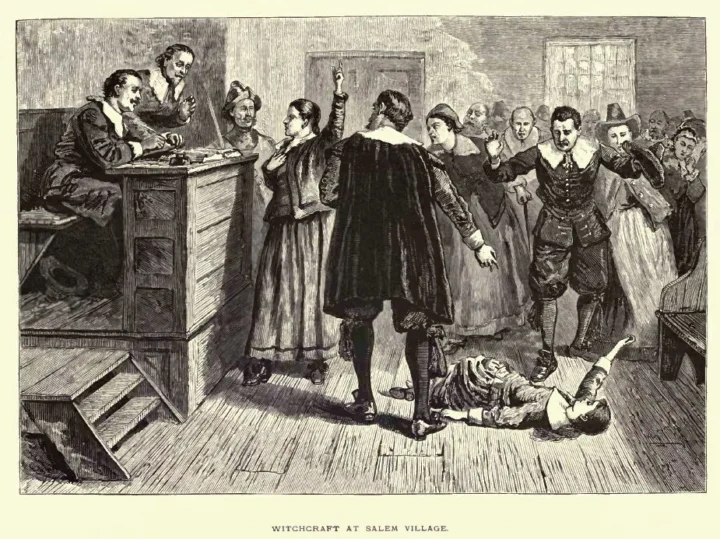
The Salem witch trials are not frightening because a community briefly believed an old superstition. They are frightening because accusation acquired procedure: complaints, warrants, examinations, confessions, property, imprisonment and execution turned claims of invisible harm into public power.
A community under pressure
The crisis began in early 1692 in Salem Village within a colonial society shaped by religious conflict, local faction, war, displacement and fear of spiritual attack. When young people in the household of minister Samuel Parris experienced fits and unusual behaviour, witchcraft became one available explanation.
Accusations first named Tituba, Sarah Good and Sarah Osborne. The cases expanded rapidly. Social standing offered no complete protection, and testimony drew neighbours and families into an enlarging network.
Spectral evidence
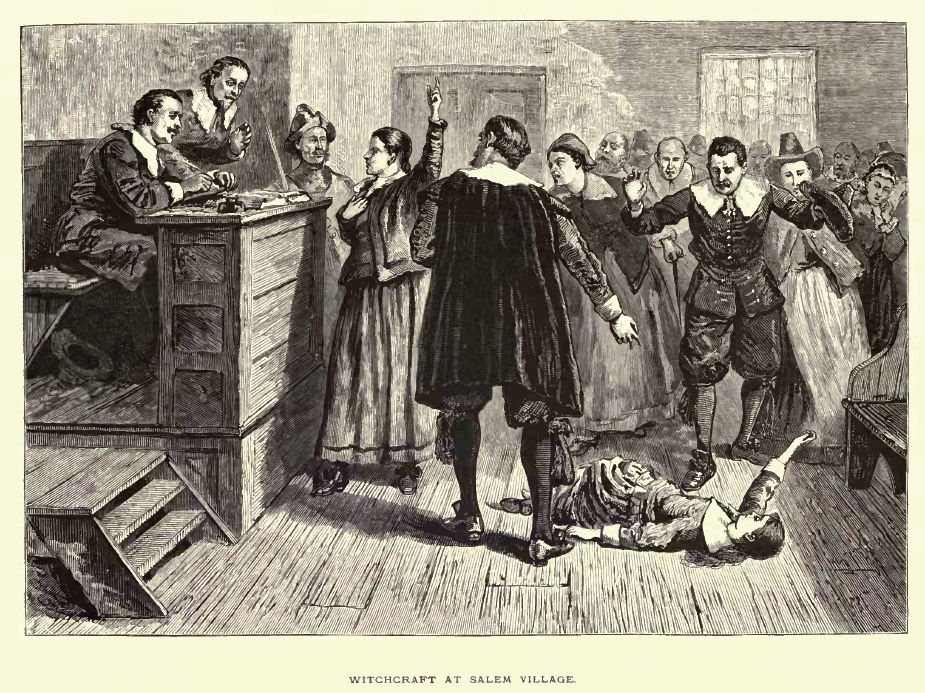
Accusers said the spectre or shape of a person tormented them even while the accused was physically elsewhere. Such claims could be considered in court because some authorities believed the Devil might use a person’s shape only with that person’s consent.
The evidential problem is severe. An invisible act cannot be independently inspected, and the accused cannot establish an alibi against a spectre. Behaviour in the courtroom could then be interpreted within the same system: an accuser’s fit confirmed the presence of unseen harm.
Confession and escalation
Pressure distorted incentives. Confession and the naming of others could postpone death, while maintaining innocence did not guarantee safety. Once the process rewarded stories that confirmed a conspiracy, each confession could produce new suspects.
The court also heard ordinary grievances, reputation evidence and accounts of illness or livestock trouble through a witchcraft framework. Events that once had separate causes became parts of one explanation.
Executions and reversal
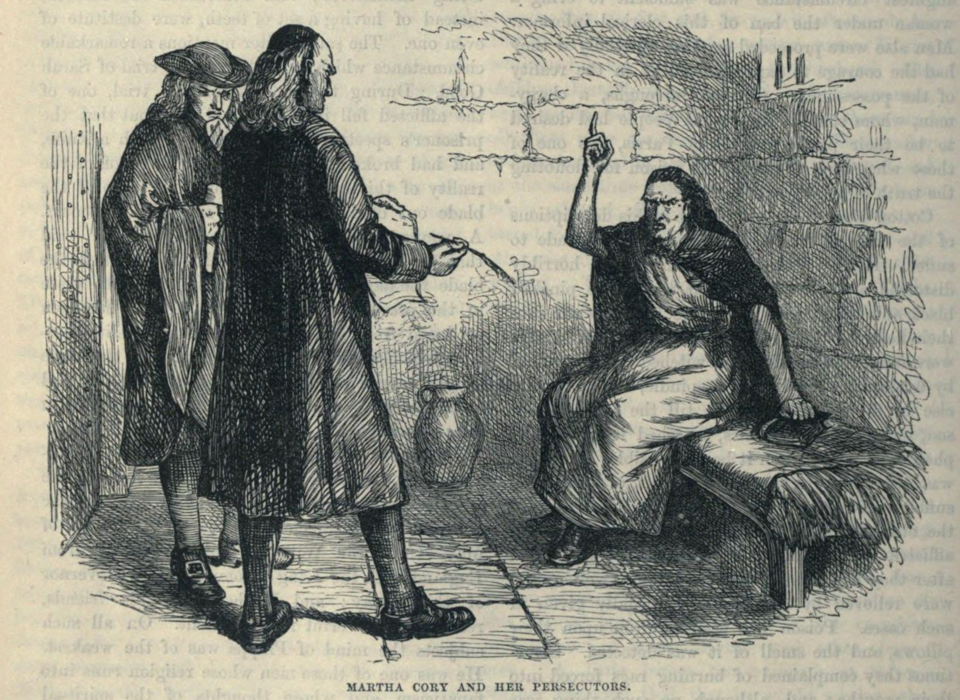
Nineteen people were hanged. Giles Corey died after being pressed when he refused to enter a plea. Others died in custody, and many more were imprisoned. By autumn, scepticism about the proceedings and spectral evidence had grown. Governor William Phips ended the Court of Oyer and Terminer, and the succeeding court did not use spectral evidence in the same way.
Later legal reversals, compensation and public apologies acknowledged injustice unevenly and over many years. Memorialisation continues because the harm was institutional as well as personal.
Reading the records
The University of Virginia archive preserves examinations, warrants, petitions and related documents. These sources allow researchers to see wording, sequence and procedure rather than relying on later dramatic summaries. They also require context: a transcript records a legal encounter shaped by authority and expectation, not a neutral conversation.
The categories in Evidence, Testimony and Legend are essential here. A court record proves that testimony was entered. It does not prove that the invisible act described in the testimony occurred.
Why it still matters
Salem offers no evidence that supernatural attacks occurred. It offers abundant evidence that institutions can turn unfalsifiable claims into consequences. Fear did not replace procedure; it entered through procedure.
The responsible archive keeps the accused, accusers and documentary system visible. Reducing the trials to seasonal imagery or collective foolishness loses the practical warning: evidence rules determine who can defend themselves.
Claim, Context and Cautions
Claim
Residents were accused of causing harm through witchcraft, including invisible attacks described through spectral evidence.
What is solid?
Court records document accusations, examinations, imprisonment, trials and executions during 1692-1693, along with later reversal and compensation.
What remains disputed?
Historians continue to weigh the relative importance of faction, religion, war, illness, gender, property and individual motives; no single social cause explains every accusation.
Possible explanations
The crisis is explained through interacting legal, religious, political, social and psychological pressures rather than verified witchcraft.
Sceptical view
Spectral evidence could not be independently tested and gave accused people no meaningful way to disprove an invisible act.
Why it still matters
Salem remains a severe case study in how institutions can reward confirmation and convert fear into irreversible punishment.
Contextual glossary
Terms used in this entry
Definitions are offered as reading aids, not as conclusions about the case.
- Spectral evidence
- In early modern witchcraft proceedings, testimony that an accused person’s spirit or apparition harmed someone while the physical person was elsewhere. Its disputed legal use is distinct from modern scientific uses of the word spectral.
Reference trail
Sources
- University of Virginia: Salem Witch Trials Documentary Archive (opens in a new tab)Searchable primary documents, maps, transcriptions and research resources.
- Peabody Essex Museum: Salem Witch Trials (opens in a new tab)Museum context for documents, participants and interpretation.
- Encyclopaedia Britannica: Salem witch trials (opens in a new tab)Reference chronology and outcome.
- Wikimedia Commons: Salem Witchcraft Trial (opens in a new tab)Public-domain illustration record used by this case.
Case Book
Photographs, Maps and Supporting Images
Supporting images provide documentary, geographic or visual context. Read each caption for its date, source and evidential limits.
Continue researching
Follow the evidence, context and comparisons
Curated connections
Selected editorially for this entry.
A field guide to three words that often get tangled in mystery research.
Curated connection · Case fileThe Fox Sisters: Rappings, Performance and the Sound of BeliefThe Fox sisters' spirit raps helped launch modern Spiritualism, then became a lesson in performance, grief, confession and belief that survives exposure.
Curated connection · ArticleCursed Objects and the Stories We Attach to ThingsWhy ordinary objects can gather blame, awe and dread when misfortune needs a visible container.