Folklore & Legends
Black Shuck at Blickling Hall: The Dog That Prefers the Roadside
Black Shuck endures because it is a black-dog legend that can stand for warning, death, landscape and local memory at the same time.
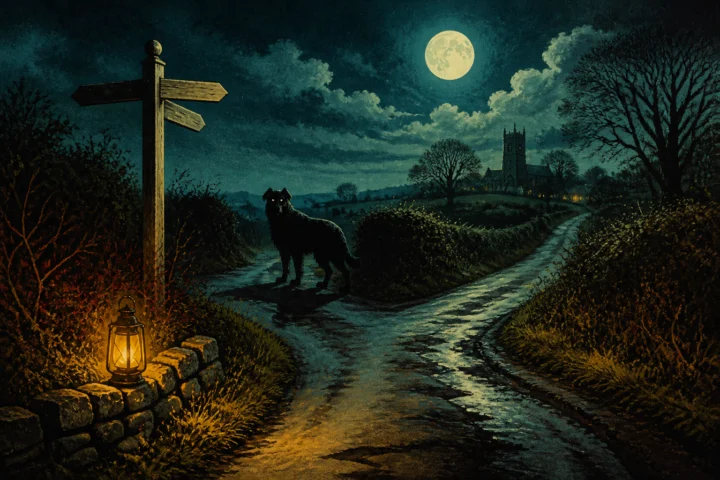
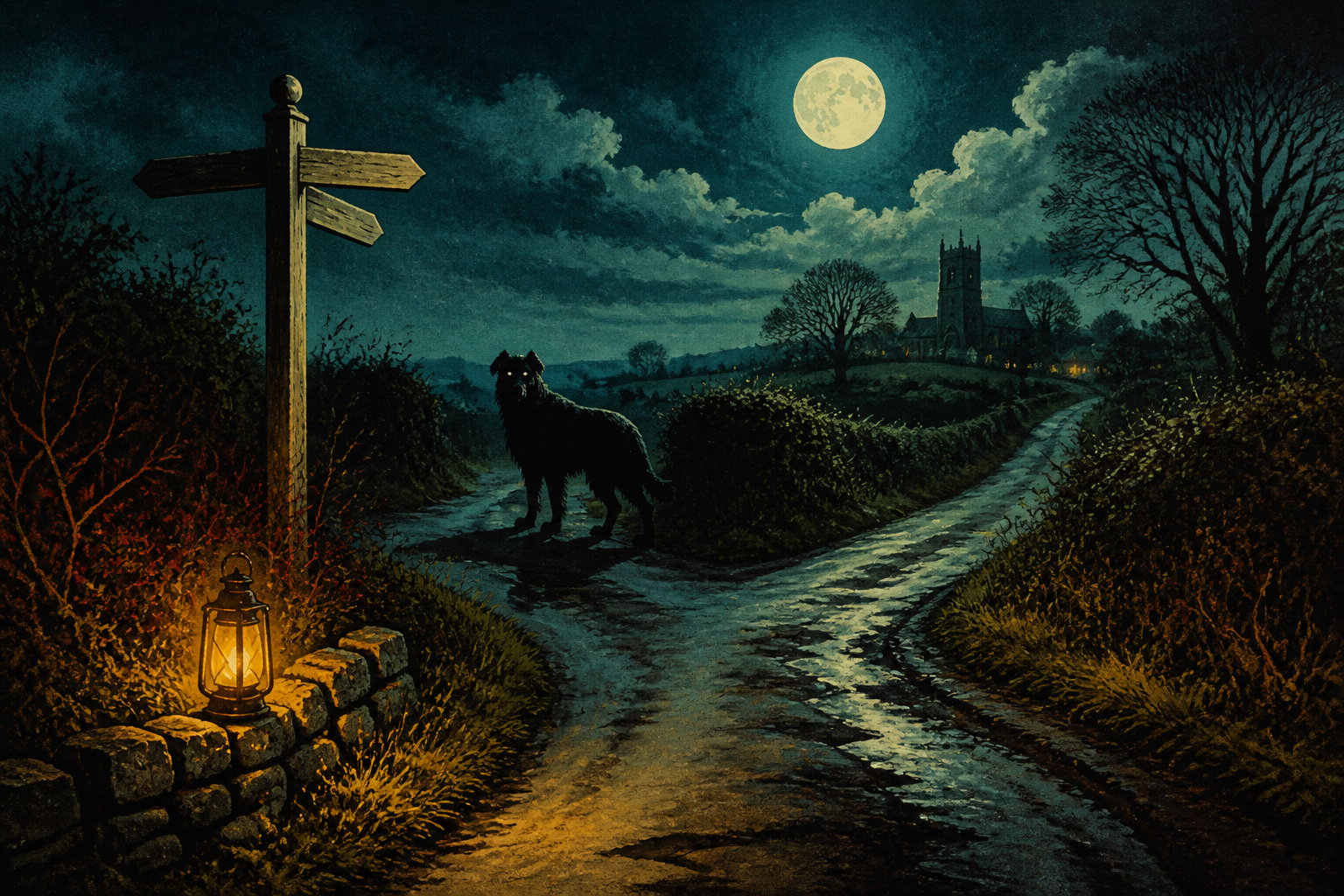
Black Shuck is the sort of creature that feels older than it is because it can be attached to so many roads and churches. The legend of a huge black dog roaming East Anglia has been retold for centuries, with Blickling Hall and other places absorbing the story as if it were weather.
The important thing is not whether one particular dog exists. It is how the legend functions. Black Shuck is what communities name when a road feels unsafe, the dark is too complete or a place seems to carry warning in its architecture.
That flexibility keeps the story alive. Each retelling can add eyes, size, flames, sound or omens, but the creature remains recognisable because the underlying role never changes much: something that turns the night into a threshold.
For Devil's Hideout, Black Shuck belongs in folklore and fear because it shows how a local monster can be less a sighting than a social tool.
Claim, Context and Cautions
Claim
A large black dog is said to haunt roads, churchyards and estate grounds across East Anglia, with Blickling Hall in Norfolk among the places most frequently named in accounts collected by later writers and local historians. The creature is usually called Black Shuck, though the name varies by county and village. Its appearances follow a consistent pattern: a road at night, a church boundary or crossroads, poor weather, and an encounter with a silent, oversized dark animal that disappears rather than withdrawing. In some versions the sighting carries an omen of death or misfortune for the witness or someone close to them. Blickling also hosts a separate legend associating the grounds with the ghost of Anne Boleyn, said to arrive by headless coach on the anniversary of her execution. These two traditions sometimes overlap in tourist and popular accounts, though they have different origins and structures and should be read separately.
Background
The black dog tradition in East Anglia is one of the most studied regional folklore forms in Britain. Early printed references appear in county antiquarian surveys from the nineteenth century, and the creature features prominently in the work of folklorists who collected stories from Norfolk, Suffolk and Essex. The word Shuck is commonly traced to Old English scucca, a word for a demon or threatening spirit, suggesting the name carried a distinct meaning before it became attached to one specific creature. Black dog legends across Britain tend to cluster around boundaries: roads, churchyard walls, bridges, field edges, and the points where one territory gives way to another. Blickling Hall, with its long drive, formal grounds, estate walls and documented historical associations, provides exactly the kind of landscape in which a boundary creature might be expected to appear. The Anne Boleyn connection places the hall at the centre of a different kind of historical legend rooted in execution, grief and aristocratic memory rather than road-edge folklore.
Reported events
Accounts of Black Shuck typically describe a brief encounter on a road or footpath, often at dusk or at night, in which a large dark animal is seen moving silently ahead of or alongside a traveller before disappearing at a boundary point such as a churchyard gate, a crossroads or a stretch of open ground. At Blickling, the most frequently cited version involves the creature appearing on the driveway or the lanes approaching the hall, sometimes in connection with the annual Anne Boleyn anniversary on 19 May. The association with the anniversary is largely a product of later popular tradition rather than early folklore records, and the two legends appear to have been woven together for storytelling convenience at some point in the nineteenth or early twentieth century. Individual sighting reports vary considerably in their details, and the consistency of the broader pattern owes more to the shared folklore template than to independent observation of the same phenomenon.
Possible explanations
Large dogs seen at night in poor visibility are the most straightforward explanation for individual sighting reports. A black Labrador or large feral dog at the edge of a lane, glimpsed briefly through rain, fog or darkness, can seem much larger and more silent than it is. The absence of sound that witnesses often describe may reflect wind noise, distance, shock or mis-memory. The disappearance at a boundary point may be the moment the animal moved into cover or out of the range of a lamp or vehicle headlight. The broader tradition is better explained through cultural transmission than through animal sightings. Communities attached warning stories to dangerous roads and threatening landscape features, and the black dog form offered a carrier for those warnings that was recognisable enough to be shared and strange enough to carry weight. Once a legend attached to a specific road or estate, later encounters in the same place were naturally interpreted through that existing framework.
Sceptical view
Black Shuck is not a cryptozoological species awaiting identification. No specimen has been examined, no animal has been photographed at close range, and no consistent pattern of sightings points toward an unknown animal. The tradition derives its power from its flexibility as a folklore form, not from a body of reliable reports pointing to one creature. Most individual accounts can be attributed to ordinary dogs seen under confusing conditions, misread shadows, or the social process by which ambiguous experiences become attached to a known local legend after the fact. The Blickling connection is partly a product of the hall's fame and its place in popular history tourism. A well-known building with a good ghost story is a better story than an anonymous lane with a large dog. The two traditions, Anne Boleyn and Black Shuck, reinforce each other in popular retelling because both make the hall more dramatically interesting, not because they have a shared historical root.
Why it still interests people
The black dog tradition stays alive because it is one of the most structurally efficient creatures in English folklore. It is ordinary enough to be believable and uncanny enough to carry weight. It attaches to roads and boundaries that were genuinely dangerous, and it names a fear that people in isolated landscapes recognised: something larger than expected, moving in darkness, that could not be explained before first light. Blickling adds the extra dimension of aristocratic history, national legend and a nationally known building. For an archive, the case is valuable precisely because it is not a cryptozoological puzzle. It is a study in how landscape, memory, weather, light and community need all work together to keep a creature alive across centuries. The question worth asking is not whether a giant dog haunts Norfolk, but what kind of thinking, feeling and remembering makes that story worth telling again on every dark road through East Anglia.
Contextual glossary
Terms used in this entry
Definitions are offered as reading aids, not as conclusions about the case.
- Black dog
- A spectral or uncanny dog associated in British and Irish traditions with roads, churchyards, boundaries, storms or death omens. Similar motifs do not make every local story the same tradition.
- Oral tradition
- Knowledge and narrative transmitted mainly through speech and performance across people or generations. Variation is part of the tradition and should not automatically be treated as corruption.
Reference trail
Sources
- Norfolk Record Office: Black Shuck at Blickling Hall (opens in a new tab)Local archive discussion of the legend.
- Aylsham History: Black Shuck journal article (opens in a new tab)Local history material discussing the legend and its roots.
- Britannica: Bogeyman (opens in a new tab)General context for creature stories that discipline behaviour and fear.
Case Book
Photographs, Maps and Supporting Images
Supporting images provide documentary, geographic or visual context. Read each caption for its date, source and evidential limits.
Continue researching
Follow the evidence, context and comparisons
Curated connections
Selected editorially for this entry.
Mothman is interesting not because the creature is easy to prove, but because the legend gathered itself around a town, a bridge and a tragic collapse.
Curated connection · Case fileThe Bell Witch: A Haunting Built From Legend and MemoryThe Bell Witch story is one of America's most durable haunting legends, but its power comes from later storytelling as much as any recoverable event.
Curated connection · ArticleWhy Phantom Black Dogs Haunt So Many Local LegendsBlack dog stories reveal how roads, boundaries, danger and memory gather into a repeated supernatural form.