Cryptids & Animal Reports
Mothman and the Silver Bridge: When a Creature Story Met a Disaster
Mothman is interesting not because the creature is easy to prove, but because the legend gathered itself around a town, a bridge and a tragic collapse.
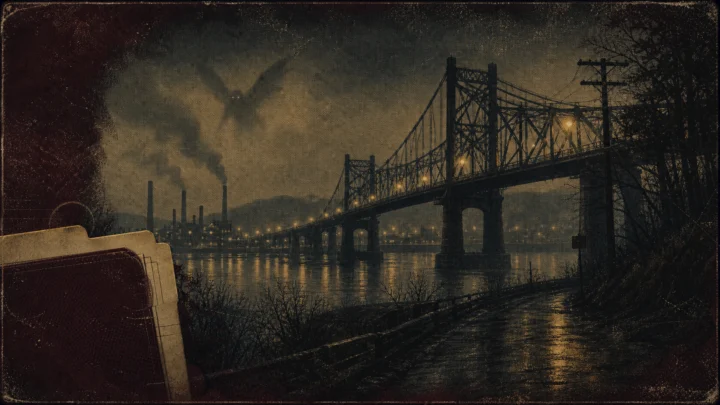
Mothman is often treated as if the whole story points toward one question: was there a creature? The better archive question is wider. How did a set of unsettling reports around Point Pleasant, West Virginia, become attached to a bridge disaster, a book, a prophecy frame and a lasting American legend?
The core reports emerged in the mid-1960s around Point Pleasant and the surrounding area. Witnesses described a large winged figure, sometimes with glowing or reflective eyes, seen near roads, fields or the former TNT area north of town. The details shifted, as creature reports usually do, but the atmosphere was consistent: night roads, surprise, speed, fear and a landscape already suited to rumour.
Sequence of events
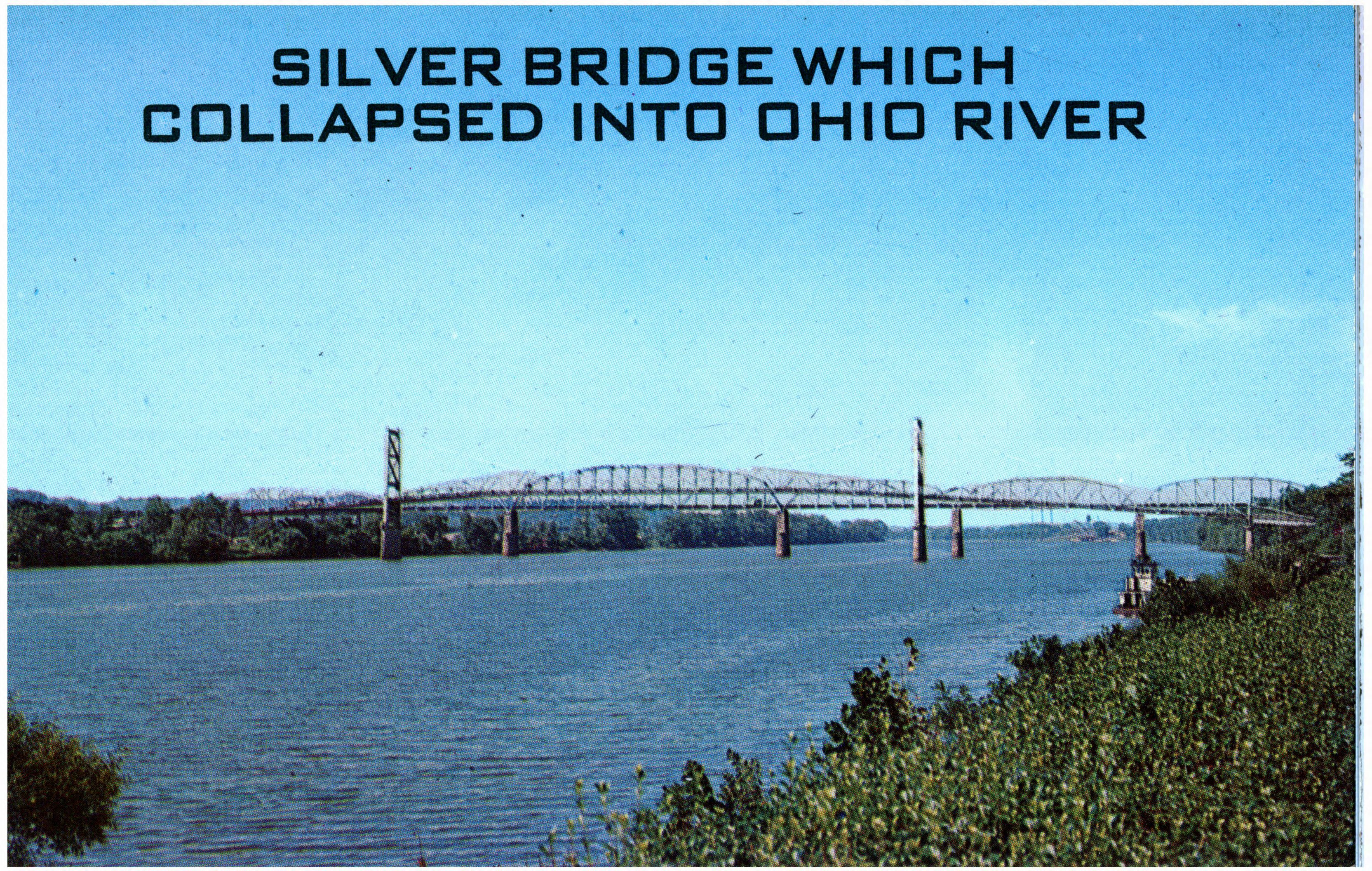
Reports associated with Mothman began before the Silver Bridge disaster. Local newspaper coverage and word of mouth helped the story gather force. People reported strange sightings, and the creature became part of the town’s public imagination. Then, on December 15, 1967, the Silver Bridge collapsed, killing forty-six people. That tragedy changed how later audiences read everything that came before it.
The bridge collapse was a documented engineering disaster, not proof of a supernatural warning. But folklore rarely keeps events in separate boxes. After the collapse, the creature reports and the disaster became fused in popular memory. John Keel’s later writing, especially the prophecy-oriented framing associated with The Mothman Prophecies, helped turn a regional creature flap into a national paranormal myth.
What is solid?
It is solid that people in and around Point Pleasant reported strange sightings in the 1960s. It is solid that the Silver Bridge collapsed in 1967 with major loss of life. It is solid that later books, films, festivals and tourism transformed Mothman into a durable cultural figure.
It is also solid that the creature reports and the bridge disaster are different kinds of evidence. Witness testimony about an alarming figure is one category. An investigated structural failure is another. Responsible writing should not collapse them into a single prophecy narrative just because the story becomes more dramatic that way.
What remains disputed?
The disputed question is what witnesses saw, if anything beyond misidentified birds, unusual lighting, stress, expectation or local rumour. Sandhill cranes, owls and other ordinary explanations have been proposed, though no single explanation neatly covers every retelling. That does not make the most spectacular explanation true. It means the record is uneven.
The prophecy framing is even more disputed. Claims that Mothman warned of the bridge collapse belong to later interpretation, not to a clean evidential chain. They are important as folklore, but they should be handled as folklore.
Why it still matters
Mothman matters because it shows how communities process fear, place and disaster through a figure that can carry more than one meaning. The creature can be a misidentification, a legend, a media creation, a grief symbol and a tourism icon without being only one of those things. The power of the case is not certainty. It is the way an unresolved figure became a local language for unease.
Source note
Useful source trails include local West Virginia history, Smithsonian Folklife discussion of Point Pleasant’s Mothman tradition, bridge-disaster records, newspaper coverage of the sightings, and critical reading of John Keel’s role in shaping the later prophecy frame.
Claim, Context and Cautions
Claim
A winged, red-eyed figure was reported around Point Pleasant before the Silver Bridge collapse, and later storytellers linked the two events.
Background
The reports came from a river town where strange lights, wartime leftovers and local folklore already had a place to land.
Reported events
Sightings in late 1966 and 1967 were followed by the Silver Bridge disaster, after which the creature and the collapse became culturally entangled.
Possible explanations
Mothman is usually read as a folklore creature built from reports, birds, memory, media amplification and later disaster narrative.
Sceptical view
The bridge collapse was a structural failure, not a creature event. The legend works because people naturally connect separate shocks into one story.
Why it still interests people
Mothman survives because it is both a monster and a memorial; it is what happens when folklore attaches itself to grief and infrastructure.
Contextual glossary
Terms used in this entry
Definitions are offered as reading aids, not as conclusions about the case.
- Misidentification
- A real object, animal, sound or event interpreted as something else because identifying information was limited. Distance, darkness and unfamiliar angles commonly remove useful scale and context.
- Rumour
- Unverified information circulated between people because it appears relevant or urgent. Repetition can make a rumour familiar without adding an independent source.
Reference trail
Sources
- Smithsonian Folklife: Mothman of Point Pleasant (opens in a new tab)Folklife discussion of the creature reports and their place in local identity.
- e-WV: The West Virginia Encyclopedia - Mothman (opens in a new tab)State encyclopedia account of the sightings and the later legend.
- National Transportation Safety Board: Silver Bridge Collapse (opens in a new tab)Official investigation record for the bridge disaster, kept separate from later prophecy claims.
Case Book
Photographs, Maps and Supporting Images
Supporting images provide documentary, geographic or visual context. Read each caption for its date, source and evidential limits.
Continue researching
Follow the evidence, context and comparisons
Curated connections
Selected editorially for this entry.
Black Shuck endures because it is a black-dog legend that can stand for warning, death, landscape and local memory at the same time.
Curated connection · Case fileRendlesham Forest: Lights, Logs and the British UFO ArchiveRendlesham remains one of the most famous UFO cases in Britain because it produced sightings, notes and later arguments in the shadow of a military base.
Curated connection · Case fileThe Bennington Triangle: Missing People, Missing ContextThe Bennington Triangle is less a single event than a regional pattern built from disappearances, local lore and the human need to connect coincidences.
More through shared context
Additional routes based only on existing topics, themes and metadata.
Reports from Van Meter told of a horned, winged figure and a mine confrontation in September 1903. Period newspapers preserve the story, but independent corroboration is difficult to establish.
Same primary topic · Shared theme: Media & rumour · Case fileThe Beast of Gévaudan: Predators, Panic and the Making of a MonsterLethal attacks in Gévaudan prompted royal hunts and national coverage from 1764 to 1767. The deaths are historical; whether one unusual animal caused them is disputed.