UFOs & Aerial Phenomena
The Allagash Abductions: Memory After the Light
A shared light sighting on an Allagash lake preceded later hypnotic abduction accounts. The original observation is testimony; hypnosis does not validate the later memories.
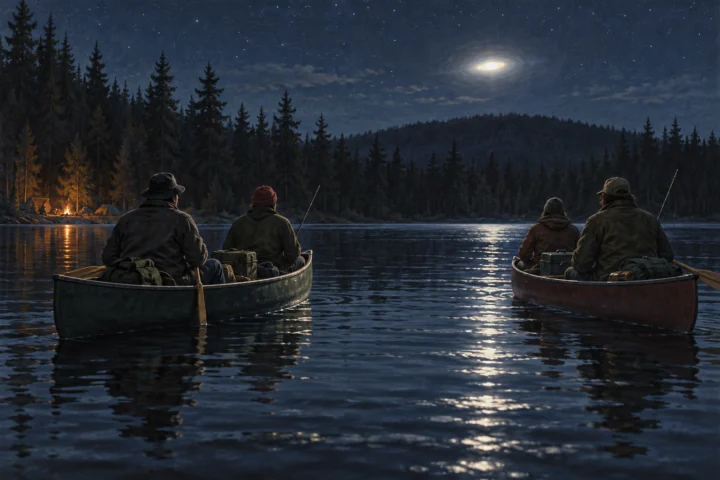
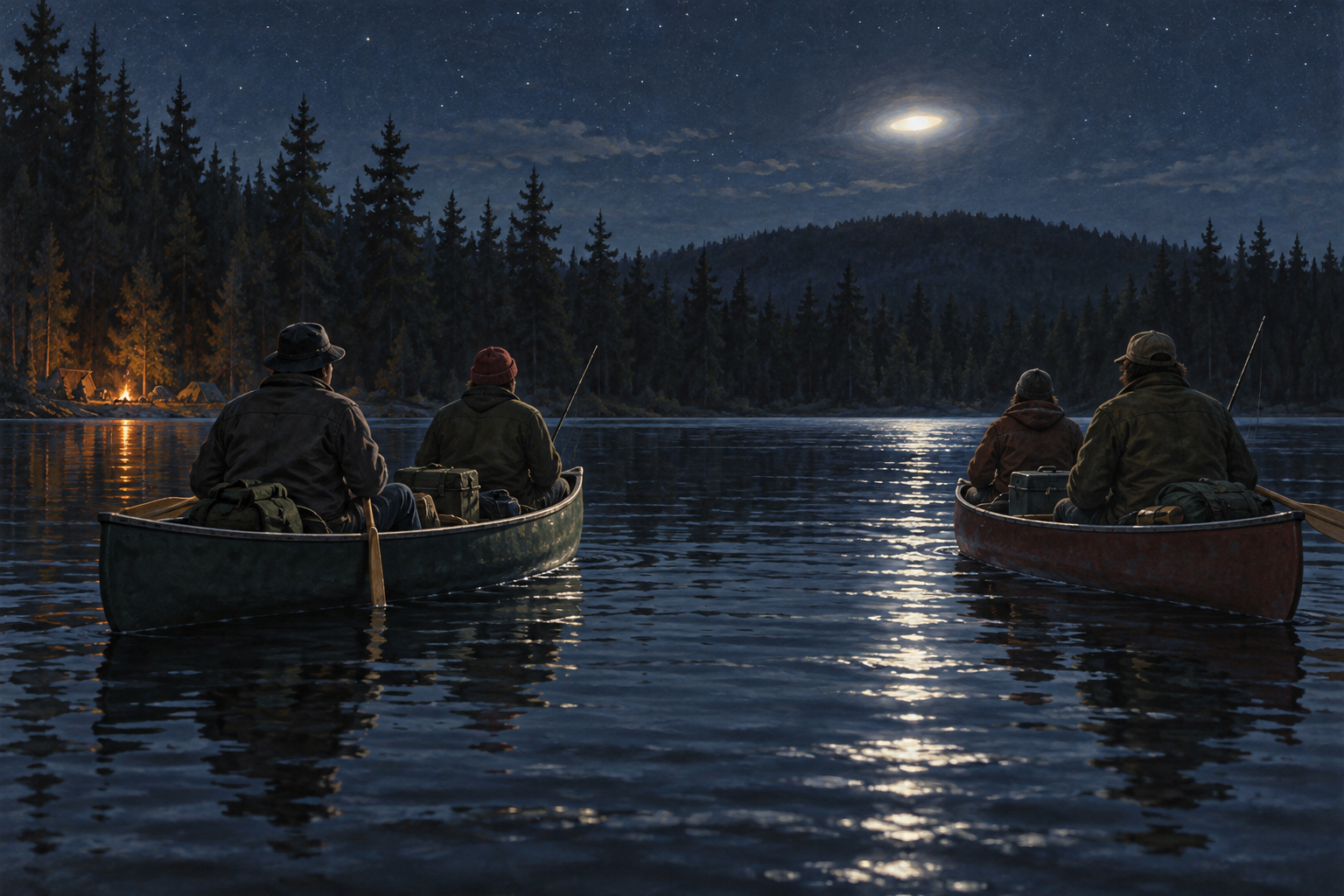
Four art-school friends camping in Maine’s Allagash Wilderness Waterway in August 1976 later said that a bright, coloured object hovered near their canoe. They paddled towards shore, where their unattended fire seemed to have burned lower than expected. At the time, the central claim was a shared light sighting.
More than a decade later, Jim Weiner’s disturbing dreams led the men to an investigator and hypnotist. Separate sessions produced accounts of capture, examinations and non-human beings. Those narratives made the case famous, but hypnosis is not a truth test: suggestion, expectation and repeated rehearsal can increase confidence while creating or altering details.
Chuck Rak later said the abduction component was false while maintaining that the group saw an unexplained light. His repudiation does not by itself explain the sighting, but it directly weakens claims that four independent recovered memories corroborate one event.
The distinction follows the archive’s treatment of testimony and legend, practical advice for recording experiences before memory shifts, and the broader problem of unidentified lights.
Claim, Context and Cautions
The 1976 core account
The friends described night fishing from a canoe and signalling a luminous object with a torch. They said the light approached or changed position, prompting a hurried return to shore. No photograph, instrument record or independent lake witness is known.
A mutually reported light is not the same evidential object as the later abduction story. Keeping those layers separate prevents the later account from being projected backwards.
Twelve years before hypnosis
The detailed capture narrative emerged around 1988–1989, after dreams, discussion and exposure to established abduction imagery. Long delay allows ordinary memory loss and reconstruction. Shared conversation can also align accounts before nominally separate interviews.
The sessions therefore document what participants narrated at that later date, not an untouched recording of 1976.
Why hypnosis cannot authenticate memory
Laboratory and clinical research shows that hypnotic procedures can increase suggestibility and confidence without improving accuracy. Leading questions and imaginative prompts may generate details that feel involuntary and real.
Consistency within a hypnotic narrative is accordingly weak corroboration. A reliable method needs independently checkable predictions or records, neither of which the sessions produced.
Rak’s rejection and the problem of consensus
Rak eventually stated that he did not believe an abduction occurred and described pressure surrounding the story. The other three continued to defend their experiences. This is a material disagreement among the claimed witnesses, not a minor sceptical objection from outside.
His account cannot prove which light was seen, but it defeats the simple claim of four lasting, independent confirmations.
A two-layer conclusion
A light on or above a remote lake could have astronomical, aircraft, atmospheric or perceptual causes; the available record cannot select one confidently. The abduction account rests on delayed hypnotic recollection and later dispute.
The evidence supports an unresolved reported sighting and a well-documented process by which a more elaborate narrative formed. It does not establish physical capture.
Contextual glossary
Terms used in this entry
Definitions are offered as reading aids, not as conclusions about the case.
- Reconstruction
- A later model, image or account made to represent an event from surviving information. It can clarify a hypothesis but should remain visibly separate from contemporary evidence.
- Corroboration
- Independent information that supports part of an account, such as a record, trace or separately obtained observation. Repetition from a shared source is not independent corroboration.
- Suggestion
- Information or expectation that influences what a person notices, remembers or reports. Even a well-meant question can introduce details that were not in the first account.
Reference trail
Sources
- The County, “How much of a famed UFO abduction is true?” (opens in a new tab)Maine reporting on Chuck Rak’s repudiation and the dispute among the four participants.
- American Psychological Association, “Hypnosis today” (opens in a new tab)Professional overview of hypnosis, suggestibility and limits on memory recovery.
- PubMed, hypnosis and memory accuracy review (opens in a new tab)Peer-reviewed research record addressing hypnotic recall, confidence and error.
- Maine Bureau of Parks and Lands, Allagash Wilderness Waterway guide (opens in a new tab)Official geographic and access context for the waterway and Eagle Lake area.
Case Book
Photographs, Maps and Supporting Images
Supporting images provide documentary, geographic or visual context. Read each caption for its date, source and evidential limits.

Continue researching
Follow the evidence, context and comparisons
Curated connections
Selected editorially for this entry.
A field guide to three words that often get tangled in mystery research.
Curated connection · ArticleA Field Guide for Recording Strange Experiences ResponsiblyA calm checklist for writing down unusual events before memory, excitement and online feedback reshape them.
Curated connection · ArticleHow Ordinary Lights Become Extraordinary UFO ReportsAircraft, satellites, planets, drones and atmospheric effects can become strange when context is missing.
More through shared context
Additional routes based only on existing topics, themes and metadata.
The crew’s visual report was real and professionally documented. Radar returns were intermittent and disputed, while darkness, cloud and uncertain distance made size estimates especially fragile.
Same primary topic · Shared theme: Aviation, Witness & memory · Case fileSocorro: Lonnie Zamora and the Object in the ArroyoThe Socorro incident rests on a prompt police report and documented ground traces, yet neither the marks nor later theories securely identify what Lonnie Zamora saw.