Disappearances & Unresolved Identities
MV Joyita: The Waterlogged Ship and Its Missing Twenty-Five
Joyita’s seaworthiness problems and failed communications explain how an emergency could develop. The decision to abandon a buoyant vessel, and what happened afterward, remain unresolved.
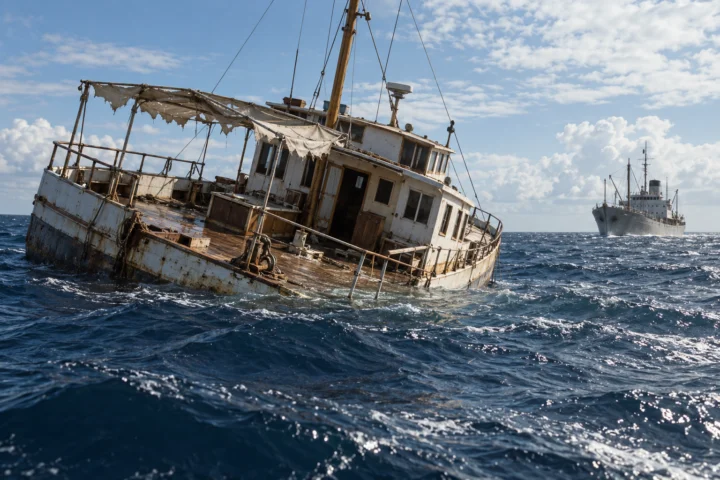
MV Joyita left Apia, Western Samoa, before dawn on 3 October 1955 bound for the Tokelau Islands. The wooden vessel carried sixteen crew and nine passengers, along with medical supplies, timber and food. It should have arrived in roughly two days. No distress message was received, and searches failed to find it.
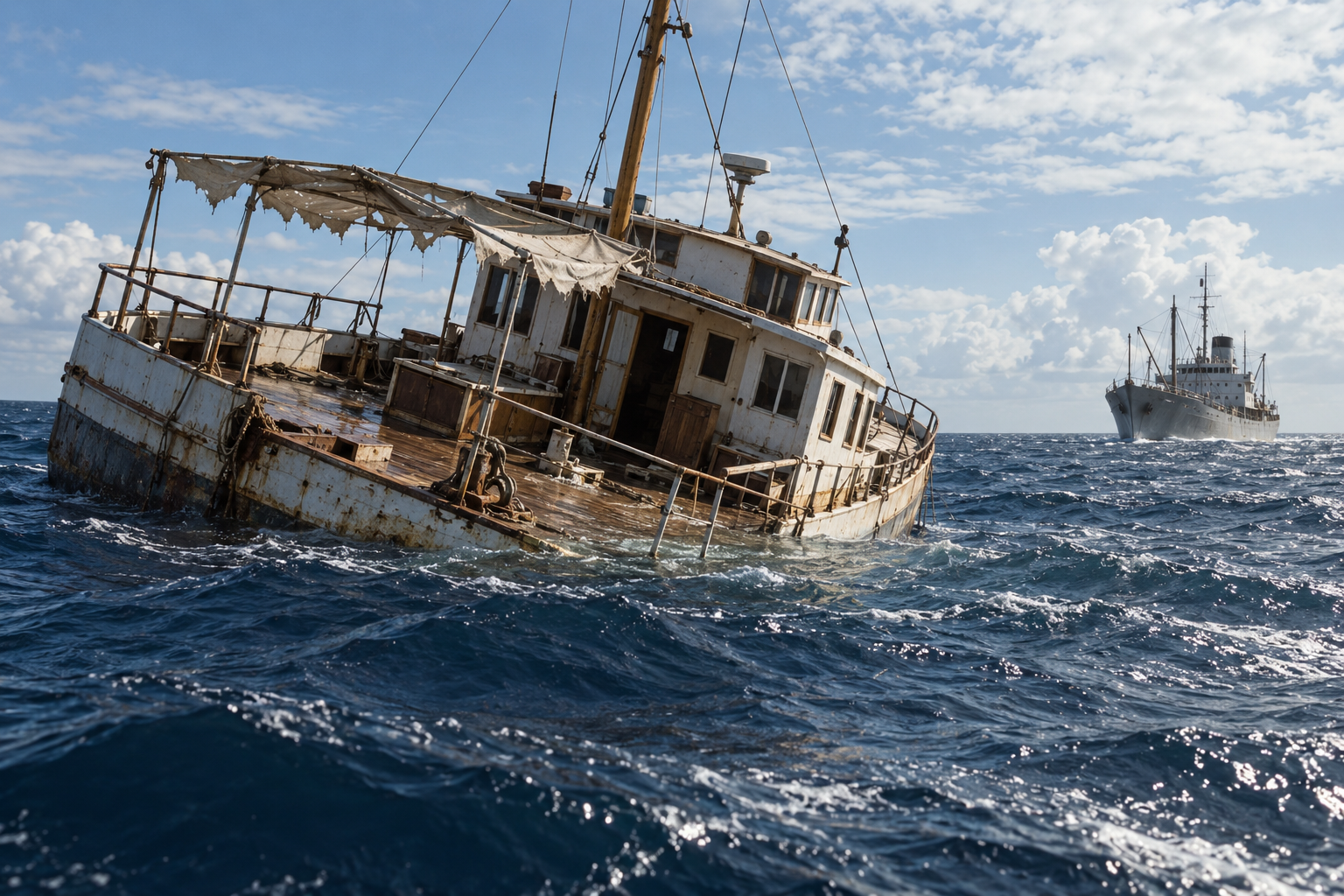
On 10 November, the merchant ship Tuvalu found Joyita more than 600 miles west of its intended route. It listed heavily, decks were partly awash and the people and small boats were gone. Cargo and equipment were missing or displaced. The ship nevertheless remained afloat because its hull and insulated compartments provided substantial buoyancy.
A commission of inquiry documented corroded pipes, pump problems, a radio set configured with an inadequate aerial and poor vessel condition. It could not determine precisely when flooding began or why everyone left. The surviving evidence supports a maritime emergency more directly than piracy, mutiny or supernatural disappearance.
The elapsed thirty-eight days between departure and recovery prevents a minute-by-minute reconstruction. Wind and current moved the unmanned hull far from the route, while perishable traces and any small boats vanished. Discovery location is therefore not the location where the decisive emergency necessarily occurred.
Joyita invites comparison with the archive’s Mary Celeste, the evidentially insecure Ourang Medan, and the drifting Baychimo.
Claim, Context and Cautions
What rescuers found
The vessel was low in the water and listing, with damage to deck structures and signs that water had entered. The logbook, navigational instruments and three boats were absent. A doctor’s bag and stained bandages later encouraged stories of violence, but staining alone cannot establish a wound or attack.
The discovery scene was a working salvage environment, not a sealed forensic site. Later inventories and retellings do not always agree.
How a buoyant ship could be abandoned
Water entering through failed pipework could flood machinery spaces, stop electrical power and disable pumps. With the vessel listing in darkness and the radio unable to reach distant stations, those aboard may have believed sinking was imminent. People in an emergency need not know that trapped air and insulation would keep the hull afloat.
Leaving for small boats in open ocean would then transform a survivable ship casualty into a lethal exposure.
Findings and responsibility
The 1956 inquiry examined maintenance, certification, command and radio arrangements. It criticised the vessel’s condition and found the master’s licence suspended, while leaving the ultimate sequence undetermined. Mechanical weaknesses are documented contributing conditions, not a complete account of the missing people.
The ship’s later repair and return to service also show that its discovery condition, dramatic as it was, did not require an inexplicable force.
Competing narratives
Theories include collision, piracy, mutiny, insurance fraud, injury to the captain and a panicked abandonment after flooding. Some may explain isolated clues, but none has a secure chain of testimony or physical evidence to the fate of all twenty-five people. The ocean and elapsed five weeks erased timing evidence.
Joyita is a genuine unsolved disappearance anchored by a recovered vessel and formal inquiry. Its mystery is narrower than legend: an emergency likely developed, the occupants left or were removed, and the available record cannot show their final route or deaths.
Contextual glossary
Terms used in this entry
Definitions are offered as reading aids, not as conclusions about the case.
- Reconstruction
- A later model, image or account made to represent an event from surviving information. It can clarify a hypothesis but should remain visibly separate from contemporary evidence.
Reference trail
Sources
- National Library of New Zealand, Joyita Commission of Inquiry record (opens in a new tab)Institutional catalogue for the 1956 transcript, dates, commission membership and photographic documentation.
- University of Canterbury Library, Report of Commission of Inquiry into MV Joyita (opens in a new tab)Academic-library catalogue confirming the government report and its publication details.
- Archives New Zealand, release of Joyita disappearance files (opens in a new tab)Government release notice identifying four archival files concerning the vessel, passengers, crew and Tokelau voyage.
Case Book
Photographs, Maps and Supporting Images
Supporting images provide documentary, geographic or visual context. Read each caption for its date, source and evidential limits.

Continue researching
Follow the evidence, context and comparisons
Curated connections
Selected editorially for this entry.
The famous 1872 maritime mystery is less a ghost story than a stubborn problem of evidence, weather, cargo and missing people.
Curated connection · Case fileOurang Medan: The Ghost Ship With No Secure ShipOurang Medan is a maritime legend built through changing newspaper and magazine retellings. No verified ship registration, crew list, wreck or rescue record anchors the event.
Curated connection · Case fileBaychimo: The Arctic Ghost Ship That Would Not Stay LostThe crew abandoned Baychimo after it vanished during a 1931 blizzard. The steel steamer survived and was repeatedly sighted or boarded; its final resting place remains unknown.
More through shared context
Additional routes based only on existing topics, themes and metadata.
The Carroll A. Deering was found abandoned on Diamond Shoals in January 1921. Missing boats, papers and crew suggested an organised departure, but its cause remains unknown.
Same primary topic · Shared theme: Maritime · Case fileThe Flannan Isles Lighthouse Keepers: A Vanishing at the Edge of WeatherThree lighthouse keepers disappeared from Eilean Mor in 1900, leaving a mystery where official records point toward sea, weather and working risk rather than fantasy.