Scientific Anomalies & Natural Phenomena
Strange Signals: How Investigators Classify Sounds and Transmissions
A source-led guide to anomalous signals, from underwater sounds to radio bursts: how calibration, reference libraries and independent repetition separate useful evidence from compelling noise.
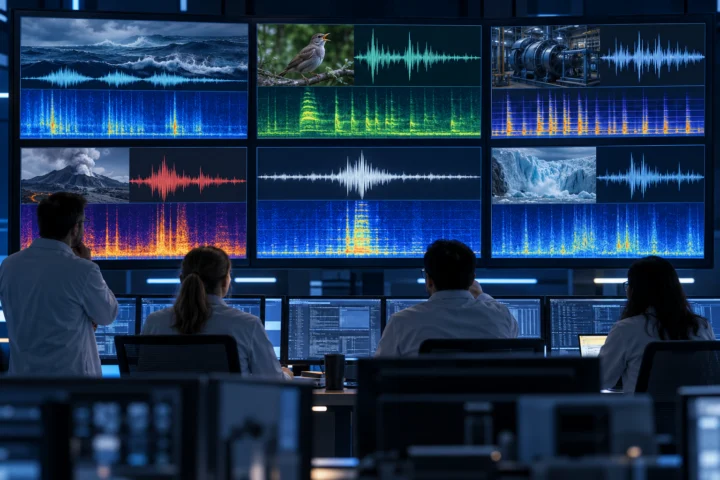
A sound or radio trace becomes anomalous when it resists an available classification, not when an instrument certifies that something extraordinary caused it. The first questions are mundane and demanding: what did the sensor actually measure, how was it calibrated, which processing steps altered the record, and what ordinary sources could reach it through that environment?
Context can be more valuable than drama. Underwater microphones hear animals, ships, ice, earthquakes and equipment; radio telescopes encounter astronomical sources, satellites and terrestrial interference. A narrow spike on a graph may be real while its apparent meaning is an artefact of scale, filtering or an incomplete reference library.
Investigators preserve raw data, compare nearby sensors, check clocks and maintenance logs, and look for recurrence. Direction, duration, bandwidth and movement can constrain a source. Independent detection is especially valuable because it reduces the chance that one receiver, cable or analysis choice created the effect.
This method helps explain the identification of the Bloop, the continuing uncertainty around the Wow! signal, and the difficult mixture of perception and measurement in the Taos Hum.
Claim, Context and Cautions
Begin with the measurement chain
Every signal passes through a chain: source, medium, sensor, amplifier, digitiser, processing software and display. A fault or transformation at any stage can preserve a genuine-looking pattern. Investigators therefore need the original file and instrument settings, not only a cropped spectrogram shared online.
Calibration establishes how a reading relates to a known reference and attaches uncertainty to it. It does not make a sensor infallible. Clipping, automatic gain, compression and clock errors can erase precisely the detail needed for classification.
Propagation changes the source
Sound bends and reflects through water and air; radio waves can refract, scatter and arrive by several paths. Distance estimates based only on loudness are fragile because source power and transmission conditions are unknown. Seasonal ocean layers, the ionosphere, buildings and terrain can all reshape what reaches a receiver.
A signal may therefore be correctly recorded but misleadingly located. Models should be tested against weather, geometry and detections at other stations rather than chosen because they produce the most intriguing origin.
Classification is comparative work
Reference libraries let analysts compare calls, machinery, seismic events and known transmitters. Shape alone is rarely decisive: different processes can produce similar sweeps or pulses. Frequency range, harmonics, repetition, direction and environmental timing create a stronger combined test.
Machine-learning classifiers can rank possibilities, but they inherit the limits of their training sets. An unknown label can mean that the correct example was absent, not that the phenomenon lies outside known physics.
What an unresolved signal means
A single non-repeating event may remain unidentified because essential information was never recorded. That is an evidential limit, not a positive discovery of intelligence, a secret weapon or an unknown animal. A responsible account states which causes were tested, which were excluded and which remain merely possible.
The best cases become easier to investigate when raw data, timing, sensor locations and processing are preserved. Repetition under independent observation can turn a curiosity into a research subject. Without it, uncertainty should be retained rather than filled with a story. The distinction protects both genuine anomalies and the people trying to understand them.
Contextual glossary
Terms used in this entry
Definitions are offered as reading aids, not as conclusions about the case.
- Raw data
- Measurements or records in their earliest retained form before substantial selection, correction or presentation. Access to raw data helps others check processing choices, although even raw records reflect how an instrument was configured.
- Uncertainty
- The stated limit on what a measurement, reconstruction or body of evidence can establish. Describing uncertainty is not indecision; it prevents a result from appearing more precise than the evidence allows.
- Spectrogram
- A visual display of how the frequencies in a sound or radio signal change over time. It can reveal structure hidden to hearing while also displaying interference and processing artefacts.
- Artefact
- An object made, modified or used by people. Its material, manufacture, wear and archaeological context are evidence; an unusual appearance alone does not establish an unusual age or origin.
- Medium
- A person who claims to communicate with the dead or other non-ordinary agents. Historical study distinguishes mental mediumship from physical performances involving objects, sounds or material effects.
Reference trail
Sources
- NOAA Fisheries, Sounds in the Ocean (opens in a new tab)Official overview of environmental, biological and human sound sources recorded in the ocean.
- NIST, Measurement Uncertainty (opens in a new tab)Official measurement-science guidance on reporting uncertainty rather than treating a measured value as exact.
- NASA Science, Searching for Signs of Intelligent Life: Technosignatures (opens in a new tab)Official explanation of technosignature searches and the need to distinguish candidate signals from interference and natural sources.
Case Book
Photographs, Maps and Supporting Images
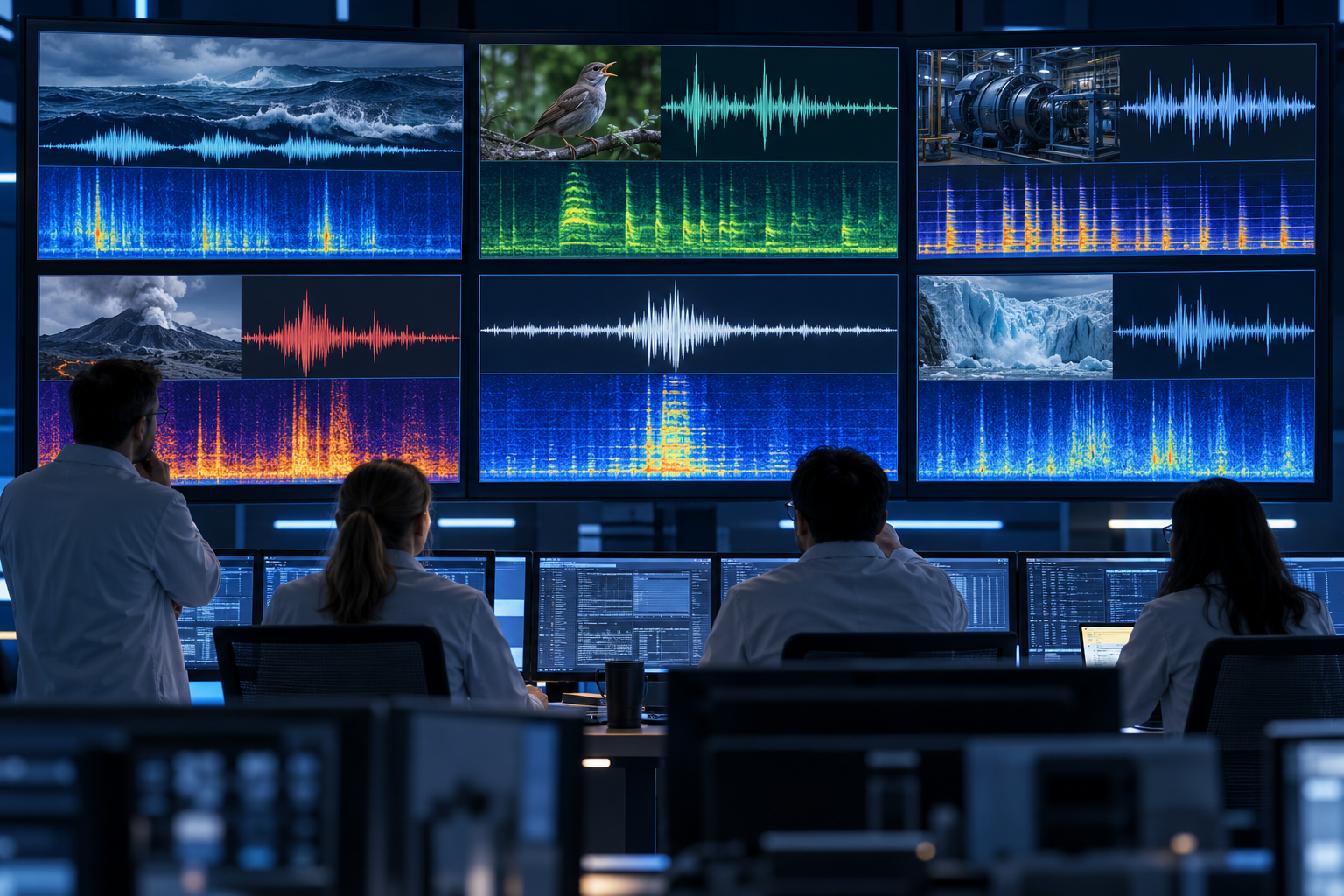
Supporting images provide documentary, geographic or visual context. Read each caption for its date, source and evidential limits.

Continue researching
Follow the evidence, context and comparisons
Curated connections
Selected editorially for this entry.
The Bloop was a real hydrophone recording, but not evidence of a giant animal. NOAA’s later Antarctic observations identified the same sound family in large icequakes.
Curated connection · Case fileThe Wow! Signal: Seventy-Two Seconds at Big EarThe Wow! signal was a one-time narrow-band radio event near the hydrogen line, recorded on 15 August 1977. Its shape was noteworthy; its source remains unconfirmed.
Curated connection · Case fileThe Taos Hum: A Sound the Instruments Could Not ShareThe Taos Hum became a public problem in the early 1990s when residents described a distant-engine sound. Researchers documented sincere reports but found no common external source.
More through shared context
Additional routes based only on existing topics, themes and metadata.
FRBs are established astrophysical events, not unexplained transmissions in the colloquial sense. Magnetars can produce them, while the population’s diversity and emission physics remain active research questions.
Same primary topic · Shared theme: Strange signals · Case fileThe Vela Incident: A Double Flash Over the South AtlanticVela 6911 detected an unexplained double flash on 22 September 1979. Official and scientific assessments disagreed over whether it marked a secret atmospheric nuclear test.