Hoaxes, Misidentifications & Media
The Amityville Horror: A Haunting Built for Print
Claims made after the Lutz family’s 1975 stay became a bestselling book and film franchise. The murders in the house were real; evidence for the subsequent haunting is not reliable.
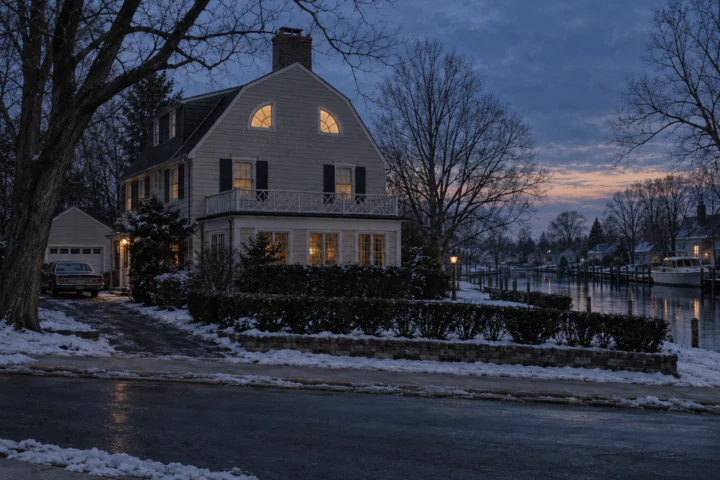
In November 1974, Ronald DeFeo Jr. killed six members of his family at their home in Amityville, Long Island. Thirteen months later, George and Kathy Lutz bought the house and moved in with their children. They left after 28 days, later describing cold spots, odours, flies, nightmares and violent disturbances.
Jay Anson’s 1977 book presented the account as a true story and supplied the narrative that films expanded. The documented murders lent the haunting a terrible foundation, but they do not corroborate events reported by later residents. Police, clergy and other people represented in versions of the story disputed important details.
Litigation exposed commercial planning and conflict among the Lutzes, Ronald DeFeo’s former lawyer William Weber, publishers and filmmakers. Weber said the horror story had been developed over wine; George Lutz continued to defend the central claims. A court did not conduct a scientific trial of ghosts.
The case can be read with the archive’s files on Borley Rectory, haunting-report structure, and the commercial shaping of cursed narratives.
Claim, Context and Cautions
Two different histories in one house
The DeFeo murders are established criminal history. Ronald DeFeo was convicted after an unsuccessful insanity defence. The Lutz haunting claims concern a different family and began more than a year later. Combining them emotionally can make the second story seem evidenced by the first.
No finding in the murder trial demonstrated a supernatural cause or presence.
Twenty-eight days become a narrative
The Lutzes reported that escalating events drove them from the house in January 1976. Public presentations and Anson's book organised those memories into a day-by-day ordeal. Reconstructed dialogue, precise timings and private sensations created narrative authority without contemporary independent records for each scene.
A compelling chronology can be literature even when based partly on testimony.
Checks against external records
Critics compared the book with weather data, police contacts, property records and accounts from the priest and later owners. Several celebrated details did not align, and the police did not document emergency visits matching the narrative. Subsequent residents did not report a comparable pattern.
Negative checks cannot prove what a family felt, but they weaken claims presented as externally observable fact.
Weber, the Lutzes and the lawsuits
William Weber had represented DeFeo and discussed a book project with the Lutzes. Later litigation involved competing claims of fraud, contract and ownership. Weber publicly said the story was created over bottles of wine; the Lutzes disputed his version.
The record securely shows a commercial collaboration and rupture. It does not require accepting every accusation made by parties with financial interests.
Investigators and the famous photograph
Paranormal investigators visited after the family had left. A later photograph was promoted as showing a ghostly child, although an ordinary person caught by infrared photography provides a direct alternative. The investigation did not establish a controlled baseline for sounds, temperature or imagery.
Retrospective selection turned ambiguous material into icons after the book had defined what audiences expected to see.
A cultural phenomenon, weak evidence
Amityville became a durable publishing and film property. That afterlife is documented and historically significant. The haunting claim depends on interested testimony, inconsistent external checks and evidence gathered after publicity began.
“Disputed” preserves the fact that the Lutzes maintained their experience while recognising that the public true-story package does not meet a reliable evidential standard.
Contextual glossary
Terms used in this entry
Definitions are offered as reading aids, not as conclusions about the case.
- Haunting
- A pattern of unusual experiences attributed to a place, including apparitions, sounds, movement or sensed presences. A location log is more informative than treating every incident as one cause.
- Baseline
- A measurement of normal conditions made before or alongside an investigation. It gives unusual readings something local and comparable to be judged against.
- Infrared
- Electromagnetic radiation with wavelengths longer than visible red light. Infrared sensors can record heat-related or reflected signals, but the colours in a displayed image are often assigned during processing.
Reference trail
Sources
- California Court of Appeal, Lutz v. De Laurentiis (1989) (opens in a new tab)Published appellate opinion summarising the Lutz stay, book, film rights and commercial litigation.
- Long Island Historical Journal, Amityville history article (opens in a new tab)Regional scholarly discussion of the murders, haunting claims and later cultural industry.
- Skeptical Inquirer, Amityville investigation (opens in a new tab)Critical comparison with trial testimony, police information, weather and accounts by people represented in the story.
- Society for Psychical Research Psi Encyclopedia, “Amityville Hoax” (opens in a new tab)Archival critical treatment of how the claims developed into a book and disputed commercial narrative.
Case Book
Photographs, Maps and Supporting Images
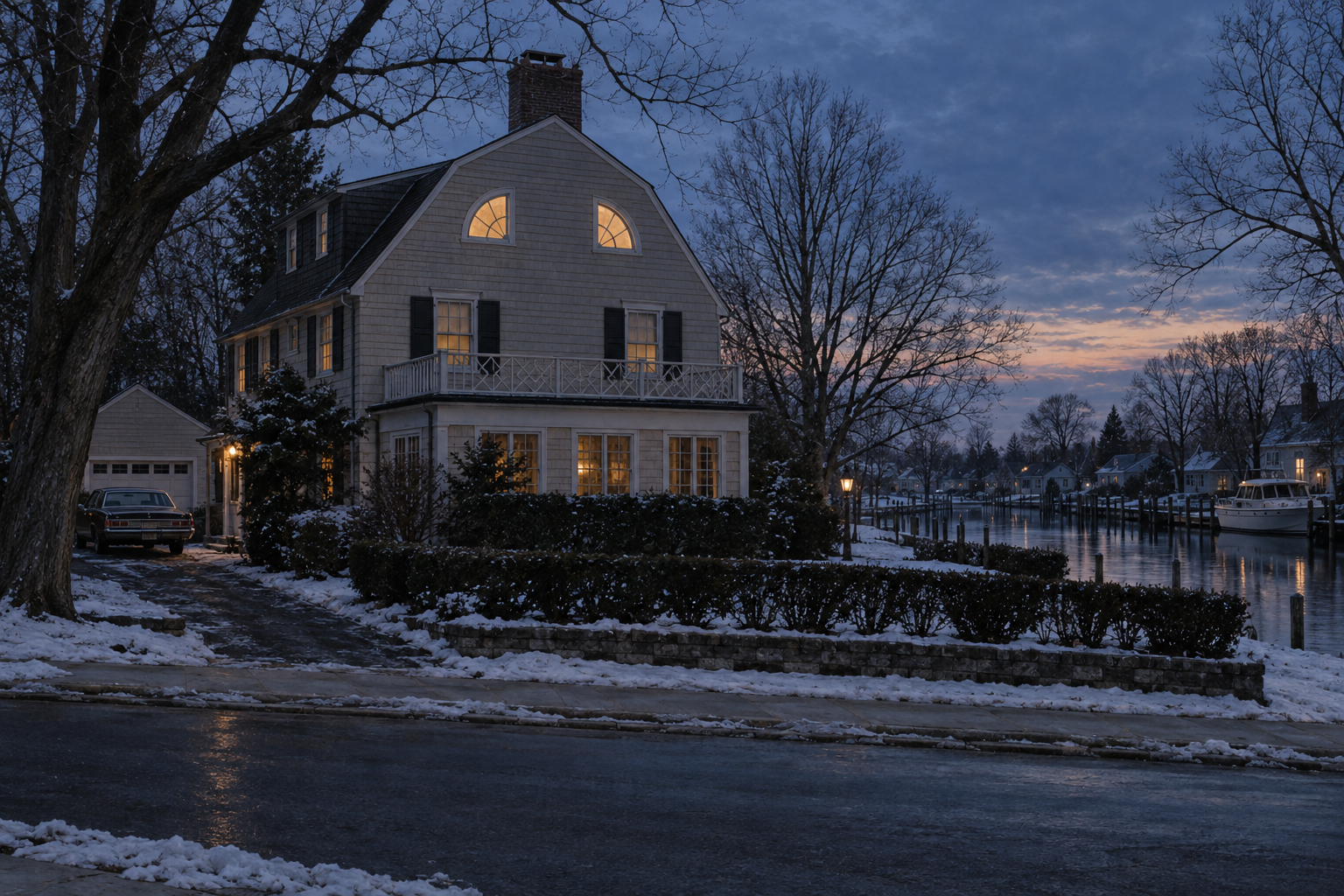
Supporting images provide documentary, geographic or visual context. Read each caption for its date, source and evidential limits.

Continue researching
Follow the evidence, context and comparisons
Curated connections
Selected editorially for this entry.
Borley Rectory became a benchmark haunted-house case because witness claims, press attention, Harry Price's investigations and later criticism all gathered around one vanished building.
Curated connection · ArticleThe Anatomy of a Haunting ReportA practical guide to separating atmosphere, testimony, memory, environment and possible causes in a reported haunting.
Curated connection · ArticleCursed Objects and the Stories We Attach to ThingsWhy ordinary objects can gather blame, awe and dread when misfortune needs a visible container.
More through shared context
Additional routes based only on existing topics, themes and metadata.
The 22 November 1987 intrusions interrupted WGN briefly and WTTW for about ninety seconds. An attacker probably overpowered microwave programme links; the FCC inquiry found no culprit.
Same primary topic · Shared theme: Media & rumour · Case fileThe Great Moon Hoax and the Machinery of WonderIn 1835, newspaper readers met moon forests, lunar animals and winged people in a celebrated lesson about media, science and appetite.