Historical Mysteries
Baychimo: The Arctic Ghost Ship That Would Not Stay Lost
The crew abandoned Baychimo after it vanished during a 1931 blizzard. The steel steamer survived and was repeatedly sighted or boarded; its final resting place remains unknown.
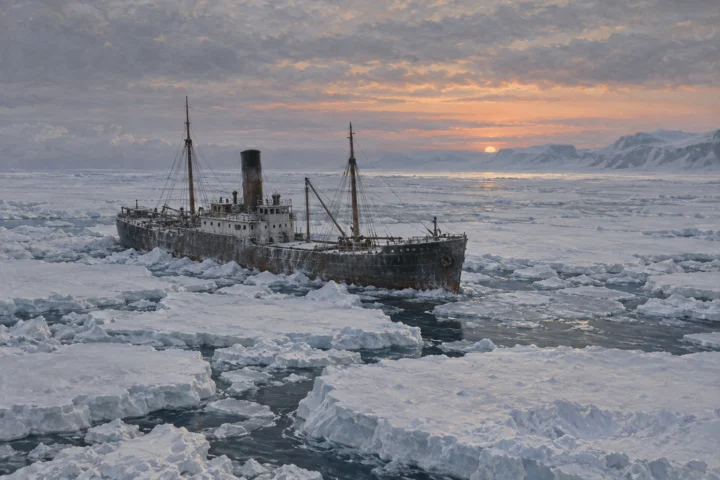
In October 1931, the Hudson’s Bay Company cargo steamer Baychimo became trapped in ice near Point Barrow, Alaska. Most passengers and crew were evacuated while Captain Sidney Cornwell and a smaller party waited ashore. After a blizzard, the ship disappeared and was assumed to have sunk.
Days later an Inupiat seal hunter reported the vessel about forty-five miles away. The crew recovered valuable cargo but judged the damaged, icebound ship unsafe and left it behind. Baychimo did not sink. Mariners sighted and sometimes boarded it repeatedly as winds and pack ice carried the empty hull across the western Arctic.
The last sighting noted in Hudson’s Bay Company archival history dates to 1969. Later searches have not securely located the wreck. The unknown is the ship’s final position, not whether a supernatural vessel sailed itself.
Baychimo makes a useful contrast with the deserted Mary Celeste, the unresolved Flannan Isles disappearance, and the archive’s guide to evidence, testimony and legend.
Claim, Context and Cautions
A working ship in Arctic trade
Built in Sweden in 1914 and acquired by the Hudson's Bay Company after the First World War, Baychimo supplied posts and carried furs through difficult seasonal waters. Its steel hull and experienced crew were designed for northern service, but not immunity from moving pack ice.
The ship's ordinary commercial record is preserved in company logs, plans and photographs.
Ice, evacuation and a shore camp
On 10 October 1931, ice halted the vessel. Aircraft removed many aboard, while a smaller group built a hut ashore to remain near the cargo. A severe blizzard struck in late November. When visibility returned, the ship was gone and the crew initially concluded it had foundered.
That conclusion was reasonable, but the ice had transported rather than crushed it.
Found again, then deliberately abandoned
A local hunter located Baychimo at a considerable distance. Cornwell's party reached the vessel and removed cargo over several days. Damage and the prospect of renewed entrapment led the company to abandon the hull rather than attempt recovery.
The “ghost ship” phase began with a documented commercial decision, not a crew vanishing mysteriously.
Sightings and boardings
Reports placed the vessel along the Alaskan coast and in Arctic ice for years. Some parties boarded it and removed material; one group reportedly sheltered aboard during a storm. Drift paths varied with wind, currents and seasonal pack.
Not every later report has equal documentation. The archival series establishes repeated survival, while popular lists may overstate the precision of individual sightings.
An empty ship can travel
A steel hull caught in pack ice can move with the ice field, be released into water and become trapped again. With no crew, its route is erratic but not purposeless: ocean and atmosphere supply the forces. Cold conditions can also slow deterioration.
Baychimo's longevity is unusual maritime endurance, not evidence of a vessel choosing its course.
The unresolved final location
The Hudson's Bay Company record notes a 1969 sighting as the latest in its files. Searches beginning decades later faced an enormous area, uncertain drift history and a seafloor capable of hiding a small wreck. No verified discovery has closed the case.
Its status is uncertain only in the final chapter: when and where the abandoned ship sank, grounded or broke apart.
Reference trail
Sources
- Hudson’s Bay Company Archives, Baychimo ship history (opens in a new tab)Official archival summary of construction, service, 1931 abandonment, sightings and relevant company records.
- Manitoba Museum, “Baychimo: The Adventures of the Ghost Ship of the Arctic” (opens in a new tab)Museum history using Hudson’s Bay Company Archives photographs and collection material.
- Canada’s History, “Unsinkable Ghost Ship” (opens in a new tab)Historical overview of the abandonment, subsequent sightings and modern search.
- Polar Record, “Rediscovering lost relationships…” (opens in a new tab)Peer-reviewed reconstruction using objects removed from Baychimo and museum accession records.
Case Book
Photographs, Maps and Supporting Images
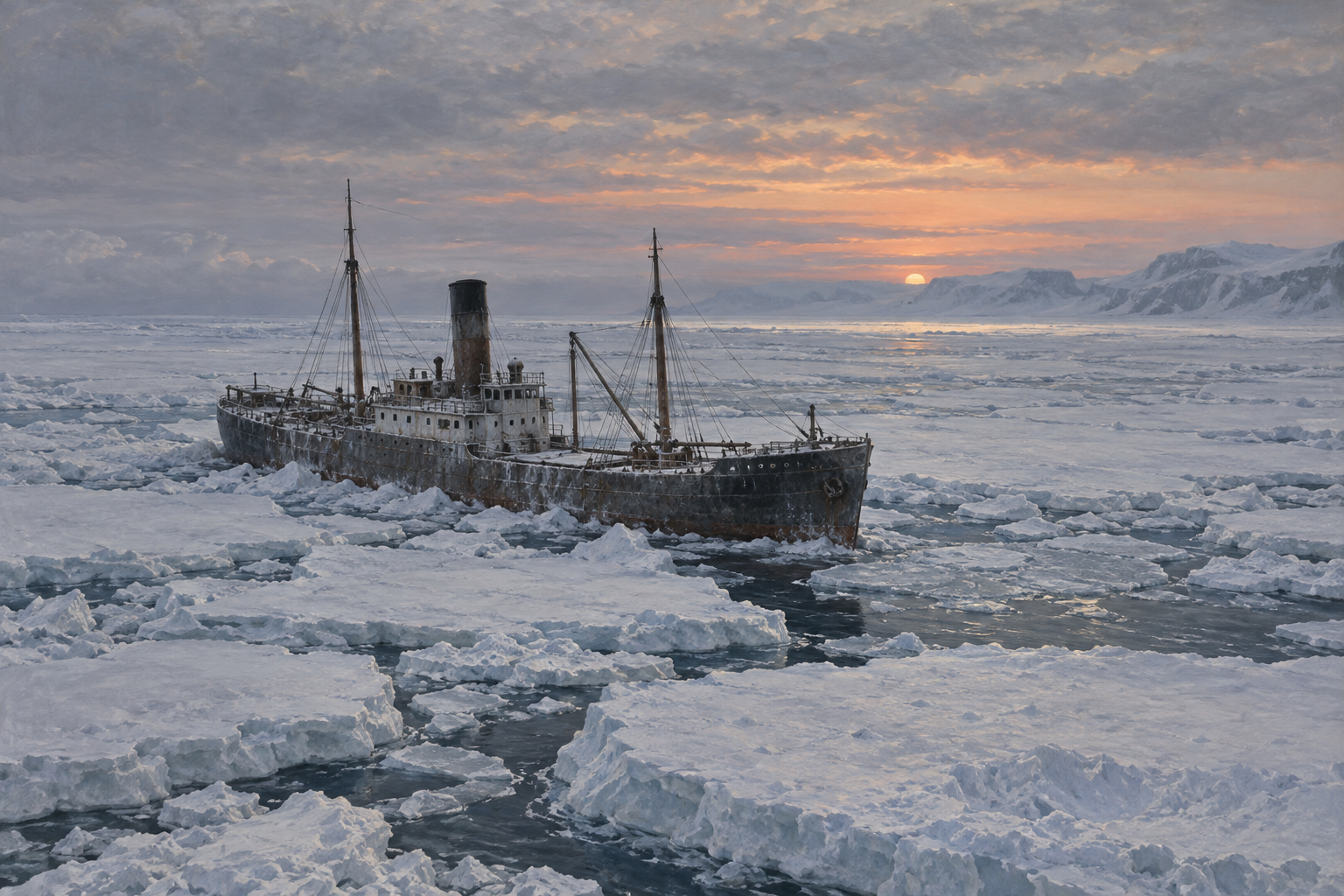
Supporting images provide documentary, geographic or visual context. Read each caption for its date, source and evidential limits.

Continue researching
Follow the evidence, context and comparisons
Curated connections
Selected editorially for this entry.
The famous 1872 maritime mystery is less a ghost story than a stubborn problem of evidence, weather, cargo and missing people.
Curated connection · Case fileThe Flannan Isles Lighthouse Keepers: A Vanishing at the Edge of WeatherThree lighthouse keepers disappeared from Eilean Mor in 1900, leaving a mystery where official records point toward sea, weather and working risk rather than fantasy.
Curated connection · ArticleThe Difference Between Evidence, Testimony and LegendA field guide to three words that often get tangled in mystery research.
More through shared context
Additional routes based only on existing topics, themes and metadata.
Ourang Medan is a maritime legend built through changing newspaper and magazine retellings. No verified ship registration, crew list, wreck or rescue record anchors the event.
Shared theme: Maritime · Case fileThe Carroll A. Deering: An Empty Schooner on Diamond ShoalsThe Carroll A. Deering was found abandoned on Diamond Shoals in January 1921. Missing boats, papers and crew suggested an organised departure, but its cause remains unknown.