Occult & Psychical Research
The Moberly–Jourdain Experience: Lost at Versailles
Charlotte Moberly and Eleanor Jourdain described an uncanny walk at Versailles in 1901. Their early notes and later research document a developing interpretation, not independent proof of a time slip.
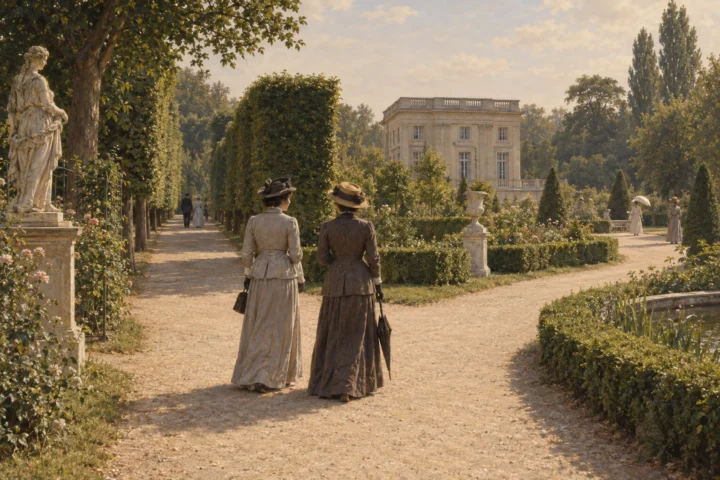
On 10 August 1901, Charlotte Anne Moberly and Eleanor Jourdain walked from the Palace of Versailles toward the Petit Trianon. Unfamiliar with the grounds, they lost their route and encountered people, buildings and an oppressive atmosphere that seemed out of place. Only afterward did they begin to wonder whether the scene belonged to the past.
The two women were experienced Oxford educators. Their status makes the account culturally important, but it does not turn later identification into direct observation. They discussed the walk before writing surviving statements months afterward, then spent years comparing memories with maps, portraits and histories of Marie Antoinette’s estate.
Their 1911 book An Adventure presented the episode anonymously as a possible crossing into 1789. Critics instead proposed mistaken paths, ordinary staff or visitors, period-dress activity, and memory reshaped through mutual discussion and research. No physical trace establishes a temporal event.
The case illustrates how testimony becomes interpretation, how place operates in landscape folklore, and how extraordinary stories once travelled before networked media.
Claim, Context and Cautions
A wrong turn near the Trianon
Moberly, principal of St Hugh's Hall in Oxford, had recently appointed Jourdain as her vice-principal. During a French holiday they visited Versailles and attempted to walk to the Petit Trianon without a detailed guide. They later described taking a confusing route past unfamiliar buildings and figures. Both recalled a growing sense of heaviness. Emotion is central to their narrative, but it cannot independently date the surroundings they saw.
What each woman remembered
Their observations overlapped without being identical. Both described men in old-fashioned-looking coats and an oddly still atmosphere. Moberly alone recalled a seated woman sketching near a house; Jourdain described other details that Moberly did not report. Later retellings often merge the two viewpoints into one seamless scene. Keeping them separate shows that the claimed event was reconstructed from two partial memories, not recorded by simultaneous notes.
From unease to Marie Antoinette
The historical interpretation developed after the visit. Research into old maps and estate history encouraged the women to identify lost structures and associate the sketching woman with Marie Antoinette. They connected the date with the approach of the march on the Tuileries in August 1792, though their book explored more than one historical layer. Recognition produced through later portraits and reading is suggestive to the witness, but vulnerable to selection: matches stand out while discrepancies recede.
The statements were not immediate
The women did not make independent records at the scene. Surviving accounts were written roughly three months later, after they had discussed whether the experience was strange. Critical studies argue that this interval and collaboration weaken claims that matching details arose independently. The early texts remain valuable because they allow comparison with the more elaborate published story. They show an interpretation acquiring confidence over time.
Ordinary Versailles and extraordinary memory
A visitor who is lost can encounter gardeners, guards, residents or other visitors without understanding their roles. Historic architecture, changing paths and period clothing can all produce anachronistic impressions. Proposed identifications of particular people or events have not been demonstrated. An ordinary encounter does not require the women to have fabricated anything. Sincere memory is reconstructive, especially when two close colleagues revisit an emotionally charged episode through shared research.
Why the adventure endured
An Adventure appeared in 1911 under the names Elizabeth Morison and Frances Lamont. Its educated authors, restrained tone and archival detail distinguished it from a conventional ghost story. It also emerged within an Anglican and psychical culture interested in survival, personality and enchanted place. The book documents a powerful experience and the meanings its authors built around it. It does not establish that Versailles briefly opened onto another century; that claim remains disputed.
Contextual glossary
Terms used in this entry
Definitions are offered as reading aids, not as conclusions about the case.
- Psychical research
- The organised investigation of claimed telepathy, apparitions, mediumship and related phenomena, particularly from the late nineteenth century. Its history includes field enquiries, experiments and persistent disputes over method.
- Time slip
- An experience interpreted as a brief encounter with another historical period or altered version of a place. Route, timing, fatigue, expectation and when the account was recorded are central evidence.
Reference trail
Sources
- C. A. E. Moberly and Eleanor F. Jourdain, An Adventure (1911), Project Gutenberg (opens in a new tab)The participants’ published first-person account; essential primary testimony but written and revised after the visit.
- Château de Versailles, “The ghosts of Trianon” (opens in a new tab)Institutional overview confirming the visit, authors’ positions, 1911 publication and the estate setting.
- Laura Schwartz, “Enchanted modernity, Anglicanism and the occult…” (Cultural and Social History, 2017) (opens in a new tab)Peer-reviewed cultural history placing the narrative within the authors’ religious, educational and psychical context.
- Sturge Whiting, The Mystery of Versailles (1938) (opens in a new tab)Historical critical study reproducing and comparing documentary claims and the delay before the early written accounts.
Case Book
Photographs, Maps and Supporting Images
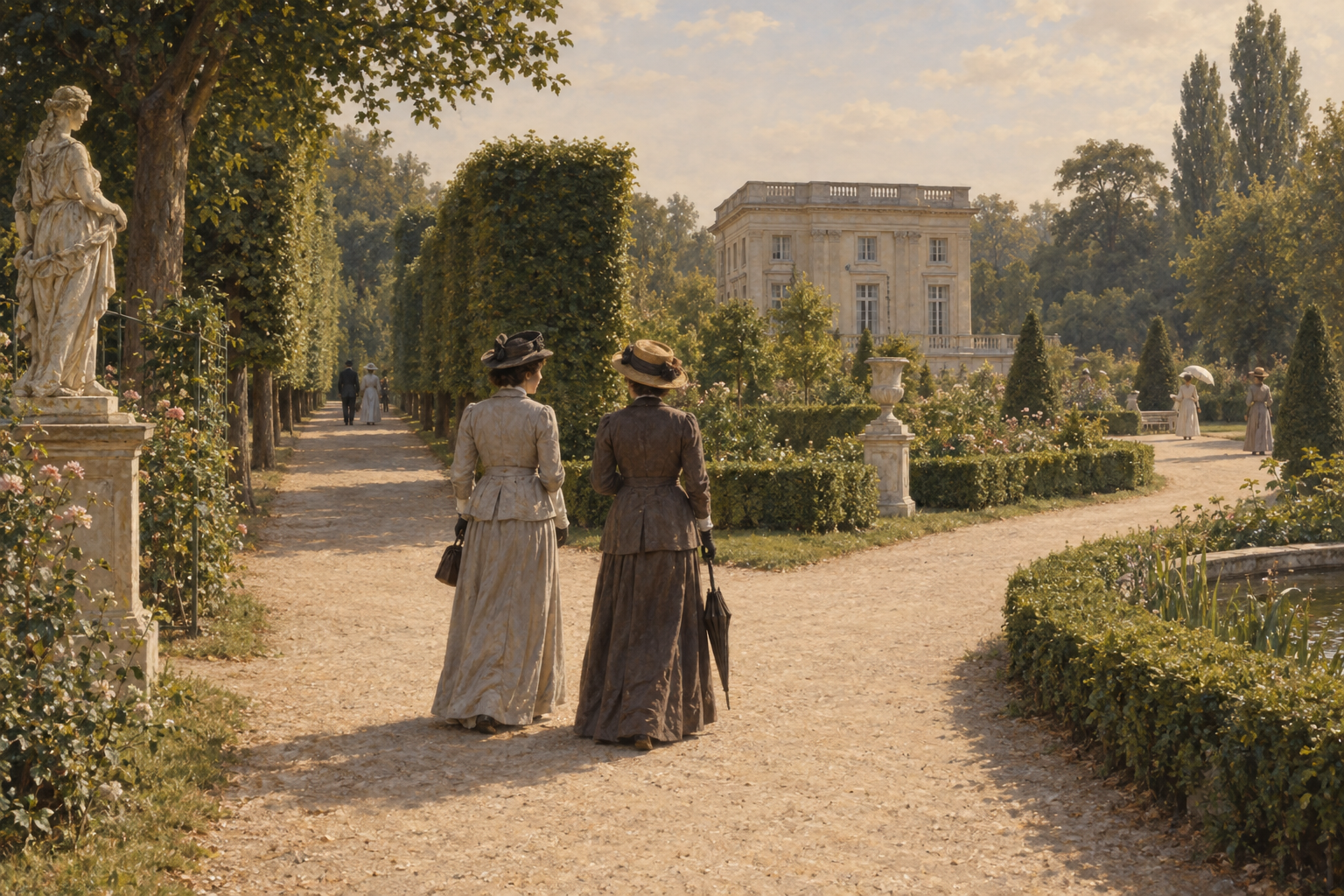
Supporting images provide documentary, geographic or visual context. Read each caption for its date, source and evidential limits.

Continue researching
Follow the evidence, context and comparisons
Curated connections
Selected editorially for this entry.
A field guide to three words that often get tangled in mystery research.
Curated connection · ArticleFairy Lore as Local GeographyHills, rings, paths and boundaries often matter more than wings or glitter in older fairy traditions.
Curated connection · ArticleUrban Legends Before the InternetChain letters, photocopies, local radio and schoolyard retellings show that viral folklore did not need a screen.
More through shared context
Additional routes based only on existing topics, themes and metadata.
The Fátima crowd event is historically documented, while its cause and religious meaning remain disputed. Testimony, expectation, optics and weather must be kept distinct.
Shared theme: Witness & memory · Case fileKenneth Arnold: The Sighting That Named the Flying SaucerKenneth Arnold’s 1947 report helped launch the modern flying-saucer era. His observation was sincere and carefully timed, but distance and object identity were never independently secured.