Disappearances & Unresolved Identities
The Bennington Triangle: Missing People, Missing Context
The Bennington Triangle is less a single event than a regional pattern built from disappearances, local lore and the human need to connect coincidences.
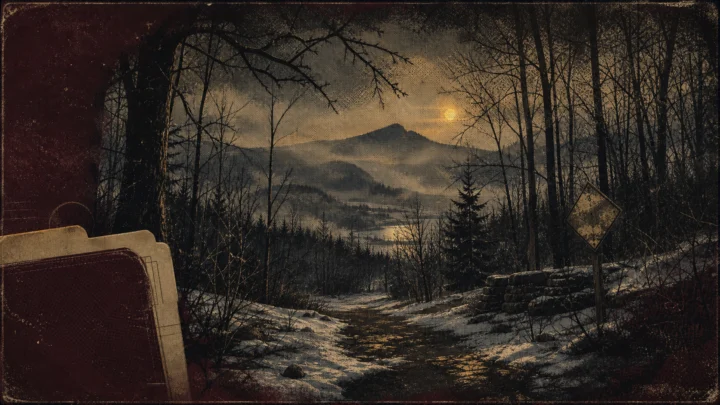
The Bennington Triangle is not a triangle in the way a map is a triangle. It is a later shape placed over several disappearances in and around southwestern Vermont, especially the area associated with Glastenbury Mountain and the town of Bennington. The phrase gives the cases a pattern. The harder task is deciding how much pattern the evidence can bear.
The disappearances usually gathered into the story took place between the mid-1940s and 1950. They include Middie Rivers, an experienced local guide who vanished in November 1945; Paula Jean Welden, a Bennington College student who disappeared while walking on the Long Trail in December 1946; James Tedford, whose disappearance from a bus in 1949 became one of the strangest elements in later retellings; Paul Jepson, a young child who vanished in 1950; and Frieda Langer, who disappeared later that same year while hiking and whose body was eventually found.
Sequence of events
The cases were not one event. They unfolded across years, under different circumstances, involving people of different ages and situations. Rivers was familiar with the land. Welden was a young walker whose disappearance drew public attention and search efforts. Tedford’s case is often remembered because he was said to have been on a bus before being missed. Jepson’s disappearance brought the fear close to family and farm life. Langer’s case, because remains were found, complicates the idea of a single vanished-without-trace pattern.
The “triangle” label came later. Once a name exists, separate events can begin to look as if they were always waiting to be connected. That does not make the disappearances trivial. It means the archive has to distinguish between original records and later pattern-making.
What is solid?
It is solid that several disappearances occurred in the region and that some remain troubling in the public memory. It is also solid that the geography matters. Mountain terrain, weather, woods, trails, search limitations and the passage of time all affect what can be known. Missing-person cases are not puzzles on a clean table; they happen in terrain that erases evidence.
It is also solid that the Bennington Triangle became a folklore object. The name helps people remember the cases, but it also encourages a single explanation where the record may support several different, incomplete explanations.
What remains uncertain?
The major uncertainty is whether the cases are meaningfully connected beyond geography, period and later storytelling. Accident, exposure, misadventure, crime, confusion and bad luck do not all leave the same kind of evidence. In some cases, the available record is too thin to choose one explanation responsibly.
Paranormal versions of the story tend to arrive after the pattern has already been drawn. They may be culturally interesting, but they should not be treated as a solution. The missing people deserve more care than a neat theory can usually provide.
Why it still matters
The Bennington Triangle matters because it shows how disappearance clusters form. A region gains a reputation. Later accounts gather names into a list. The list becomes a story, and the story begins to guide how people read the land. For Devil’s Hideout, the case is valuable because it asks readers to hold two truths at once: the disappearances were real, and the triangle is partly a construction.
Source note
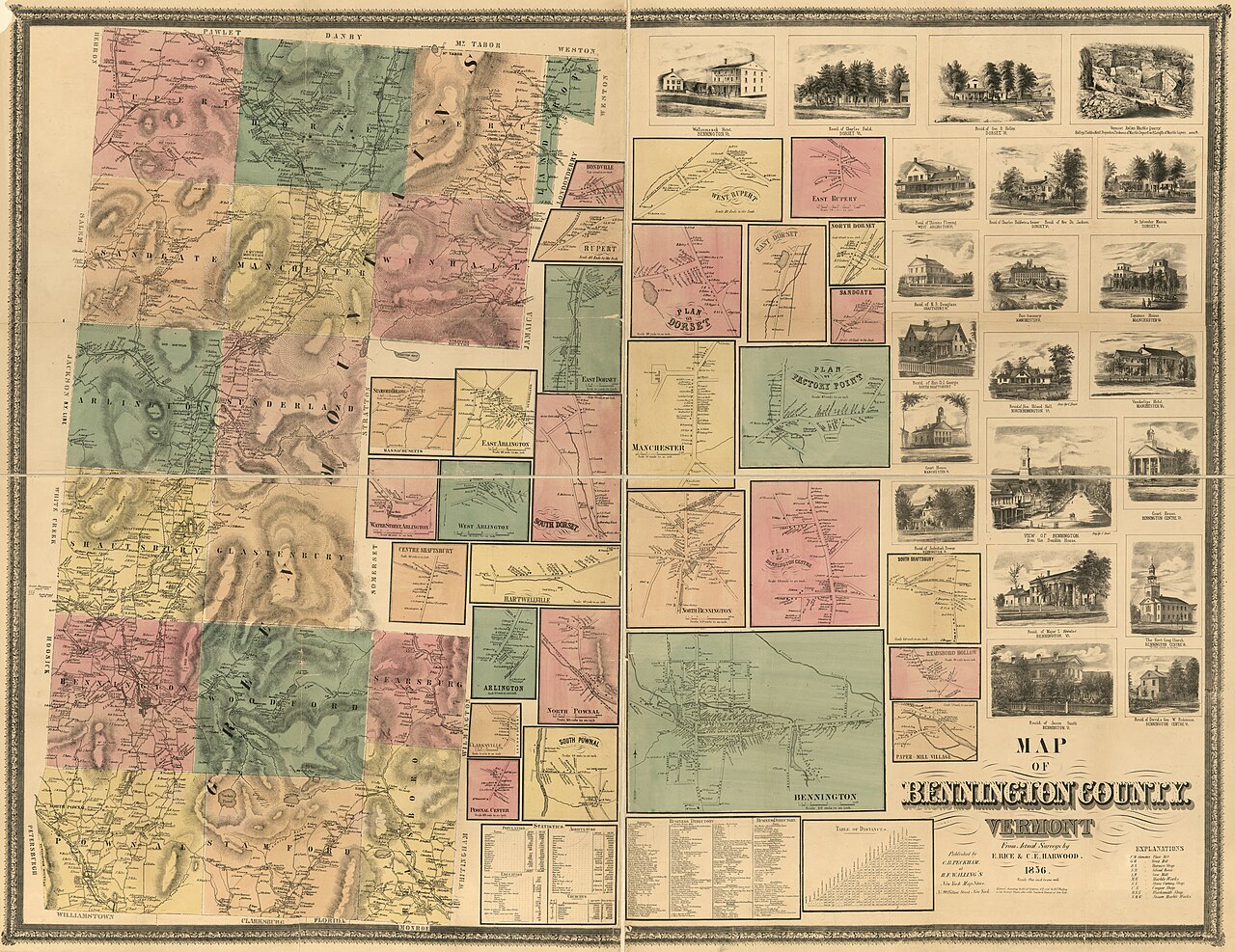
Useful source trails include local Vermont reporting, historical newspaper searches, maps of Glastenbury and the Long Trail, and careful comparisons between contemporary accounts and later paranormal summaries. Later lists should be checked against earlier records before being treated as evidence.
Claim, Context and Cautions
Claim
Several disappearances in southwestern Vermont were later grouped into a single mystery zone called the Bennington Triangle.
Background
The label came from later folklore and book culture rather than from a single official investigation that tied the events together.
Reported events
Different people vanished in different circumstances around the same region, and later writers began stitching the cases into a pattern.
Possible explanations
The strongest explanations remain ordinary and tragic: wilderness risk, lost trails, poor weather, chance and the way memory upgrades coincidence into system.
Sceptical view
The triangle is useful as folklore but weak as a literal mechanism. A map shape is not a cause.
Why it still interests people
It endures because it gives a region a shadow map, and because missing people are one of the few mysteries that naturally resist neat closure.
Contextual glossary
Terms used in this entry
Definitions are offered as reading aids, not as conclusions about the case.
- Coincidence
- Two or more events occurring together in a way that attracts attention without a demonstrated causal connection. Its evidential weight depends on how the match was defined and how many opportunities existed for it to occur.
- Uncertainty
- The stated limit on what a measurement, reconstruction or body of evidence can establish. Describing uncertainty is not indecision; it prevents a result from appearing more precise than the evidence allows.
Reference trail
Sources
- Vermont Public: How the Bennington Triangle developed a cult following (opens in a new tab)Public-radio investigation of the disappearances and the later construction of a single mystery region.
- Bennington Museum: History and biography research files (opens in a new tab)Museum finding aid for regional people, places and historical files relevant to local research.
- Alternation: The Bennington Triangle and vernacular region (opens in a new tab)Peer-reviewed analysis of how the named region and its supernatural reputation were constructed.
Case Book
Photographs, Maps and Supporting Images
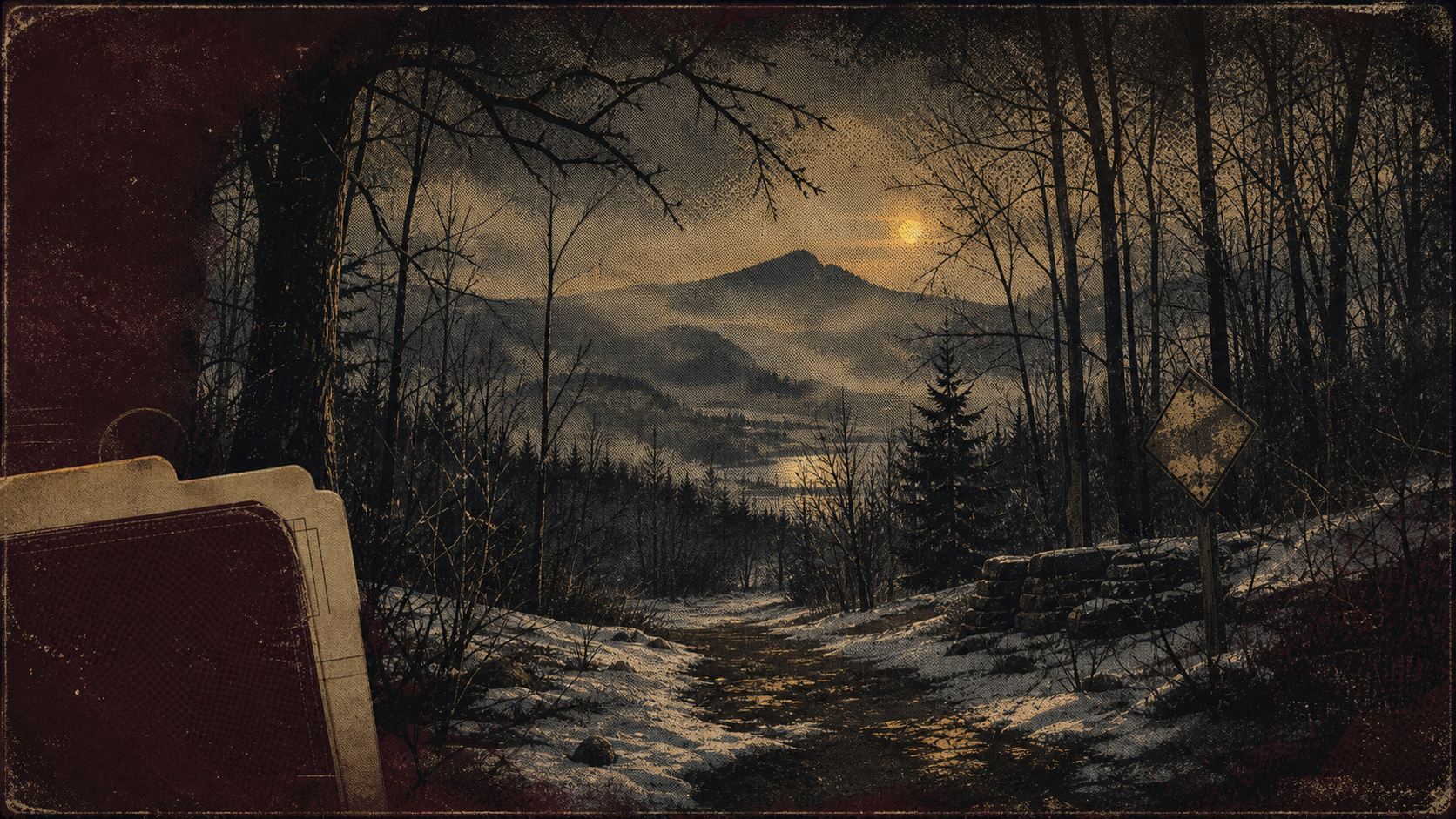
Supporting images provide documentary, geographic or visual context. Read each caption for its date, source and evidential limits.
Continue researching
Follow the evidence, context and comparisons
Curated connections
Selected editorially for this entry.
Dyatlov Pass remains an archive of frozen conditions, injuries and competing explanations, with the strongest case still grounded in the mountain rather than the supernatural.
Curated connection · Case fileThe Flannan Isles Lighthouse Keepers: A Vanishing at the Edge of WeatherThree lighthouse keepers disappeared from Eilean Mor in 1900, leaving a mystery where official records point toward sea, weather and working risk rather than fantasy.
Curated connection · Case fileRoanoke: The Lost Colony and the Word on the TreeThe Roanoke disappearance endures because one carved word, missing people and colonial uncertainty leave room for both evidence and imagination.