Hauntings & Apparitions
The Bell Witch: A Haunting Built From Legend and Memory
The Bell Witch story is one of America's most durable haunting legends, but its power comes from later storytelling as much as any recoverable event.
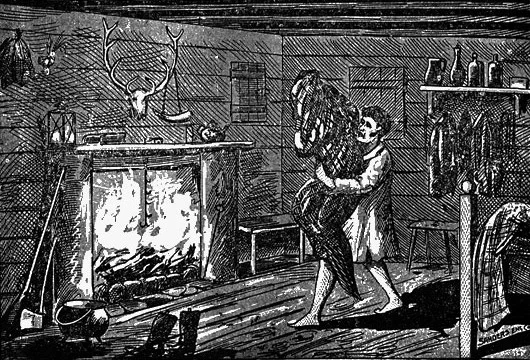
The Bell Witch is often introduced as a haunting with an unusually talkative spirit. The harder historical question is quieter: how much of the familiar story can be placed near the alleged events, and how much arrived through family memory and later publication?
The Bell farm
Tradition places the disturbances on John Bell’s farm near Adams, Tennessee, beginning around 1817. Accounts describe knocks, scratching, bedclothes pulled away, blows and eventually a voice. The presence was given personalities and motives, most famously a connection to neighbour Kate Batts.
The story grew to include religious argument, songs, prophecies, attacks on John Bell and a claim that the entity caused his death in 1820. Andrew Jackson was later added as a visitor whose party encountered the presence, although documentation for this episode is lacking.
The source gap
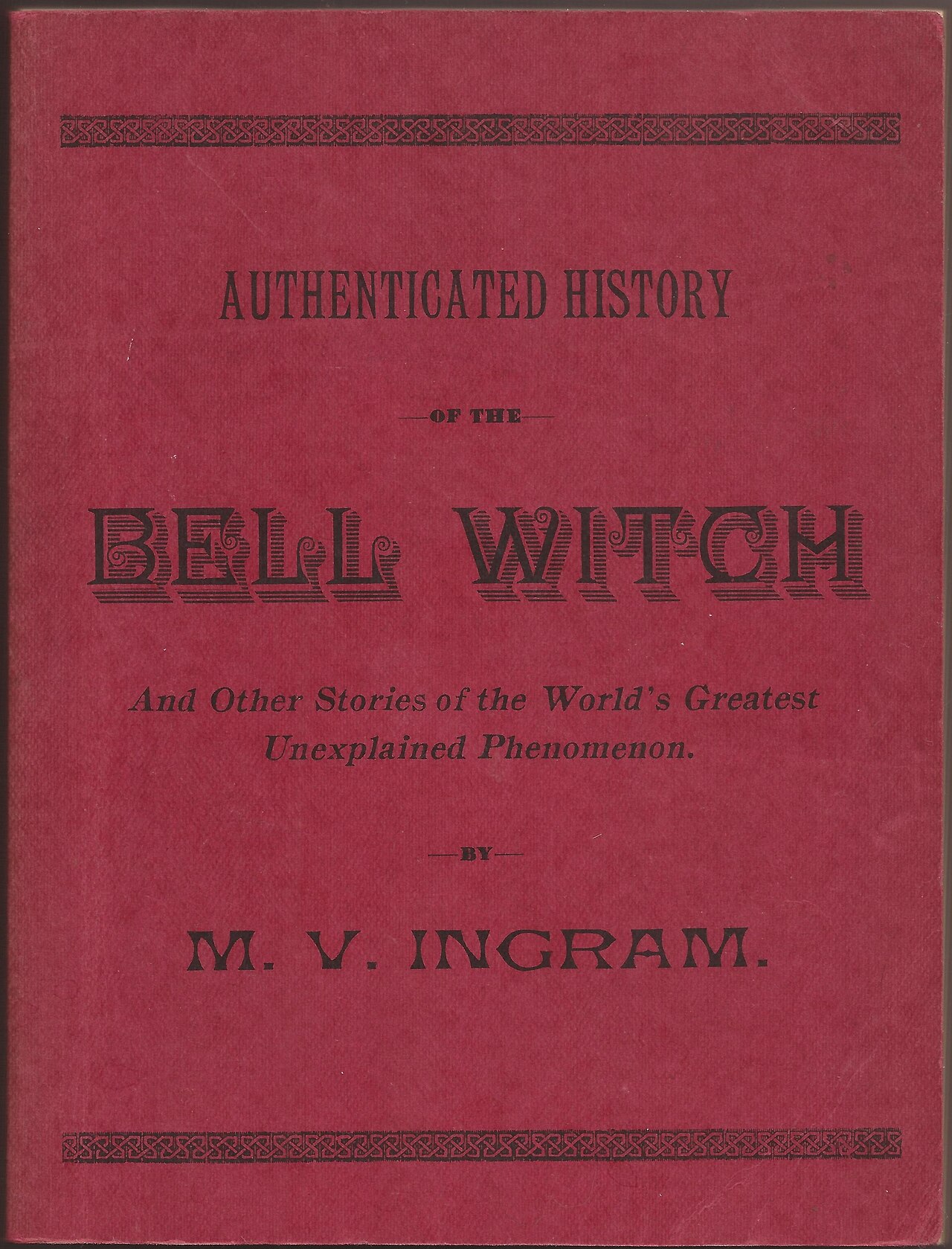
The central problem is distance. The fullest influential narrative is M. V. Ingram’s 1894 Authenticated History of the Bell Witch, published more than seventy years after the traditional events. It claimed access to an earlier manuscript by Richard Williams Bell, but the transmission and editorial shaping of the material are difficult to test.
Late sources are not worthless. They can preserve family tradition, names and local memory. They cannot be treated as verbatim contemporary records. Every polished scene must be checked against its earliest traceable appearance.
How a haunting becomes a regional legend
The Bell story contains motifs familiar from other household hauntings: intelligent knocks, invisible blows, a named entity and escalating conflict. Local geography, family status and repeated print gave those motifs a Tennessee address.
Once the story became part of regional identity, later caves, tours, books and screen versions created new reasons to tell it. Tourism does not automatically falsify tradition, but it can smooth uncertainty into a fixed plot.
What can be concluded
There is good evidence that a Bell Witch tradition existed in nineteenth-century Tennessee and became nationally known. There is much weaker evidence for the detailed supernatural chronology usually presented as fact. Illness, family conflict, pranks, religious belief and later embellishment may account for different layers, but the early record is too thin to reconstruct one final cause.
This differs from a case such as Borley Rectory, where a large contemporary investigator archive survives even though its quality is disputed. With the Bell Witch, the absence and lateness of the record are themselves the main evidence problem.
Why it still matters
The case demonstrates that longevity does not measure accuracy. A story can survive because it speaks to family, place and identity, not because every incident was independently documented.
The right archive does not demand that the legend choose between literal truth and irrelevance. It records when each version appeared and lets the history of the telling remain visible.
Claim, Context and Cautions
Claim
An intelligent invisible presence allegedly spoke, struck members of the Bell household and claimed responsibility for John Bell's death.
What is solid?
A durable nineteenth-century Tennessee tradition formed around the Bell family and was fixed in influential print by M. V. Ingram in 1894.
What remains uncertain?
The detailed sequence, contemporary documentation, reliability of the claimed earlier Bell manuscript and famous Andrew Jackson episode remain difficult or impossible to verify.
Possible explanations
Family and regional folklore, illness, conflict, pranks, religious anxiety and later literary shaping may explain different layers of the narrative.
Sceptical view
A late, coherent account should not be read as a contemporary transcript. The source history must be examined before individual scenes are treated as events.
Why it still matters
The Bell Witch is an unusually clear example of a local haunting becoming family inheritance, regional identity and commercial folklore.
Contextual glossary
Terms used in this entry
Definitions are offered as reading aids, not as conclusions about the case.
- Haunting
- A pattern of unusual experiences attributed to a place, including apparitions, sounds, movement or sensed presences. A location log is more informative than treating every incident as one cause.
- Uncertainty
- The stated limit on what a measurement, reconstruction or body of evidence can establish. Describing uncertainty is not indecision; it prevents a result from appearing more precise than the evidence allows.
Reference trail
Sources
- Tennessee Encyclopedia: Bell Witch (opens in a new tab)Regional historical overview of the Bell family, legend and major printed source.
- Internet Archive: Authenticated History of the Bell Witch (opens in a new tab)Digitised 1894 book central to the later form of the legend.
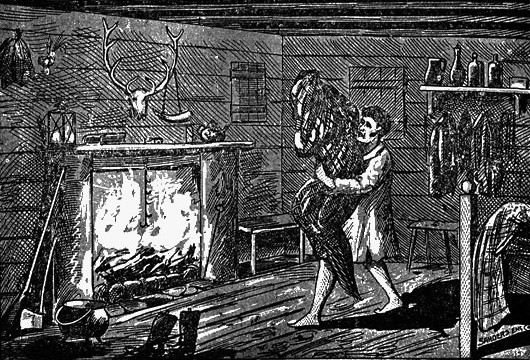
- Wikimedia Commons: Bell Witch illustration (opens in a new tab)Public-domain illustration record used by this case.
Case Book
Photographs, Maps and Supporting Images
Supporting images provide documentary, geographic or visual context. Read each caption for its date, source and evidential limits.
Continue researching
Follow the evidence, context and comparisons
Curated connections
Selected editorially for this entry.
Borley Rectory became a benchmark haunted-house case because witness claims, press attention, Harry Price's investigations and later criticism all gathered around one vanished building.
Curated connection · ArticleThe Difference Between Evidence, Testimony and LegendA field guide to three words that often get tangled in mystery research.
Curated connection · ArticleUrban Legends Before the InternetChain letters, photocopies, local radio and schoolyard retellings show that viral folklore did not need a screen.