Hoaxes, Misidentifications & Media
The Cottingley Fairies: Paper Wings, Cameras and Belief
Two Yorkshire cousins, a camera and a set of fairy photographs became one of the most instructive image hoaxes of the twentieth century.
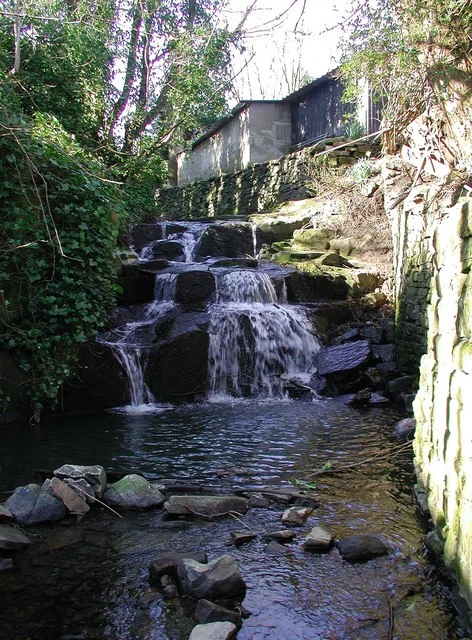
The Cottingley photographs did not persuade people because they survived a perfect technical examination. They persuaded people because a camera seemed impartial, two young cousins seemed incapable of managing adult belief, and the images arrived in a culture already prepared to treat photography as a doorway to the unseen.
Two photographs by the beck
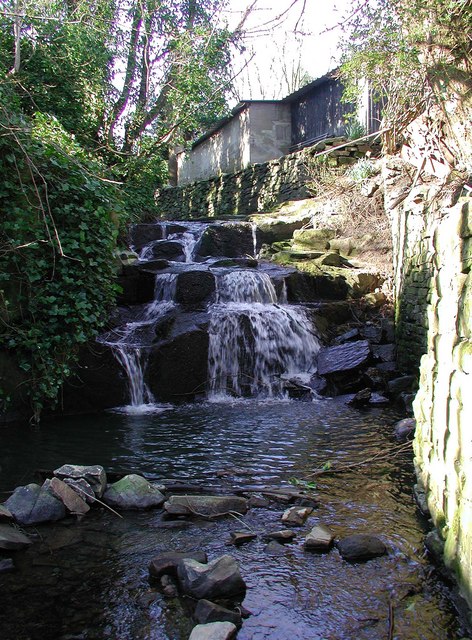
In 1917, Elsie Wright and Frances Griffiths made the first photographs near Cottingley Beck in West Yorkshire. One showed Frances with dancing winged figures; another placed Elsie beside a gnome-like shape. The pictures began inside a family disagreement about why the girls spent time near the beck.
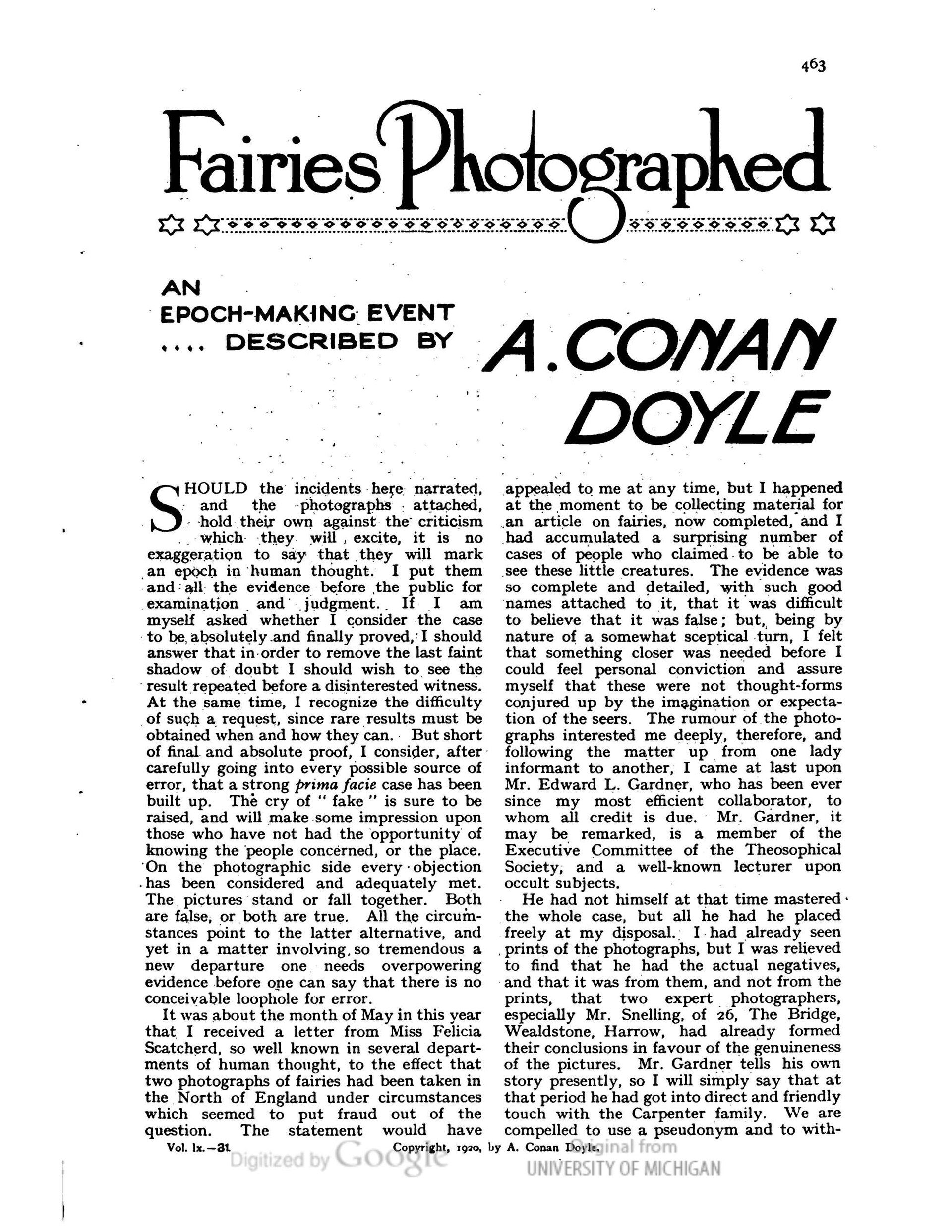
In 1919, Elsie’s mother showed the prints at a Theosophical Society meeting. Edward Gardner became involved, and the photographs reached Arthur Conan Doyle. Doyle was famous for Sherlock Holmes but was also a committed Spiritualist. He used the images in a 1920 magazine article as support for fairy existence.
What the camera tests did and did not show
Photography specialists examined negatives and found no obvious double exposure or darkroom compositing. That conclusion was narrower than the public claim. A camera can faithfully record a staged object placed in front of its lens. Showing that a negative was not altered does not show that the scene was natural.
The figures were flat, sharply outlined and reminiscent of published illustration. Those clues were visible, but investigators also relied on assumptions about the girls’ technical ability and honesty. Age and social position became substitutes for scene reconstruction.
The second series
Gardner supplied cameras and marked photographic plates for further work in 1920. Three more images followed. The controlled plates reduced some opportunities for substitution, but they did not control what was arranged in the landscape before the shutter was released.
Decades later, Elsie and Frances acknowledged that the familiar figures had been made from paper cut-outs supported with hatpins. The National Science and Media Museum preserves cameras, prints and correspondence that document both the making and the long afterlife of the images. Frances continued to maintain that the final photograph was different, a remaining personal claim rather than independently verified evidence.
What is solid?
Five photographs were produced, the first two in 1917 and the later group in 1920. Gardner and Doyle promoted them. The cousins later described the practical staging method, and surviving objects and records connect the pictures to their cameras and family history.
What remains uncertain?
The private intentions at each stage are harder to recover. A joke became a public test, and the girls then faced adults who had invested reputation and hope in the result. Frances’s continued claim for the final image belongs to her testimony; it does not overturn the admitted method used for the series.
Why viewers saw proof
The case belongs with the Window Face Photograph: an image does not arrive without interpretation. Technical authenticity, scene authenticity and supernatural interpretation are three separate questions. Cottingley passed only the limited test that the exposed plates were ordinary photographs.
Why it still matters
The photographs are valuable precisely because the mechanism is known. They show how a real camera, a simple prop and sincere adult expectation can produce evidence that feels stronger than it is. Image literacy begins by asking not only whether a file was manipulated, but what was placed before the lens.
Claim, Context and Cautions
Claim
Five photographs made at Cottingley appeared to show Elsie Wright and Frances Griffiths in the company of fairies.
What is solid?
The photographs, cameras, correspondence and publicity history survive. The cousins later described using illustrated paper figures and hatpins for the staged images.
What remains uncertain?
The cousins did not agree completely about the final photograph, and their intentions changed as a family joke became a public controversy.
Possible explanations
Flat paper figures placed in the scene explain the images without darkroom manipulation, exactly as the makers later described.
Sceptical view
A negative free of double exposure proves only that the camera recorded one scene; it does not authenticate every object arranged within that scene.
Why it still matters
Cottingley is an unusually complete lesson in camera trust, weak controls, social assumptions and the persistence of an image after its method is known.
Contextual glossary
Terms used in this entry
Definitions are offered as reading aids, not as conclusions about the case.
- Double exposure
- Two exposures recorded on the same photographic frame or combined to resemble one image. It may be accidental or deliberate and can create transparent figures or duplicated scenery.
- Reconstruction
- A later model, image or account made to represent an event from surviving information. It can clarify a hypothesis but should remain visibly separate from contemporary evidence.
Reference trail
Sources
- National Science and Media Museum: The Cottingley Fairies (opens in a new tab)Museum account of the five images, cameras, paper figures, hatpins and later correspondence.
- National Science and Media Museum: Using science to investigate the paranormal (opens in a new tab)Collection context for the cameras and the limits of the investigations applied to the photographs.
- National Science and Media Museum: Marjorie Curtis Collection (opens in a new tab)Archive description covering family photographs, clippings and the 1920 Conan Doyle article.
- Wikimedia Commons: Cottingley Beck (opens in a new tab)CC BY-SA 2.0 location photograph record used by the case.
Case Book
Photographs, Maps and Supporting Images
Supporting images provide documentary, geographic or visual context. Read each caption for its date, source and evidential limits.
Continue researching
Follow the evidence, context and comparisons
Curated connections
Selected editorially for this entry.
A face in a window is a useful archive case because it lets us talk about pareidolia, photography and the way expectation edits what we think we saw.
Curated connection · ArticleFairy Lore as Local GeographyHills, rings, paths and boundaries often matter more than wings or glitter in older fairy traditions.
Curated connection · ArticleThe Difference Between Evidence, Testimony and LegendA field guide to three words that often get tangled in mystery research.