Folklore & Legends
Fairy Lore as Local Geography
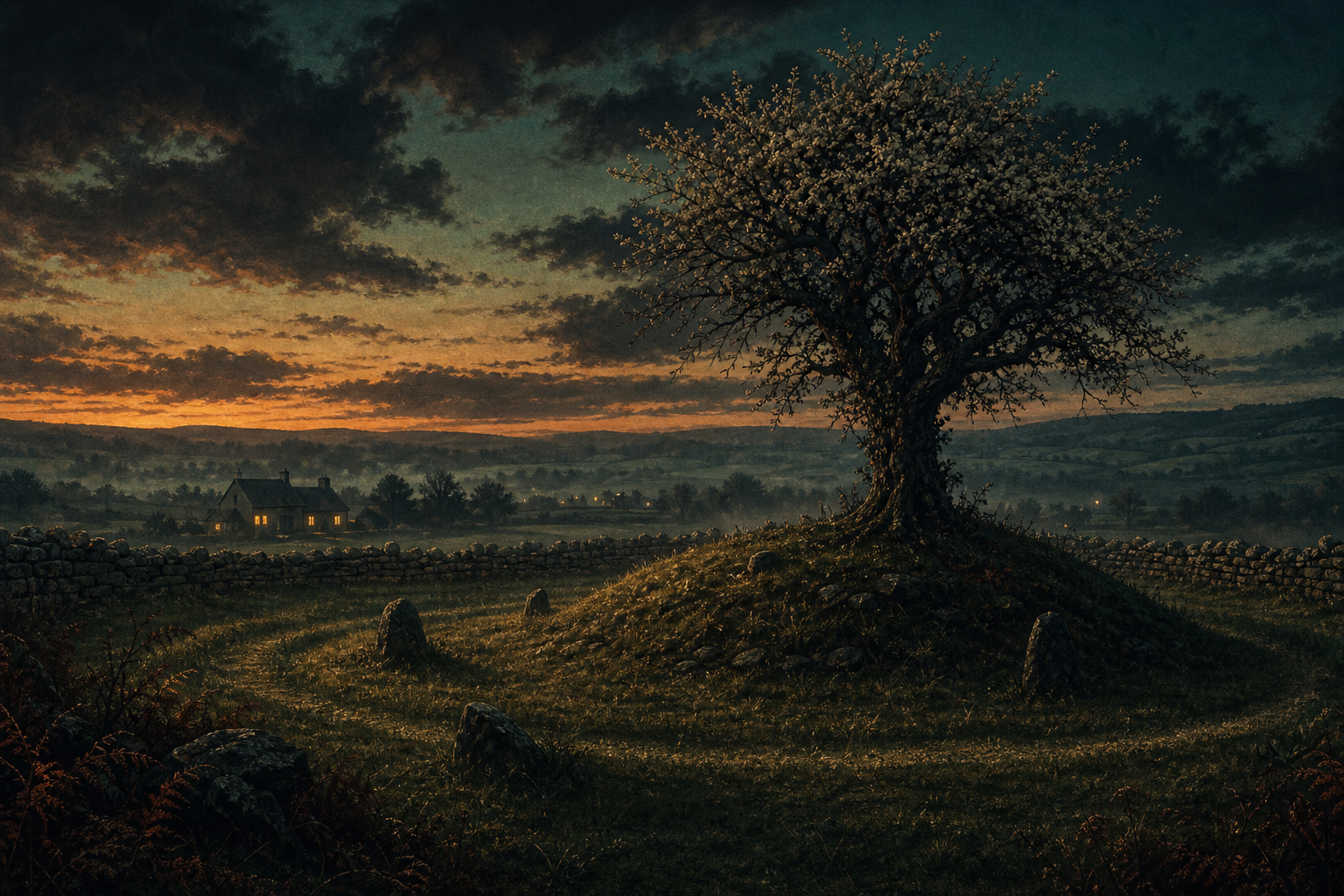
Hills, rings, paths and boundaries often matter more than wings or glitter in older fairy traditions.
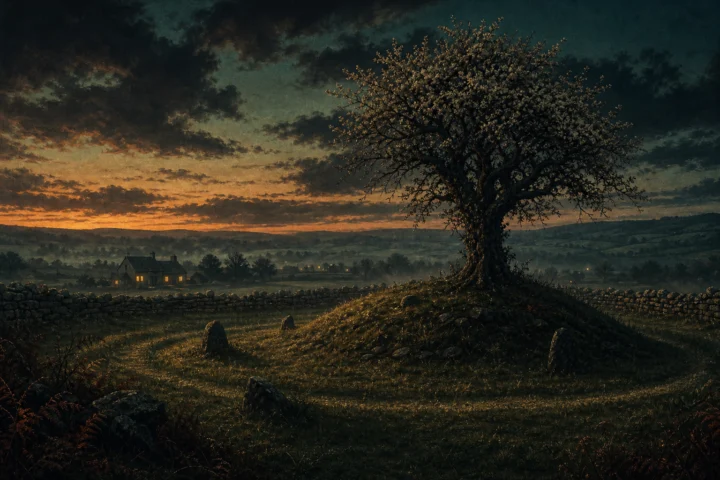
In place-based fairy lore, the hill, path, well or fort is not scenery. It is the part that stays. People and versions change, but a story can remain attached to one field boundary for generations because it explains how that place should be approached.
This is why older traditions often feel less like tales of miniature beings and more like maps with rules. Do not cut the lone tree. Do not disturb the ring. Leave the well as you found it. Avoid a certain path after dark. The instruction may be supernatural in form while preserving memory about land, danger, ownership or respect.
Forts and old earthworks
Across Ireland, ringforts and other earthworks acquired fairy associations long after their original human uses changed or were forgotten. The National Folklore Collection’s Schools’ Collection records thousands of local accounts gathered in the 1930s. Individual entries name actual forts, owners, roads, lights, animals and consequences.
These accounts should not be read as a national story copied into every parish. Their value lies in local detail and variation. One fort protects animals; another contains a path; another is linked to music or a warning against cutting bushes. The repeated category coexists with highly specific geography.
Wells, water and obligation
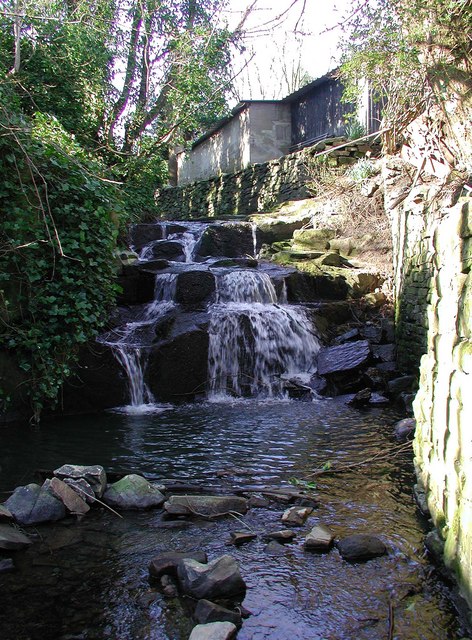
Wells gather stories because water gathers use. A well can be a practical source, a devotional place, a healing destination and a boundary marker at once. Fairy traditions may overlap with saint traditions or older place memory without allowing a simple chronology to be reconstructed.
The archive should record the exact well, access route, local name, associated day, offerings and changes to the site. A generic retelling that says only “a fairy well in Ireland” removes the evidence that made the account meaningful.
Roads, paths and thresholds
Stories travel along the routes people actually use. A figure appears at a bend; music is heard while returning from a neighbouring town; a traveller loses time near a boundary. Roads create sequence, and sequence turns a place into an encounter.
Threshold locations also concentrate uncertainty. At dusk, distance and direction are harder to judge. A route may cross wet ground, exposed coast or private land. A supernatural warning can preserve practical caution while also expressing who belongs, who may pass and what behaviour a community expects.
The same structure appears in phantom black-dog traditions, where roads, bridges and churchyard edges repeatedly shape the encounter. Similar landscape does not prove a shared creature. It shows that certain places are especially productive for warning stories.
What online retellings remove
Internet versions often keep the dramatic event and discard the townland, informant and route. A specific local account becomes “an ancient Celtic legend,” a phrase that sounds old while concealing the absence of a dated source. Tourism copy may merge neighbouring traditions into one marketable place story.
Returning to collection metadata can restore what was lost: who supplied the account, where they lived, who collected it, when it was recorded and which page preserves it. That does not make every remembered claim historically literal. It makes the tradition traceable.
A place-based field record
- Record coordinates, local place-name and the route used to reach the site.
- Photograph the wider landscape as well as the feature itself.
- Identify the informant, collector and recording date where consent allows.
- Separate the site’s archaeological history from the date the folklore was documented.
- List rules, warnings and seasonal customs without combining different versions.
- Check maps, monument records, newspapers and folklore collections for independent context.
Landscape as cultural evidence
Fairy lore is not archaeological proof of hidden beings, and archaeology does not exhaust what a place means. A ringfort can be a material remnant of settlement and a later focus of living tradition. Both histories are real in different senses.
Keeping the geography intact allows the archive to hold that distinction. The question becomes not simply “did this happen?” but “why did this story settle here, and what did it teach people to notice?”
Contextual glossary
Terms used in this entry
Definitions are offered as reading aids, not as conclusions about the case.
- Black dog
- A spectral or uncanny dog associated in British and Irish traditions with roads, churchyards, boundaries, storms or death omens. Similar motifs do not make every local story the same tradition.
- Uncertainty
- The stated limit on what a measurement, reconstruction or body of evidence can establish. Describing uncertainty is not indecision; it prevents a result from appearing more precise than the evidence allows.
- Metadata
- Information stored about a record, such as its creation time, device, location, format or editing history. Metadata can support provenance but may be missing, altered or copied incorrectly.
Reference trail
Sources
- National Folklore Collection: The Schools' Collection stories (opens in a new tab)Digitised 1930s Irish folklore manuscripts with named schools, collectors, informants and places.
- Duchas: Schools' Collection search for fairy forts (opens in a new tab)A targeted search of transcribed accounts showing how fort traditions attach to named places and local beliefs.
- Duchas: Schools' Collection search for fairy wells (opens in a new tab)A targeted search of transcribed accounts connecting wells, informants and local encounter traditions.
- Library of Congress: Legends and Belief Tales (opens in a new tab)Guidance for reading belief narratives as folklore records rather than automatic event verification.
Case Book
Photographs, Maps and Supporting Images
Supporting images provide documentary, geographic or visual context. Read each caption for its date, source and evidential limits.
Continue researching
Follow the evidence, context and comparisons
Curated connections
Selected editorially for this entry.
Black Shuck endures because it is a black-dog legend that can stand for warning, death, landscape and local memory at the same time.
Curated connection · ArticleWhy Phantom Black Dogs Haunt So Many Local LegendsBlack dog stories reveal how roads, boundaries, danger and memory gather into a repeated supernatural form.
Curated connection · ArticleUrban Legends Before the InternetChain letters, photocopies, local radio and schoolyard retellings show that viral folklore did not need a screen.