Occult & Psychical Research
Cursed Objects and the Stories We Attach to Things
Why ordinary objects can gather blame, awe and dread when misfortune needs a visible container.
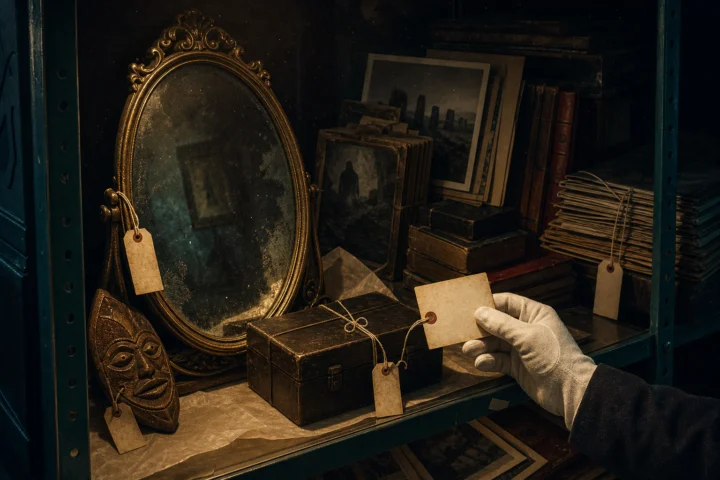
A cursed object is never only an object. A ring, doll, portrait, jewel or book becomes dangerous after a story fixes misfortune to it: an owner dies, a visitor falls ill, a warning is ignored, and every later coincidence is recruited as confirmation. The material thing stays still while its biography grows.
That biography deserves investigation, but it should not be confused with provenance. Provenance asks who made, owned, sold and preserved an object, with dates and documents where possible. A curse story asks what people came to believe about it. The two trails may cross, but they are not interchangeable.
Begin with the object, not the warning
Record material, dimensions, maker, date, alterations and present owner. Establish when the object entered each collection and whether its identity can be traced continuously. An old-looking object with no history before an online auction has a different evidential status from a museum object with catalogues, invoices and conservation records.
Next, date the curse. Was it mentioned before a death or only afterwards? Does it appear in family correspondence, a newspaper, an auction description, a tourist leaflet or a recent video? The earliest documented supernatural claim is often much younger than the object.
The Hope Diamond: one jewel, two histories
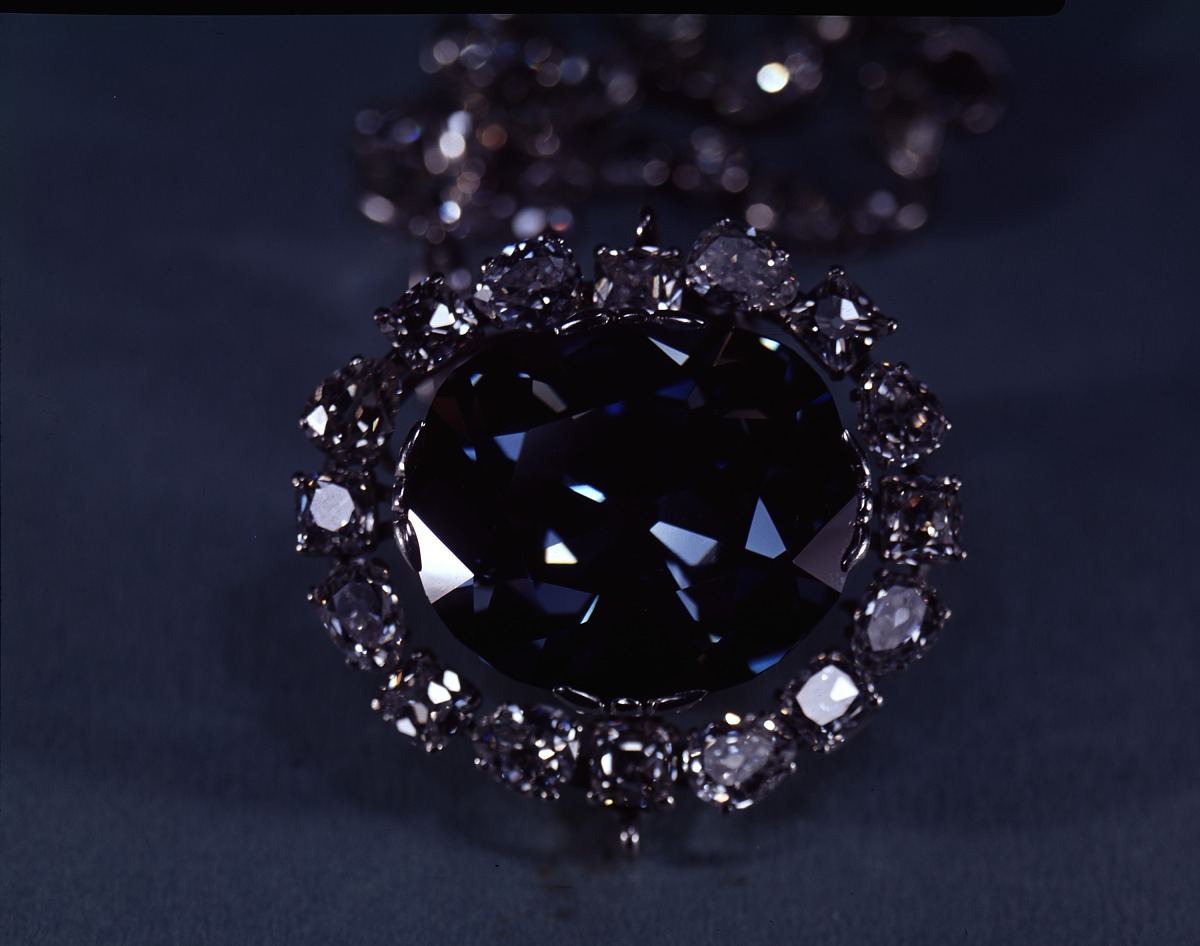
The Hope Diamond has a substantial physical and ownership history. It can be connected to the French Blue through measurements, documentary work and a surviving lead model. Its curse history is different. Smithsonian research traces the familiar supernatural narrative especially to early twentieth-century salesmanship and publicity.
Tragedies associated with Evalyn Walsh McLean are real. They do not establish that a diamond caused them. The curse is assembled retrospectively from selected owners and selected outcomes; long uneventful periods do not become part of the list.
Owner testimony and pattern-making
An owner may sincerely associate an object with nightmares, illness or household conflict. That testimony should be recorded in the owner’s words, with dates and circumstances. It should not be silently upgraded into a verified property of the object.
Once attention centres on a suspected object, ordinary failures become salient. A cracked glass, poor sleep or electrical fault that would normally be forgotten now belongs to a pattern. Friends hear the warning before visiting and monitor their reactions. Expectation does not make distress unreal; it changes what is noticed and remembered.
Marketing creates a cleaner curse
A curse gives an object a plot, and plots sell. Dealers, museums, collectors, publishers and tourist attractions may all benefit from a biography with danger and consequence. That does not mean every institution fabricates its account. It means commercial context belongs in the evidence file.
The Fiji Mermaid and Cardiff Giant were deliberate spectacles whose histories include the mechanics of admission, display and press attention. A supposedly cursed object may be genuine rather than fabricated, but its supernatural reputation can still be managed as entertainment.
A curse audit
- Identify the object: confirm that every story refers to the same physical item.
- Build the provenance: list owners, transfers and gaps without filling them from legend.
- Date each claim: distinguish an event date from the date it was first reported.
- Count exclusions: note owners and periods in which no misfortune was recorded.
- Check ordinary causes: health, finance, environment, conservation and family conflict.
- Follow the money: mark auctions, exhibitions, books, films and publicity campaigns.
- Preserve testimony: record experience respectfully without treating sincerity as causation.
Why the category endures
A cursed object gives chance a visible address. Misfortune can be locked away, sold, blessed, buried or placed behind glass. The story turns randomness into a relationship between action and consequence.
That makes cursed objects valuable cultural records even when the supernatural claim is unsupported. The archive should retain both biographies: the documented life of the thing and the changing story people asked it to carry.
Contextual glossary
Terms used in this entry
Definitions are offered as reading aids, not as conclusions about the case.
- Provenance
- The documented history of an object’s origin, ownership, location and handling. A dramatic claim with weak provenance cannot reliably establish where or when an object came from.
- Coincidence
- Two or more events occurring together in a way that attracts attention without a demonstrated causal connection. Its evidential weight depends on how the match was defined and how many opportunities existed for it to occur.
Reference trail
Sources
- Smithsonian National Collections Program: Provenance (opens in a new tab)Museum guidance on reconstructing ownership history and recognising gaps in an object's documented life.
- Smithsonian National Museum of Natural History: History of the Hope Diamond (opens in a new tab)A detailed example separating a gem's documented history from its later curse narrative.
- The Metropolitan Museum of Art: Provenance Research (opens in a new tab)Museum explanation of provenance as an investigation into creation, ownership and movement.
- Library of Congress: Legends and Belief Tales (opens in a new tab)Research context for stories that are repeated as accounts of possible events.
Case Book
Photographs, Maps and Supporting Images
Supporting images provide documentary, geographic or visual context. Read each caption for its date, source and evidential limits.
Continue researching
Follow the evidence, context and comparisons
Curated connections
Selected editorially for this entry.
The Hope Diamond is real, spectacular and historically traceable; the curse attached to it is better read as media folklore and gem-market theatre.
Curated connection · Case fileThe Fiji Mermaid: A Fake That Made Barnum FamousThe Feejee Mermaid became an object lesson in showmanship because the hoax was never just the object; it was the lecture around it.
Curated connection · Case fileThe Cardiff Giant: America’s Stone Hoax and the Business of BeliefThe Cardiff Giant was a carved gypsum fake sold as a petrified ancient man, and it remains one of the cleanest lessons in spectacle, profit and belief.