Folklore & Legends
Selkies: Seal People, Stolen Skins and Stories of Return
Selkie stories are living folklore rather than zoological reports. Their variants preserve island relationships with seals and the sea, while modern retellings increasingly examine consent in the stolen-skin marriage plot.
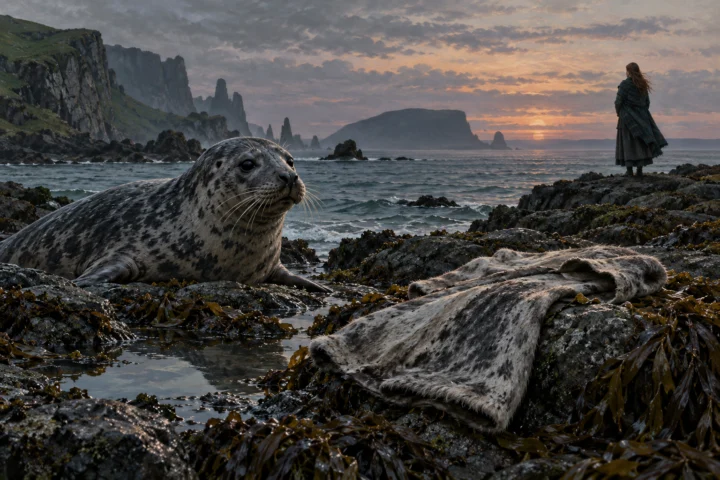
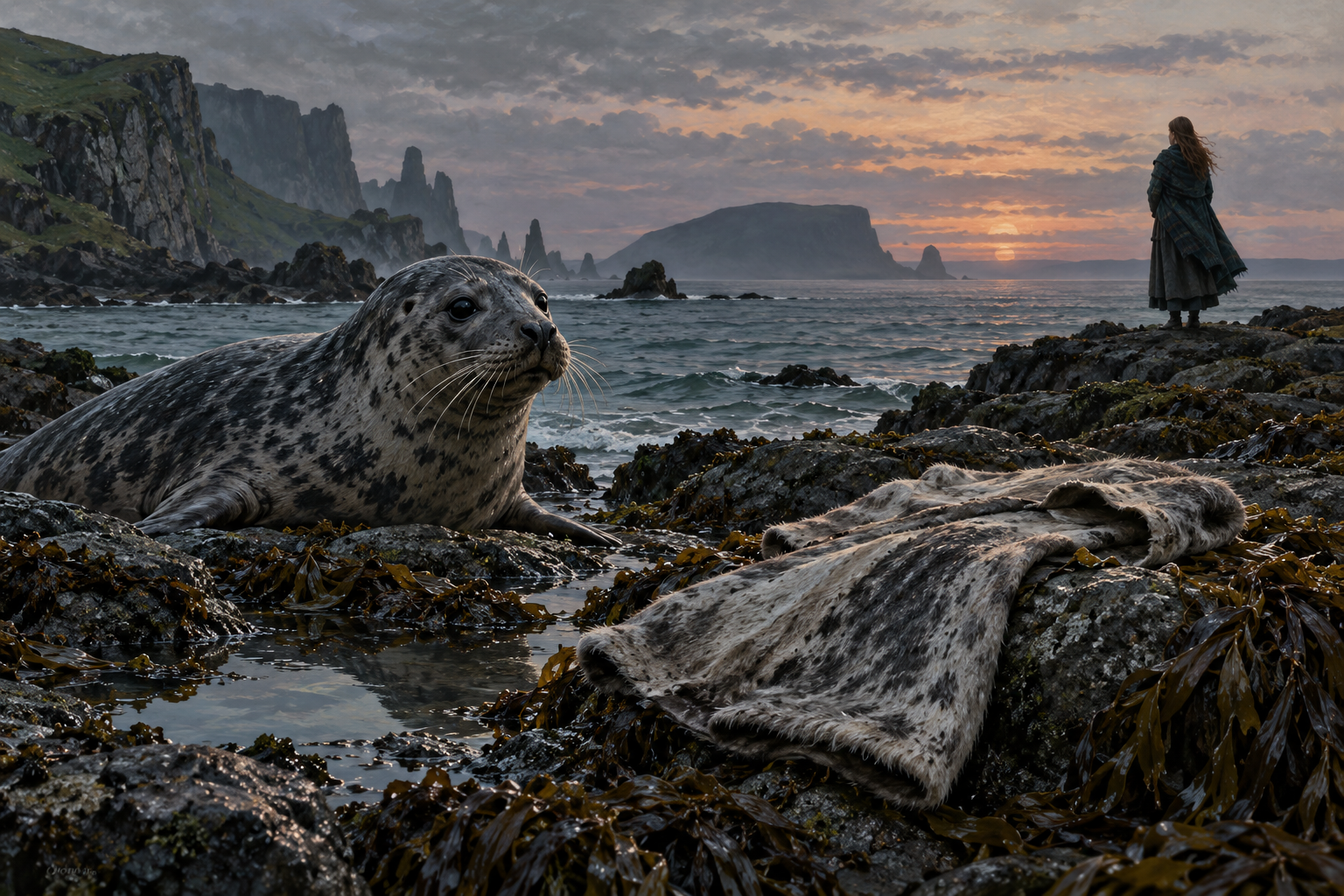
In traditions of Orkney, Shetland and other North Atlantic coasts, a selkie is a seal capable of taking human form by removing its skin. The best-known plot has a person hide a selkie woman’s skin, preventing her return to the sea and compelling a marriage. Years later she finds it and leaves.
That outline is not one fixed canonical myth. Some stories feature male selkies visiting human partners, seal ancestry, revenge for killed seals, rescues or warnings. Ballads and recorded storytelling alter names, morals and endings for their audiences.
The stolen-skin tale is sometimes softened into romance, but its mechanism is confinement. Modern readings foreground consent and the divided loyalties of children left between households. Earlier tellers could hold sympathy, danger and humour together without resolving them into a single moral.
Seals were familiar neighbours and resources. Their eyes, voices, curiosity and ability to move between shore and deep water made them powerful boundary animals. That ecological intimacy explains imagery; it does not mean archived stories are disguised sighting reports of an unknown humanoid species.
Selkies belong with the place-based method of fairy lore, changing versions of the vanishing hitchhiker, and the distinction between evidence, testimony and legend.
Claim, Context and Cautions
Skin, movement and captivity
The removable skin makes transformation tangible: possession of it controls whether the selkie can cross the boundary. In marriage variants, domestic years do not erase the original coercion or the pull of the sea. A found skin restores agency, often at painful cost.
Treating this as one universal Celtic story obscures different island terms, performance settings and family claims.
Ballad and spoken story
The Great Silkie of Sule Skerry circulates as a ballad with its own kinship and fatality motifs. Prose stories recorded by twentieth-century collectors may centre different islands or remembered neighbours. Print can feed back into oral performance, so an old-sounding version is not necessarily independent of books.
Archive dates establish when a performance was captured, while the teller may describe a much longer chain of transmission.
Seals in coastal life
A seal's shape changes dramatically between water and land, and its calls can sound uncannily human. Hunting and fishing made encounters morally charged. Stories could express taboo, reciprocity, loss at sea or claims that a family carried distinctive seal ancestry.
Natural observations provide material for symbolism without reducing the tradition to misidentification. The narrative transformation is meaningful because listeners knew ordinary seals well.
A tradition that continues to change
Recordings preserve individual voices, not fossils of an untouched past. Tourism, novels, film and environmental concern now circulate alongside family and island versions. New tellers may emphasise ecological kinship or expose the violence hidden by romantic adaptation.
The evidence supports a diverse regional tradition connected by seal-human transformation and return. It does not identify a first selkie story or validate a biological shapeshifter. Listening to variants—and crediting the people and archives that preserve them—keeps the tradition more accurate and more alive than compressing it into a paranormal encounter. Differences among Orkney, Shetland, Gaelic and literary sources should be retained, not blended into a placeless modern mythology. Catalogues should name the recorded teller whenever permissions allow.
Contextual glossary
Terms used in this entry
Definitions are offered as reading aids, not as conclusions about the case.
- Selkie
- A seal being in Scottish and Irish tradition who can take human form, commonly through removing a skin. Surviving stories vary, but often concern captivity, marriage, loss and return to the sea.
- Misidentification
- A real object, animal, sound or event interpreted as something else because identifying information was limited. Distance, darkness and unfamiliar angles commonly remove useful scale and context.
Reference trail
Sources
- Proceedings of the Society of Antiquaries of Scotland, Shetland Ballad (opens in a new tab)Nineteenth-century published source for a selkie ballad tradition.
- Oral Tradition, Dipping into the Well (opens in a new tab)Peer-reviewed study linking specific Scottish oral recordings to archive context.
- University of Edinburgh, Scottish Studies 42/2 (opens in a new tab)Recent scholarship using named archive recordings to examine seal folklore and transmission.
Case Book
Photographs, Maps and Supporting Images
Supporting images provide documentary, geographic or visual context. Read each caption for its date, source and evidential limits.

Continue researching
Follow the evidence, context and comparisons
Curated connections
Selected editorially for this entry.
Hills, rings, paths and boundaries often matter more than wings or glitter in older fairy traditions.
Curated connection · Case fileThe Vanishing Hitchhiker: Anatomy of a Travelling LegendVanishing-hitchhiker stories are documented folklore rather than one verified recurring event. Their changing details, local authentication and older supernatural motifs reveal how a modern legend acquires credibility.
Curated connection · ArticleThe Difference Between Evidence, Testimony and LegendA field guide to three words that often get tangled in mystery research.