Hoaxes, Misidentifications & Media
Mary Toft: The Rabbit Births That Fooled Georgian Doctors
Mary Toft’s rabbit-birth claims were a documented medical hoax. The case reveals unequal power, weak observation and the speed with which professional authority can magnify a spectacle.
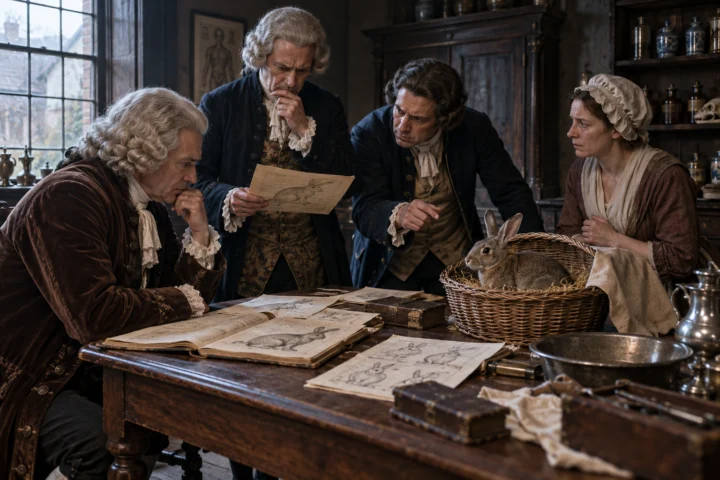
In 1726, Mary Toft of Godalming became the centre of an extraordinary medical spectacle. After a miscarriage, attendants claimed that she repeatedly delivered pieces of rabbits and other animal matter. Local surgeon John Howard reported the events to influential doctors, and the story reached the court of George I.
Several practitioners examined Toft or the material. Some accepted an explanation based on “maternal impression”, the obsolete belief that a pregnant woman’s experiences could shape a foetus. Others noticed anatomical and practical contradictions. In London, closer confinement made the performance harder to sustain. Toft confessed on 7 December after a porter was caught trying to obtain a rabbit for her room.
The fraud was real, but motive and responsibility are less simple than the caricature of one woman fooling learned men. Confessions were produced under threat, accounts disagreed over who inserted the animal parts, and Toft occupied a vulnerable position among male practitioners competing for status. The doctors’ appetite for a marvel helped create the national scandal.
The case belongs beside the mechanisms of the Great Moon Hoax, the professional expectations exposed by Piltdown Man, and the archive’s guide to evidence, testimony and legend.
Claim, Context and Cautions
A marvel enters medicine
Howard said that he had attended repeated deliveries and preserved specimens. Royal surgeon Nathaniel St André travelled to investigate and published an account that treated the phenomenon seriously. Print turned a local claim into a test of medical judgement.
The existence of named observers did not make the observation controlled. Examinations were intermittent, interested parties managed access, and the claimed process was never continuously witnessed from an independently secured setting.
What the specimens showed
The animal material did not behave like newborn tissue. Some pieces appeared to have been cut, and stomach contents suggested that at least one rabbit had lived and fed outside a womb. These were direct conflicts with the proposed birth mechanism.
An extraordinary anatomical claim required secure custody of both patient and specimens. The case supplied neither until sceptical observers tightened the conditions.
Confession and unequal power
After the attempted rabbit delivery was discovered, Toft gave several accounts of how the deception worked. Threats of painful examination and prosecution formed part of the pressure around her confession. She was imprisoned briefly but never tried.
Calling the affair a hoax is justified; treating every detail of a coerced and shifting confession as settled is not. Family members, attendants and practitioners had different opportunities and incentives.
Why the doctors mattered
The scandal damaged St André and became material for satire. It also showed how expertise can fail when prestige, novelty and a fashionable theory reward belief before basic controls are imposed.
Mary Toft remains more than an absurd anecdote. The archive value lies in the observation failure: claims were repeated, specimens circulated and authority accumulated while the simplest safeguards arrived late.
Satire, punishment and what endured
Printmakers and pamphleteers turned the scandal into a public humiliation for doctors, using rabbits to mock professional vanity and court patronage. Toft herself was held in Bridewell prison and displayed to visitors before authorities released her without trial. The imbalance is revealing: elite men could recover careers or publish defences, while her body and poverty remained part of the spectacle.
Later summaries often repeat the funniest version and omit the miscarriage that preceded the fraud, the invasive examinations, and uncertainty over collaborators. Those omissions do not excuse deception. They explain why a responsible history must treat the case as both an established hoax and an episode in which medical authority, gender and class controlled whose account became credible.
The firm conclusion is deliberately narrow. Rabbits were introduced by human action; no extraordinary birth occurred. Exactly who designed each stage, why Toft continued under scrutiny, and how freely she confessed cannot be recovered with equal confidence.
Contextual glossary
Terms used in this entry
Definitions are offered as reading aids, not as conclusions about the case.
- Hoax
- A deliberate attempt to make false evidence or a false story appear genuine. A hoax can still become culturally important, but its later influence should not be confused with the original claim.
- Uncertainty
- The stated limit on what a measurement, reconstruction or body of evidence can establish. Describing uncertainty is not indecision; it prevents a result from appearing more precise than the evidence allows.
Reference trail
Sources
- Wellcome Collection, “Much ado about nothing” (1727) (opens in a new tab)Digitised near-contemporary pamphlet presenting Toft’s confession and the early public dispute; read as a partisan primary source.
- Medical History, “What Mary Toft Felt” (opens in a new tab)Peer-reviewed analysis of Toft’s voice, pain, examinations, confessions and the power relations often lost in comic retellings.
- Royal Society of Medicine, A Georgian Miscellany (opens in a new tab)Medical-history exhibition booklet used to cross-check the chronology, royal physicians and confession.
Case Book
Photographs, Maps and Supporting Images
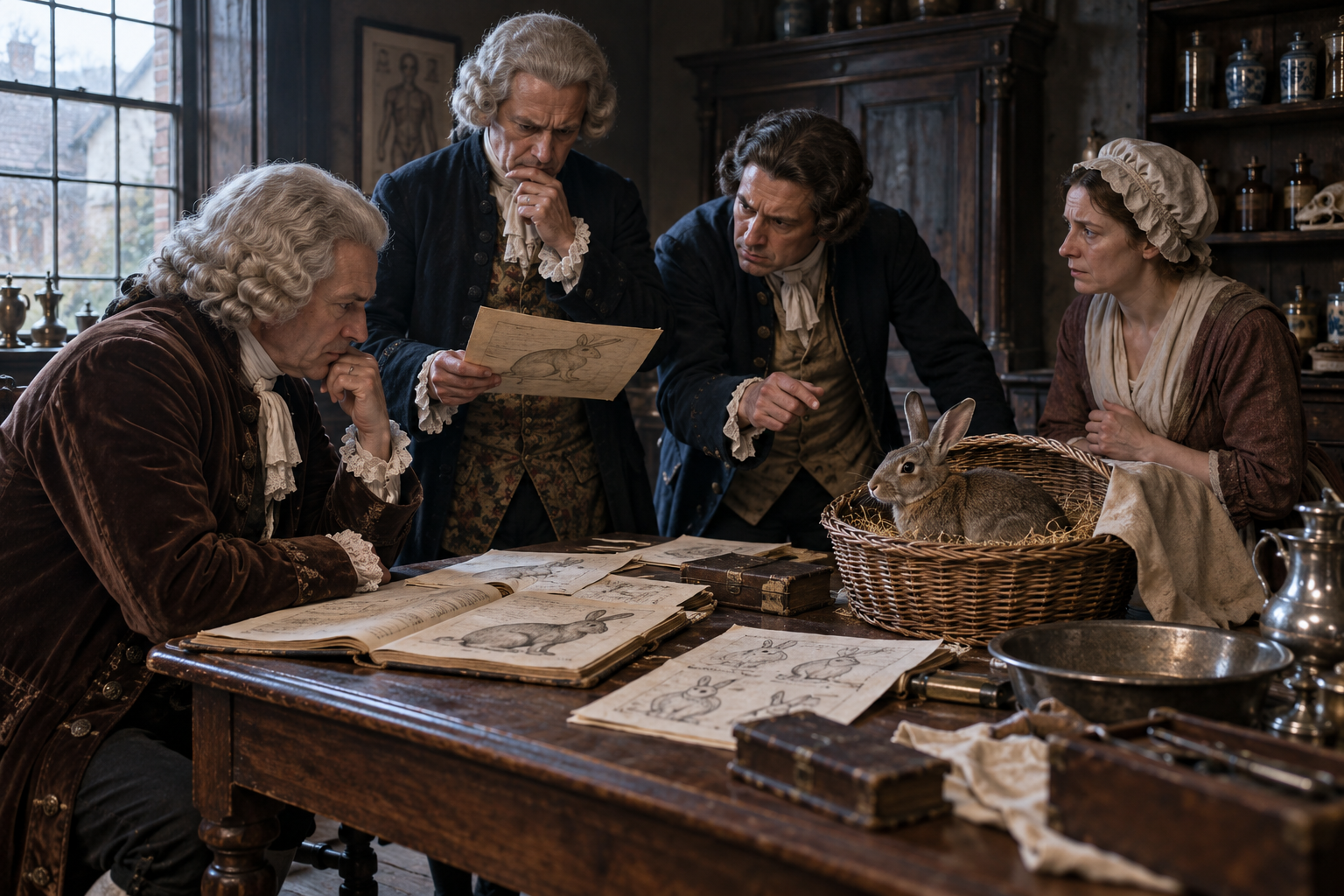
Supporting images provide documentary, geographic or visual context. Read each caption for its date, source and evidential limits.

Continue researching
Follow the evidence, context and comparisons
Curated connections
Selected editorially for this entry.
In 1835, newspaper readers met moon forests, lunar animals and winged people in a celebrated lesson about media, science and appetite.
Curated connection · Case filePiltdown Man: The Fossil That Flattered an ExpectationPiltdown Man fooled parts of the scientific world for decades because forged evidence appeared to fit a story people were ready to hear.
Curated connection · ArticleThe Difference Between Evidence, Testimony and LegendA field guide to three words that often get tangled in mystery research.