Historical Mysteries
The Lead Masks Case: Two Technicians on Vintém Hill
The deaths of Manoel Pereira da Cruz and Miguel José Viana are documented; the note, masks and spiritualist interests are real clues. None establishes poison, murder or paranormal contact.
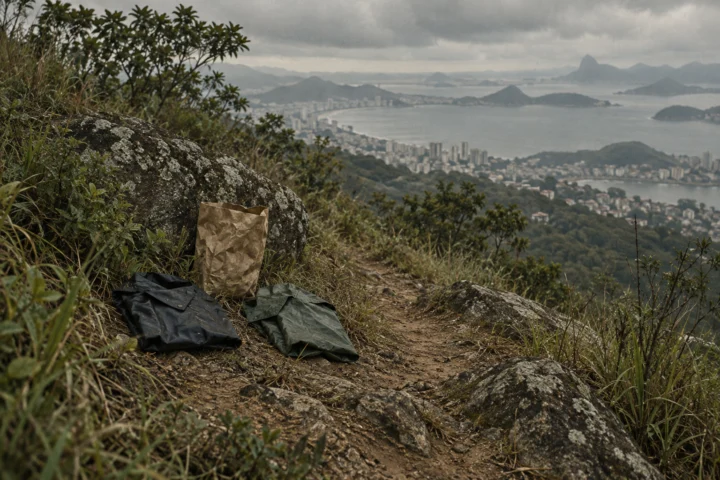
On 20 August 1966, the bodies of electronics technicians Manoel Pereira da Cruz and Miguel José Viana were found on Morro do Vintém in Niterói, Brazil. Both wore suits beneath raincoats. Beside them were crude lead masks shaped to cover the eyes, a bottle, towels and a note giving timed instructions that referred to capsules and awaiting a signal.
The men had travelled from Campos dos Goytacazes three days earlier and bought raincoats and bottled water. They were interested in electronics and reportedly participated in spiritualist experiments. Those facts suggest planning, but not what substance or procedure was intended.
No traumatic injury explained the deaths. Because the bodies had decomposed and the relevant viscera were not successfully analysed, toxicology did not establish or exclude poisoning. Claims of radiation, alien contact, espionage and an electrical experiment go beyond the recoverable evidence.
The uncertainty resembles the evidential limits discussed in evidence, testimony and legend, the disputed interpretation of the Vela Incident, and the archive’s treatment of objects without secure context.
Claim, Context and Cautions
A journey with a plan
Receipts and witness reports place the men travelling to Niterói, purchasing raincoats and water, and ascending the hill. The matching clothing and prepared masks argue against a wholly accidental walk. The note indicates a schedule, including a time to take ‘capsules’, but does not identify their contents.
Translation variations should not be mistaken for different original notes.
What the masks were—and were not
The objects were hand-cut lead sheets with openings for the eyes. Lead can shield some radiation, which encouraged theories about flashes or experiments. Their actual protective capacity and intended use were never demonstrated.
A purpose inferred from material is not evidence that radiation was present. No secure measurement tied unusual radiation to the scene.
The autopsy’s decisive limitation
Examiners reported no obvious violence. Decomposition and handling meant that toxicological examination failed to provide a cause of death. This is not equivalent to a negative test for poison; it is an absence of usable result.
Any account naming a particular drug or dose therefore exceeds the medical record.
Spiritualism, electronics and speculation
The men's interests make an attempted visionary or technical experiment plausible. A previous workshop explosion and local spiritualist contacts have been folded into the story, sometimes with inconsistent sourcing. Murder, robbery and third-party involvement remain possible but lack a demonstrated mechanism.
The evidence supports intention to perform something, not its supernatural success.
An unknown cause, not an empty record
The case contains firmly documented people, travel, objects and a scene. It lacks the biological evidence needed to determine why both men died. That boundary explains its endurance more effectively than elaborate conspiracy.
The correct classification is uncertain death with disputed purpose. The masks and note narrow the context but do not complete the causal chain.
Contextual glossary
Terms used in this entry
Definitions are offered as reading aids, not as conclusions about the case.
- Spiritualism
- A religious and cultural movement centred on communication with the dead, especially influential from the nineteenth century onward. It developed churches, publications, rituals and competing forms of mediumship.
- Reconstruction
- A later model, image or account made to represent an event from surviving information. It can clarify a hypothesis but should remain visibly separate from contemporary evidence.
- Uncertainty
- The stated limit on what a measurement, reconstruction or body of evidence can establish. Describing uncertainty is not indecision; it prevents a result from appearing more precise than the evidence allows.
Reference trail
Sources
- Rede Globo, Linha Direta archive: Máscaras de Chumbo (opens in a new tab)Brazilian media archive summarising the identified men, scene, investigation and unresolved cause.
- PMIG96, reconstruction of the initial police report (opens in a new tab)Document-focused transcription and provenance discussion used cautiously against sensational variants.
- The Cold File, 1966 Lead Masks source chronology (opens in a new tab)Source-led secondary chronology linking period reporting and investigative records.
- Veriarch, Lead Masks case evidence review (opens in a new tab)Secondary evidence review used to compare disputed claims and identify unsupported additions.
Case Book
Photographs, Maps and Supporting Images
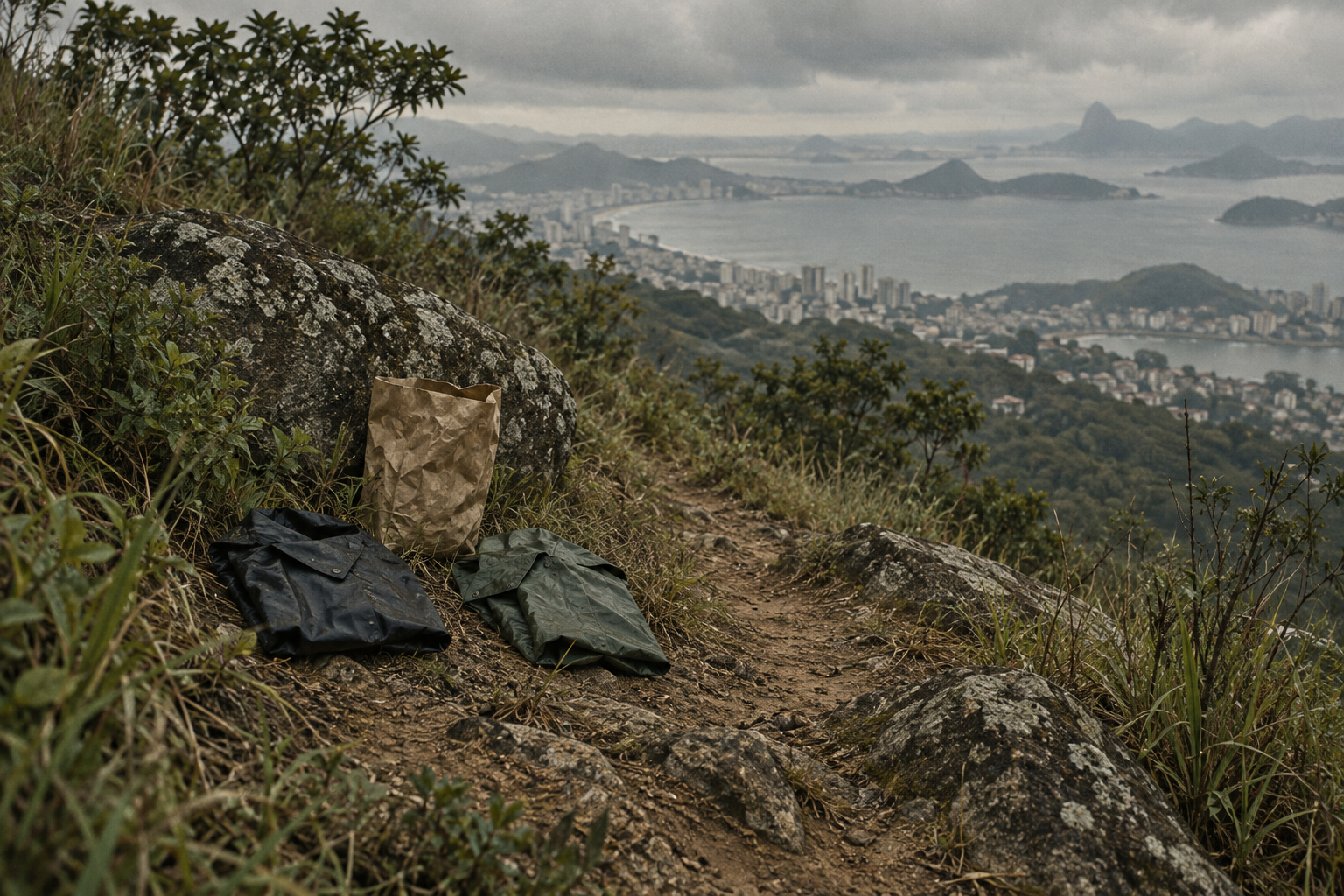
Supporting images provide documentary, geographic or visual context. Read each caption for its date, source and evidential limits.

Continue researching
Follow the evidence, context and comparisons
Curated connections
Selected editorially for this entry.
A field guide to three words that often get tangled in mystery research.
Curated connection · Case fileThe Vela Incident: A Double Flash Over the South AtlanticVela 6911 detected an unexplained double flash on 22 September 1979. Official and scientific assessments disagreed over whether it marked a secret atmospheric nuclear test.
Curated connection · ArticleOut-of-Place Artefacts and the Value of CautionWhy disputed objects need context, chain of custody and patient interpretation before becoming extraordinary evidence.
More through shared context
Additional routes based only on existing topics, themes and metadata.
The Hinterkaifeck victims were found on 4 April 1922 and probably killed on 31 March. Official files establish the crime and extensive inquiry, not the identity or movements of the murderer.
Shared theme: Unsolved deaths · Case fileDyatlov Pass: A Winter File That Still Resists a Single Easy StoryDyatlov Pass remains an archive of frozen conditions, injuries and competing explanations, with the strongest case still grounded in the mountain rather than the supernatural.