Historical Mysteries
The Hammersmith Ghost: When a Rumour Ended in a Fatal Mistake
The Hammersmith Ghost is historically established as a rumour with lethal consequences, not as a verified haunting. Trial evidence documents mistaken identification, public fear and a lasting legal problem.
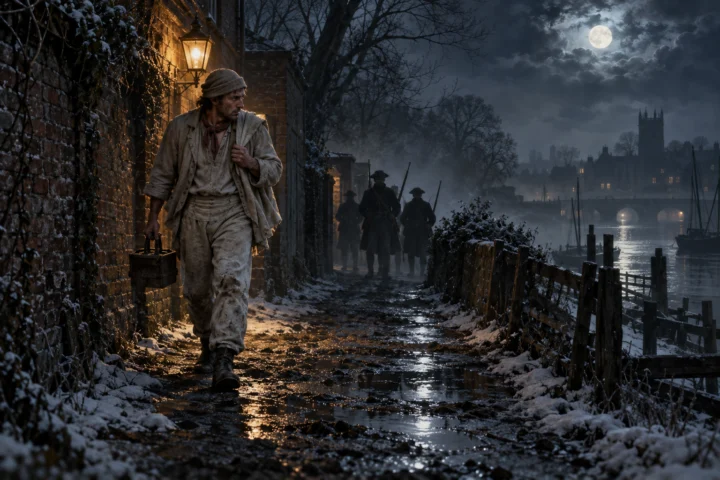
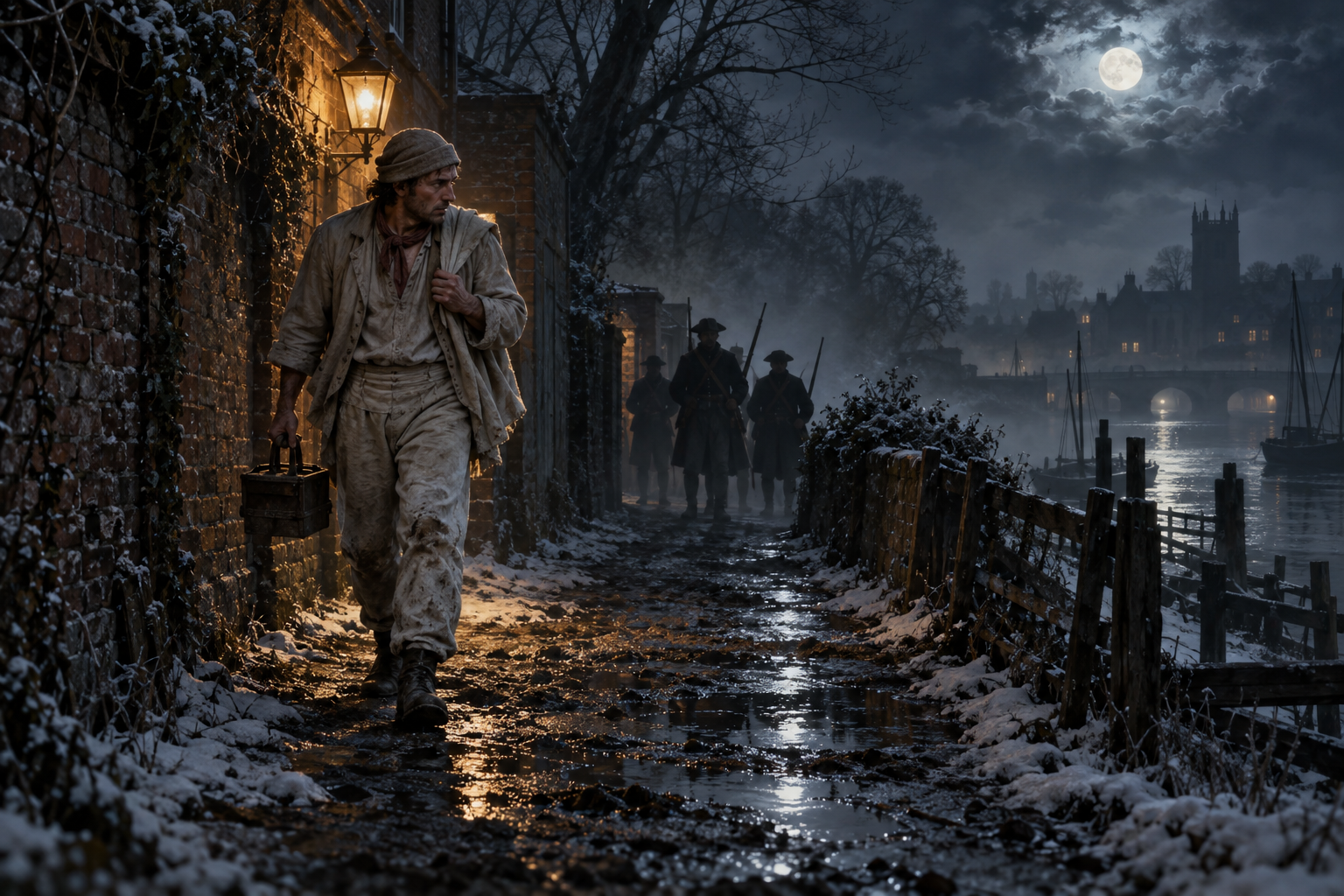
During the winter of 1803, stories spread through Hammersmith of a white-clad ghost attacking or terrifying travellers. Some residents associated it with a suicide burial. Others suspected a prankster. Groups began patrolling the lanes, converting an uncertain apparition story into an armed public response.
On the night of 3 January 1804, excise officer Francis Smith encountered bricklayer Thomas Millwood. Millwood wore the pale clothing of his trade. Smith, expecting the ghost, shot him. Millwood died at the scene, leaving a pregnant wife and family witnesses able to explain why he was dressed in white.
At the Old Bailey, the jury attempted a manslaughter verdict, but the judge directed that the facts supported murder under the law then applied. Smith was sentenced to death and later received a royal pardon with a lesser punishment. The case survived in legal discussion because it exposed the danger of acting violently on an honest but unreasonable mistake.
Accounts that a shoemaker later admitted impersonating the ghost may explain some reports, but they do not turn every sighting into a documented prank. Nor is a prank needed to explain Millwood’s death: the trial establishes that Smith misidentified a real man after rumours had primed him to see a threat.
The episode complements the crowd dynamics of the Cock Lane Ghost, the print cycle in newspapers and strange tales, and the source hierarchy in evidence, testimony and legend.
Claim, Context and Cautions
Rumour changes the scene
Before the shooting, local people had already supplied the lane with an expected figure, costume and danger. Patrols then increased the number of anxious observers outdoors. In darkness, pale clothing became evidence only because the rumour had defined what a ghost should look like.
This does not require collective hallucination. It shows how expectation changes the interpretation of an ordinary but poorly seen person.
The evidence at trial
Witnesses described Millwood's clothing, Smith's gun and the encounter. The proceedings concern a homicide rather than a paranormal investigation, so they are strongest on actions and responsibility. Earlier ghost claims enter mainly as context for Smith's belief.
A court record is not neutral in every detail, but it anchors names, date, testimony and verdict more securely than later ghost anthologies.
Mistake and self-defence
Smith's defence depended on his belief that he faced the supposed apparition or a person creating danger. The judge refused to let a mistaken belief reduce the offence on the facts presented. Later English law revisited how honest mistakes operate in self-defence, making the case a reference point rather than a simple ghost curiosity.
The legal afterlife should not be confused with proof that the apparition existed. It concerns what a person may do when belief and reality diverge.
A resolved core and uncertain edges
Thomas Millwood was killed by Francis Smith, and the immediate mechanism was mistaken identification amid public alarm. Reports before the shooting could include jokes, misperceptions, invented stories or experiences that cannot now be reconstructed.
The central mystery is therefore substantially explained. What remains uncertain is the composition of the rumour. The lasting lesson is evidential and ethical: treating an ambiguous report as a dangerous certainty can create the very tragedy later attached to the legend.
Contextual glossary
Terms used in this entry
Definitions are offered as reading aids, not as conclusions about the case.
- Rumour
- Unverified information circulated between people because it appears relevant or urgent. Repetition can make a rumour familiar without adding an independent source.
- Haunting
- A pattern of unusual experiences attributed to a place, including apparitions, sounds, movement or sensed presences. A location log is more informative than treating every incident as one cause.
- Apparition
- A reported figure or presence seen without an obvious physical person present. The word describes the experience without deciding whether its cause was environmental, psychological or unknown.
Reference trail
Sources
- Old Bailey Proceedings, trial of Francis Smith (opens in a new tab)Primary court record for the January 1804 murder trial and witness evidence.
- Library of Congress, The Case of a Ghost Haunted England for Over Two Hundred Years (opens in a new tab)Legal-history analysis of the shooting, verdict, pardon and later treatment of mistaken self-defence.
- Hammersmith Today, The Hammersmith Ghost Whose Murder Made Legal History (opens in a new tab)Local historical account drawing together the trial, neighbourhood setting and later legal memory.
Case Book
Photographs, Maps and Supporting Images
Supporting images provide documentary, geographic or visual context. Read each caption for its date, source and evidential limits.

Continue researching
Follow the evidence, context and comparisons
Curated connections
Selected editorially for this entry.
The Cock Lane Ghost became a public test of spirit claims, murder accusations and experimental controls. Contemporary investigators ultimately exposed deliberate production of the knocks.
Curated connection · ArticleThe Role of Newspapers in Spreading Strange TalesOld newspapers preserved remarkable local reports, but they also shaped them for appetite, humour and alarm.
Curated connection · ArticleThe Difference Between Evidence, Testimony and LegendA field guide to three words that often get tangled in mystery research.
More through shared context
Additional routes based only on existing topics, themes and metadata.
The Amherst case rests chiefly on Walter Hubbell’s participant narrative of noises, fires, messages and moving objects around Esther Cox. Some incidents had witnesses; controls were poor.
Shared theme: Media & rumour · Case fileThe Great Moon Hoax and the Machinery of WonderIn 1835, newspaper readers met moon forests, lunar animals and winged people in a celebrated lesson about media, science and appetite.