Hoaxes, Misidentifications & Media
The Cock Lane Ghost: Knocks, Crowds and an Enlightenment Hoax
The Cock Lane Ghost became a public test of spirit claims, murder accusations and experimental controls. Contemporary investigators ultimately exposed deliberate production of the knocks.
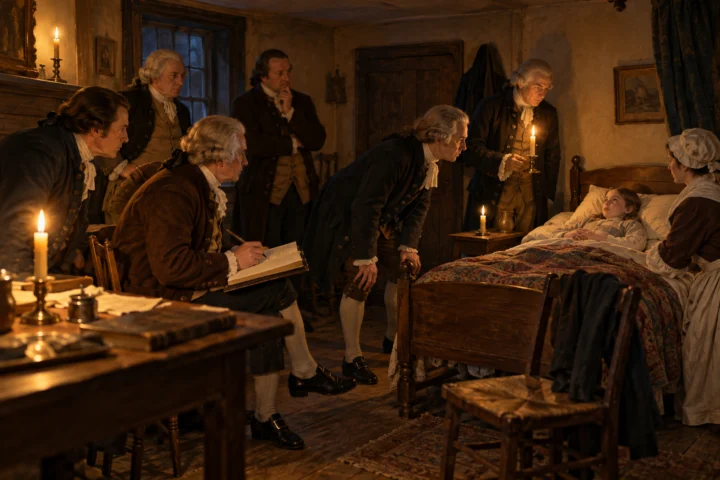
In January 1762, crowds blocked a narrow London street to hear a ghost answer questions with scratches and knocks. The supposed spirit was Fanny Lynes, who had lived at Cock Lane with William Kent and died of smallpox. From the bed of eleven-year-old Elizabeth Parsons, the noises accused Kent of poisoning Fanny and promised signs from beyond the grave.
The claim joined personal grievance to a public appetite for wonders. Richard Parsons, Elizabeth’s father and Kent’s former landlord, owed Kent money. Clergy, physicians, aristocrats and writers attended sessions. Admission and publicity made the house a spectacle, while the murder accusation threatened a living man’s reputation.
A committee including Samuel Johnson tested the manifestations. The ghost failed promised demonstrations, including a knock at Fanny’s coffin. When Elizabeth was watched closely and moved between rooms, investigators found that she could create sounds by manipulating her body against the bed. The performance ended in exposure and legal punishment for adults involved.
Cock Lane anticipates the Fox Sisters’ rappings, the household tests in the Enfield Poltergeist, and the archive’s anatomy of a haunting report.
Claim, Context and Cautions
From household noise to accusation
Earlier scratching had been reported while Kent and Fanny lodged with the Parsons family. After Fanny died and Kent left, the sounds returned around Elizabeth. A question-and-knock code transformed an ambiguous noise into a speaking witness that alleged murder.
The ghost could not be cross-examined independently: adults framed questions, interpreted patterns and repeated the answers in print. That structure rewarded a coherent accusation even when the sound source remained hidden.
A city attends the haunting
Visitors arrived in such numbers that Cock Lane became congested. The case intersected with religious arguments about spirits and materialism, but it was also entertainment. Each failed night could be excused by the wrong room, the wrong audience or the ghost's reluctance.
Publicity did not create the first knocks, yet it altered the incentives around them. The spectacle offered attention, money and leverage in Parsons's dispute with Kent.
Controls close the gap
Investigators required promised effects under closer observation. At the crypt, no coffin knock occurred. Elizabeth was then placed so that her hands and feet could be monitored and the bed examined. Accounts describe the discovery that rubbing or striking concealed surfaces could reproduce the sounds.
The important step was not a famous sceptic's opinion. It was changing the conditions so the effect could no longer occur without the suspected performer being observed.
Responsibility and the child
Elizabeth was a child under adult direction, so a simple tale of a fraudulent girl misses the power around her. Richard Parsons was prosecuted and pilloried; other participants received lesser penalties. Kent obtained vindication, although the accusation had already circulated widely.
Satirical prints and poems then made credulity itself the subject. Those sources document the case's cultural reach, but their jokes should not be mistaken for neutral transcripts. The history has to be rebuilt from competing pamphlets, press reports and accounts written by participants with reputations to defend.
The case is properly classified as a hoax, but its history also shows why controls must protect vulnerable participants while testing a claim.
Contextual glossary
Terms used in this entry
Definitions are offered as reading aids, not as conclusions about the case.
- Haunting
- A pattern of unusual experiences attributed to a place, including apparitions, sounds, movement or sensed presences. A location log is more informative than treating every incident as one cause.
- Hoax
- A deliberate attempt to make false evidence or a false story appear genuine. A hoax can still become culturally important, but its later influence should not be confused with the original claim.
- Poltergeist
- A cluster of reported noises, object movement or disruption traditionally attributed to an unseen agency. Cases require attention to household dynamics, access, building conditions and witness timing.
Reference trail
Sources
- Wellcome Collection, A complete contemporary history of the Cock Lane Ghost (opens in a new tab)Digitised compilation of 1762 newspaper reports and engravings; a near-contemporary record of the public sequence and claims.
- Society for Psychical Research, Cock Lane Ghost (opens in a new tab)Historical synthesis citing the investigation, tests, participants and legal aftermath.
- Yale Law School, historical study of the Cock Lane Ghost (opens in a new tab)Academic discussion of the murder accusation, committee inquiry and the case’s place in eighteenth-century evidence culture.
Case Book
Photographs, Maps and Supporting Images
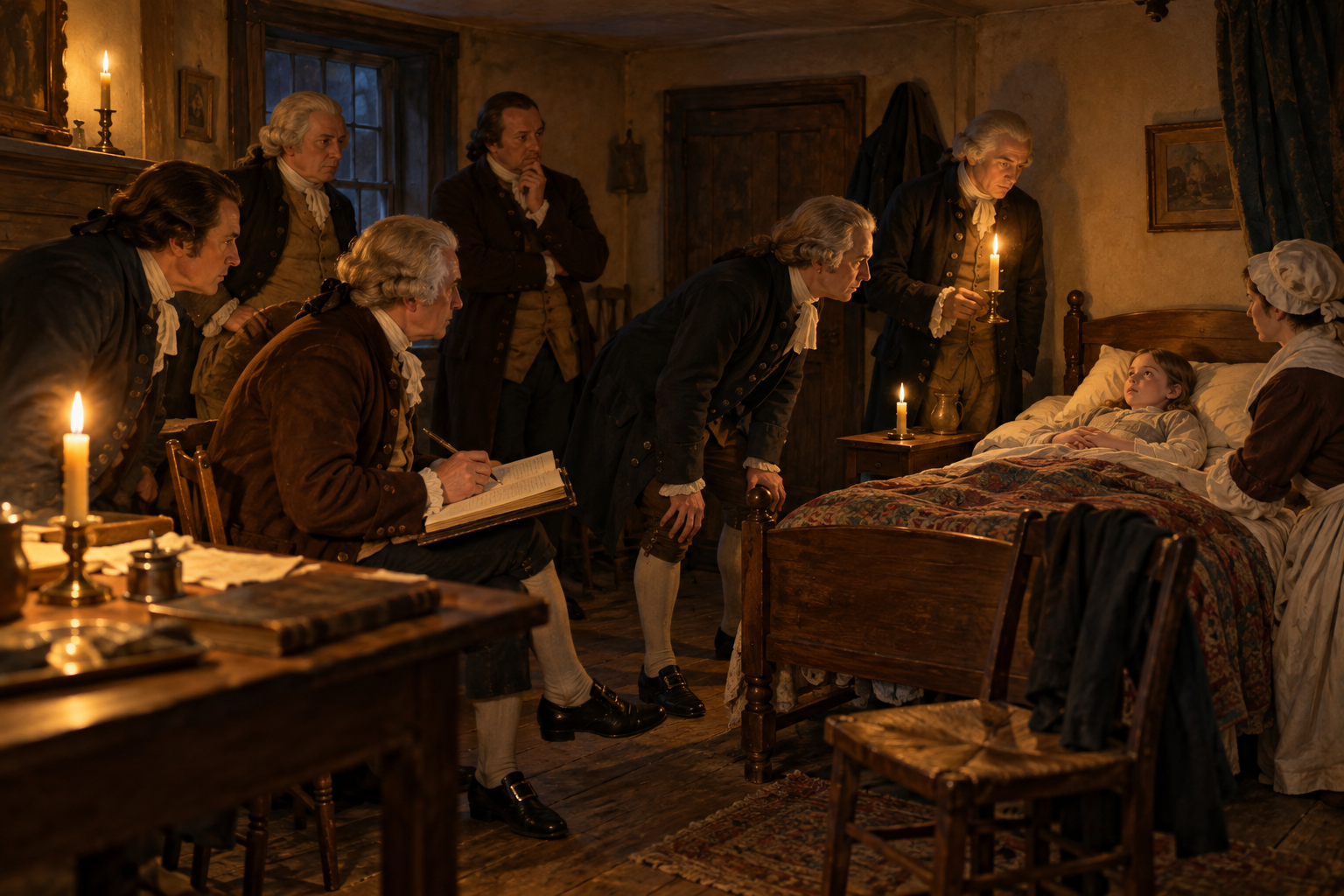
Supporting images provide documentary, geographic or visual context. Read each caption for its date, source and evidential limits.

Continue researching
Follow the evidence, context and comparisons
Curated connections
Selected editorially for this entry.
The Fox sisters' spirit raps helped launch modern Spiritualism, then became a lesson in performance, grief, confession and belief that survives exposure.
Curated connection · Case fileThe Enfield Poltergeist: Noise, Narrative and the Council House on Green StreetThe Enfield case remains famous because it was recorded, argued over and repeatedly reinterpreted, which makes it a perfect archive for uncertainty.
Curated connection · ArticleThe Anatomy of a Haunting ReportA practical guide to separating atmosphere, testimony, memory, environment and possible causes in a reported haunting.
More through shared context
Additional routes based only on existing topics, themes and metadata.
Claims made after the Lutz family’s 1975 stay became a bestselling book and film franchise. The murders in the house were real; evidence for the subsequent haunting is not reliable.
Same primary topic · Shared theme: Media & rumour · Case fileThe Black Knight Satellite: How Separate Stories Became One ObjectThe Black Knight is a composite legend assembled from unrelated radio experiments, Cold War tracking stories and STS-88 photographs of lost thermal insulation.