Hoaxes, Misidentifications & Media
Cattle Mutilations: What the Investigations Actually Found
Cattle-mutilation claims became a national mystery through alarming field appearances and uneven investigation. Forensic work explains many features without proving a single cause for every report.
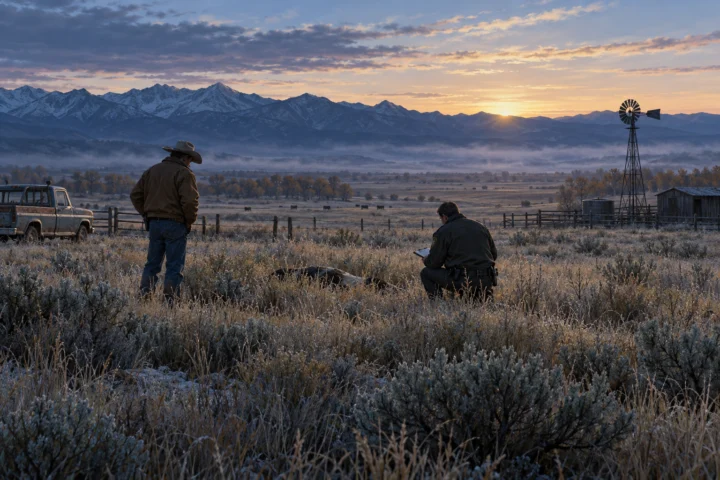
During the 1970s, ranchers across the western United States reported cattle found dead with missing eyes, ears, tongues or genital tissue. The edges sometimes looked smooth, little blood was visible, and tracks seemed absent. To owners confronting valuable animals in isolated fields, the scenes could look deliberate.
Reports accumulated into several competing narratives: secret government sampling, cult activity, organised criminals, predators and extraterrestrial experimenters. The Federal Bureau of Investigation collected correspondence and local reports but found no basis for a broad federal case. A New Mexico investigation led by Kenneth Rommel concluded that ordinary death, decomposition and scavenging explained the cases it examined.
That conclusion did not prove that every reported animal died identically. Some carcasses were inspected late, documentation varied, and the initial cause of death could remain unknown. It did show how drying tissue can split into apparently sharp lines while insects and scavengers target soft areas and remove blood-rich organs.
The case rewards the methods in the field-recording guide, the distinction between evidence and testimony, and the analysis of how news reports join separate incidents.
Claim, Context and Cautions
Why the wounds looked manufactured
Skin retracts and dries after death. A tear opened by a scavenger can become a clean-looking edge, while flies concentrate on moist openings and delicate tissue. Blood settles, clots or is consumed, so a weathered carcass may not resemble a fresh injury scene.
These processes are visually surprising. Without a prompt necropsy, photographs of the final appearance cannot reconstruct every earlier stage.
A distributed wave of reports
Cases occurred across large distances and were recorded by agencies with different standards. Newspaper summaries reused the same dramatic vocabulary, encouraging the appearance of one coordinated programme before common methods or perpetrators were established.
A cluster in reporting can reflect attention as well as incidence. Once ranchers knew the signature, ordinary losses were more likely to be examined through it.
What the FBI file represents
The FBI Vault contains letters, memoranda and requests for assistance. Collection in a federal file shows that officials received and considered material; it does not mean the Bureau verified the extraordinary claims inside every document.
Jurisdiction and evidence quality limited federal involvement. The archive is most useful for tracing how the concern moved among citizens, local officers and national agencies.
Rommel and the ordinary model
New Mexico funded a focused investigation led by retired FBI agent Kenneth Rommel. His report emphasised natural mortality, scavengers, insects and expectation, and it found no evidence for a coordinated cult or secret operation. Critics objected to scope and tone, while proponents treated it as decisive.
Its strongest contribution is procedural: examine fresh carcasses, compare controls and document weather, tracks and tissue before inference.
No need for one universal answer
Livestock die from disease, accidents, poisoning, weather and predation. Human interference is possible in an individual case and should be tested when evidence supports it. A visually similar endpoint does not guarantee a shared initial cause.
The extraordinary national narrative is poorly supported. The practical mystery in many files is narrower: the animal's precise cause of death was never established before decomposition transformed the scene.
Reference trail
Sources
- FBI Vault, Animal Mutilation (opens in a new tab)Released federal correspondence and reports documenting official enquiries and their jurisdictional limits.
- U.S. Office of Justice Programs, Operation Animal Mutilation report (opens in a new tab)Digitised state-funded investigation report used for case examinations and the scavenging/decomposition conclusion.
- Colorado Encyclopedia, “Cattle Mutilation” (opens in a new tab)Historical synthesis of the regional reporting wave and its cultural context.
Case Book
Photographs, Maps and Supporting Images
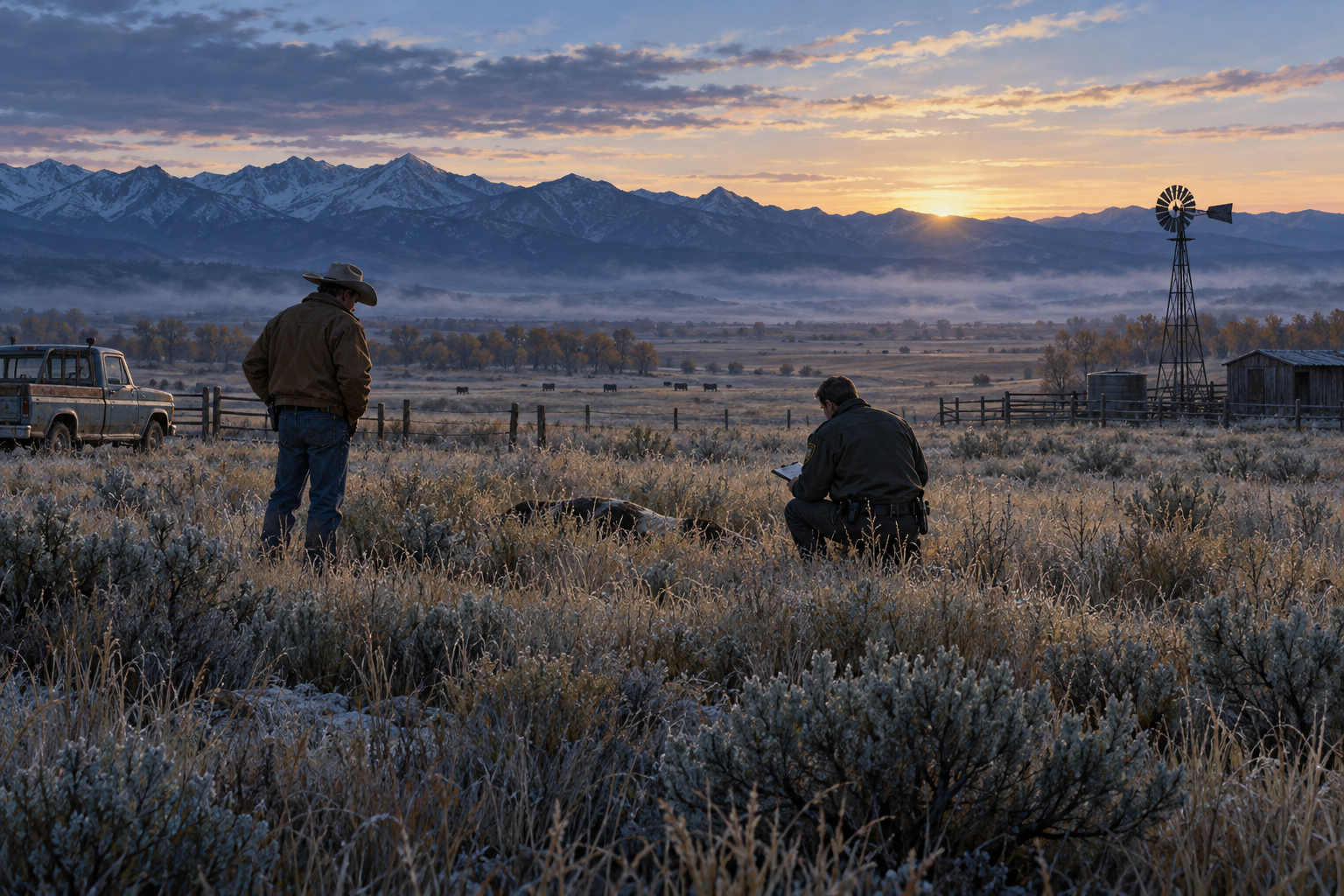
Supporting images provide documentary, geographic or visual context. Read each caption for its date, source and evidential limits.

Continue researching
Follow the evidence, context and comparisons
Curated connections
Selected editorially for this entry.
A calm checklist for writing down unusual events before memory, excitement and online feedback reshape them.
Curated connection · ArticleThe Difference Between Evidence, Testimony and LegendA field guide to three words that often get tangled in mystery research.
Curated connection · ArticleThe Role of Newspapers in Spreading Strange TalesOld newspapers preserved remarkable local reports, but they also shaped them for appetite, humour and alarm.