Folklore & Legends
The Green Children of Woolpit: Two Chroniclers and a Village Wonder
In the late 12th century, two chroniclers recorded a story about green-skinned children found near Woolpit. The shared core is old; its meaning and literal history remain uncertain.
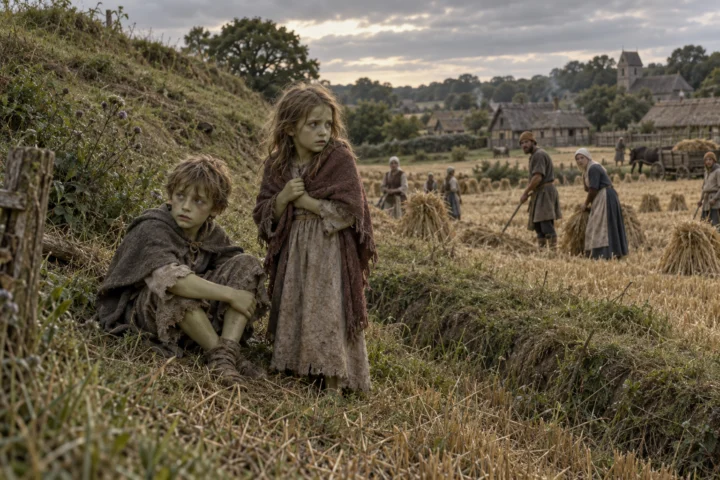
The Green Children of Woolpit enter history through two medieval writers, not through a surviving village record or the testimony of either child. William of Newburgh and Ralph of Coggeshall each told of a boy and girl with green skin who appeared near Woolpit in Suffolk during the reign of Stephen. The closeness of the accounts to the alleged period makes them historically important; it does not make them eyewitness reports.
Both versions share a striking centre. The children spoke an unfamiliar language, initially refused ordinary food and ate raw broad beans. Their colour later faded. The boy died, while the girl survived, was baptised and learned to explain where she said they had come from. Around that core, the chroniclers differ in setting, sequence and description.
The case is therefore best treated as a medieval wonder story with possible memories of real strangers embedded in it. Attempts to diagnose the children, identify them as displaced foreigners or turn them into visitors from another world go beyond what the sources can establish.
That boundary between local memory and inherited story also appears in the archive’s accounts of fairy lore as local geography, pre-modern story transmission and the later circulation of strange news.
Claim, Context and Cautions
Two chroniclers, not two eyewitnesses
William of Newburgh included the story in his Historia rerum Anglicarum near the end of the 12th century. Ralph of Coggeshall placed a related account in the Chronicon Anglicanum, compiled in the early 13th century. Both writers were comparatively close to the period they described, yet neither says that he watched the children arrive. Their evidence came through reported speech and local informants.
That distinction matters. Independent wording can show that a story circulated early, but the texts may also have drawn upon overlapping oral traditions. They establish a medieval account at Woolpit more securely than they establish the literal details of an encounter.
What the accounts share
In both narratives, harvesters discover two unusually coloured children near Woolpit. The pair cannot be understood, reject offered food and eagerly eat beans. With time and a normal diet, their green appearance disappears. The boy sickens and dies; the girl survives, adapts to local life and supplies an account of a different homeland.
Those repeated elements are the story's oldest recoverable structure. Familiar additions should not be folded into it without attribution. There is no physical specimen, contemporary portrait or administrative file against which to test the colour, language or route described.
St Martin’s Land and the changing route
The surviving girl is said to have described a land associated with Saint Martin, where light was dim or perpetual twilight prevailed. The accounts do not give exactly the same route into Woolpit. Later retellings often combine a cavern, a bell and an underground passage into a smooth narrative, concealing which detail belongs to which text.
The differences are not a flaw to repair. They show the story being recorded by separate authors for separate purposes. A responsible reconstruction keeps the variants visible rather than manufacturing a definitive itinerary.
Can the story be naturalised?
Modern explanations have proposed malnutrition or illness for the colour and displacement for the children's unfamiliar speech and dress. Some writers have tried to connect them with immigrant communities affected by local conflict. These proposals demonstrate that no supernatural cause is required, but no surviving record identifies the children or confirms a diagnosis.
Green skin may describe an observed condition, an exaggeration or a literary sign of otherness. A plausible mechanism is not evidence that a particular mechanism occurred. The documents are too sparse for a medical or genealogical conclusion.
A medieval marvel with a purpose
Medieval chronicles did not divide natural history, providence, rumour and marvel in the way a modern investigation would. A strange event could be recorded because it was morally suggestive, memorable or reported by a trusted intermediary. The Green Children sit inside that culture of wonders.
The tale also follows durable folklore patterns: outsiders cross a boundary, ordinary food restores them, one child dies and the survivor interprets the other world. Recognising those patterns does not prove invention. It explains why an uncertain report could become a resilient narrative.
What remains in Woolpit
Woolpit still carries the children in local history and identity. That afterlife is documented even if the original event cannot be recovered. The village setting, the chroniclers and the early narrative are real; the children's origin is not settled by them.
The most careful conclusion is therefore cultural rather than sensational. Two writers preserved a 12th-century story about unfamiliar children. Its shared core deserves study, while its literal cause remains beyond the reach of the surviving evidence.
Contextual glossary
Terms used in this entry
Definitions are offered as reading aids, not as conclusions about the case.
- Chronicle
- A historical narrative organised broadly by time, often compiled from earlier records, testimony and tradition. A chronicle can preserve valuable material while also reflecting its author’s period and purpose.
- Reconstruction
- A later model, image or account made to represent an event from surviving information. It can clarify a hypothesis but should remain visibly separate from contemporary evidence.
- Rumour
- Unverified information circulated between people because it appears relevant or urgent. Repetition can make a rumour familiar without adding an independent source.
Reference trail
Sources
- John Clark, The Green Children of Woolpit (University of Exeter Press/JSTOR, 2024) (opens in a new tab)Scholarly book presenting the two chronicle traditions, translations and the story’s manuscript and interpretive history.
- Michał Madej, “The Story about the Green Children of Woolpit according to the Medieval Chronicles” (Res Historica, 2020) (opens in a new tab)Peer-reviewed comparison of William of Newburgh and Ralph of Coggeshall, including their different narrative purposes.
- William of Newburgh, Historia rerum Anglicarum, Book I, chapter 27 (Fordham Medieval Sourcebook) (opens in a new tab)Accessible translation of one near-contemporary chronicle account; a primary narrative source, not an eyewitness deposition.
- John Clark, “Green Growing Pains: The Green Children of Woolpit and Child Refugees” (Cambridge University Press) (opens in a new tab)Scholarly chapter on the two chronicle traditions and modern refugee interpretations.
Case Book
Photographs, Maps and Supporting Images
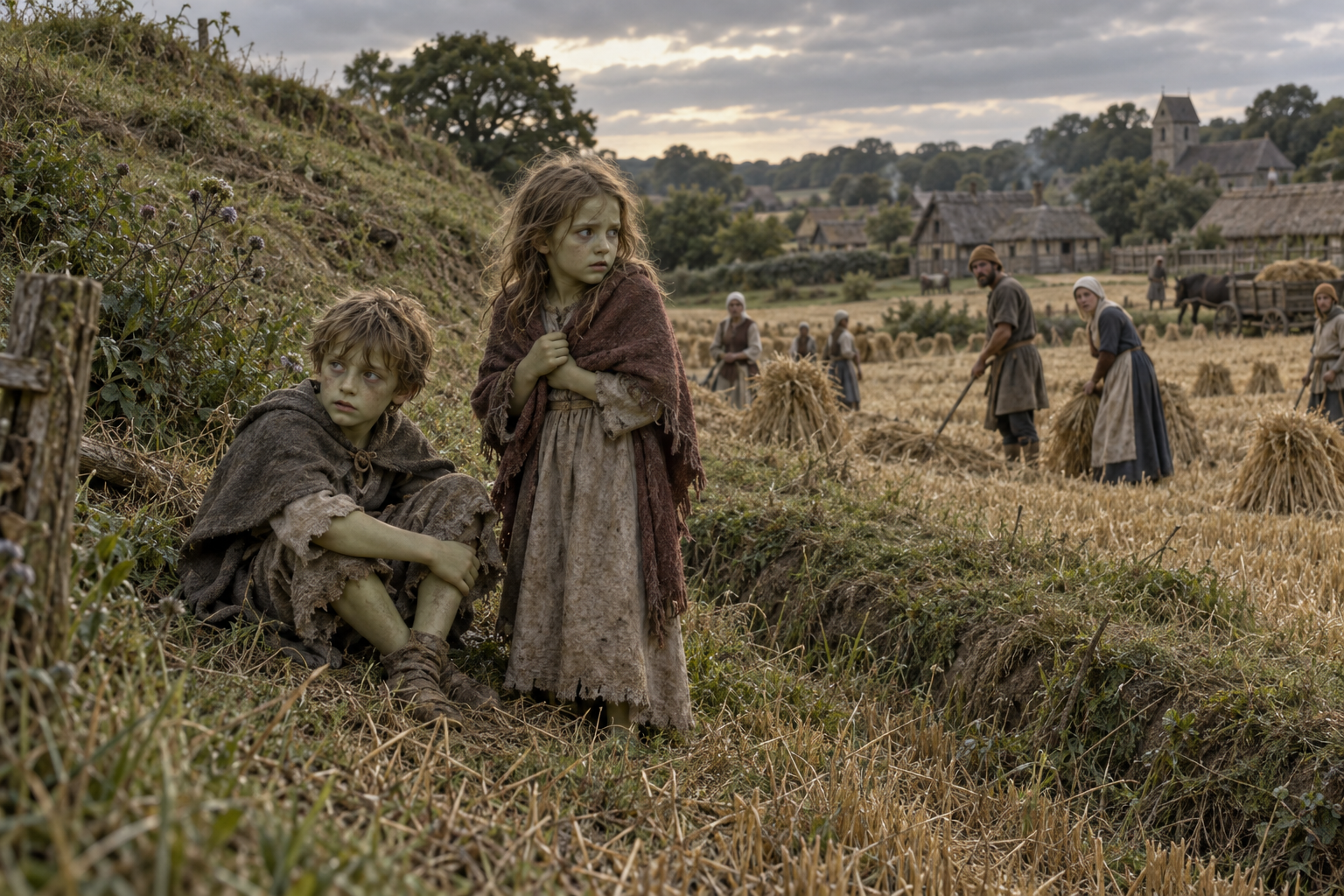
Supporting images provide documentary, geographic or visual context. Read each caption for its date, source and evidential limits.

Continue researching
Follow the evidence, context and comparisons
Curated connections
Selected editorially for this entry.
Hills, rings, paths and boundaries often matter more than wings or glitter in older fairy traditions.
Curated connection · ArticleUrban Legends Before the InternetChain letters, photocopies, local radio and schoolyard retellings show that viral folklore did not need a screen.
Curated connection · ArticleThe Role of Newspapers in Spreading Strange TalesOld newspapers preserved remarkable local reports, but they also shaped them for appetite, humour and alarm.