Archaeology & Disputed Artefacts
Out-of-Place Artefacts and the Value of Caution
Why disputed objects need context, chain of custody and patient interpretation before becoming extraordinary evidence.

An object becomes “out of place” only after someone has made a claim about where it came from, how old it is and what its makers could know. If any part of that chain is weak, the mystery may belong to the label rather than the object.
Some disputed artefacts are genuine finds given extravagant functions. Some are modern objects found in disturbed ground. Some are deliberate frauds. Others, like the Antikythera Mechanism, are authentic discoveries that really do enlarge the history of technology. Caution is how we tell these categories apart; it is not a device for making surprising evidence disappear.
Context is part of the object
An archaeological find is more than its material. The layer, position, nearby objects, excavation notes and subsequent custody help establish date and use. Removing an item from that context destroys information that laboratory analysis cannot fully recover. A metal object said to come from ancient rock means little if no one recorded whether it was embedded, dropped into a fissure or introduced during later work.
Provenance continues after excavation. Who held the object? Was it cleaned, repaired or reconstructed? Are photographs and samples traceable? Museum records often contain gaps, and responsible research marks those gaps rather than converting them into certainty.
Antikythera: a real surprise
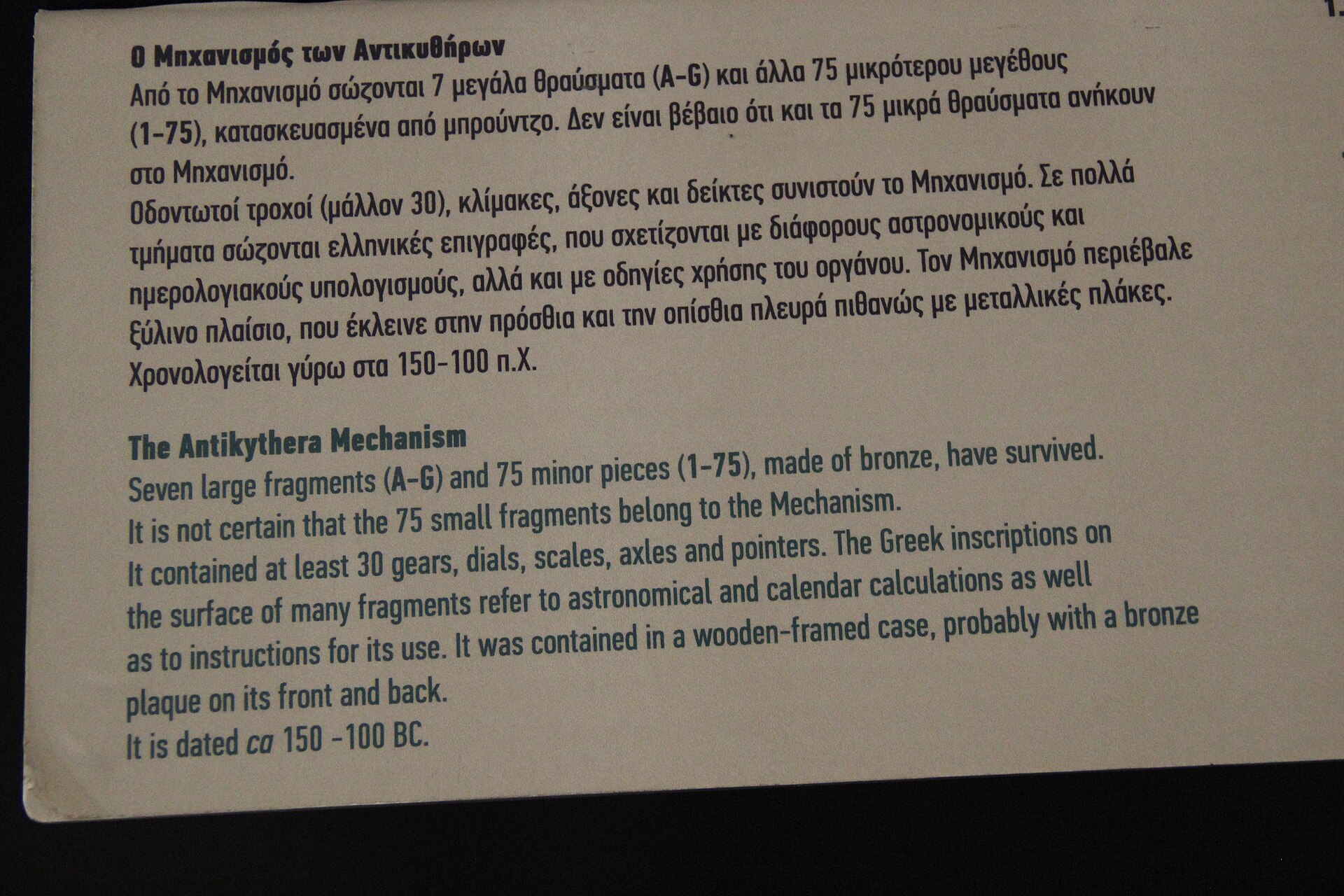
The Antikythera Mechanism came from a documented Mediterranean shipwreck and survives in multiple corroded fragments. Inscriptions, X-ray imaging and mechanical reconstruction show a geared device used to calculate astronomical cycles. It is extraordinary, but it is not context-free.
The device changed understanding because evidence accumulated around it: recovery history, associated wreck material, inscriptions, physical gears and independent study. Its complexity did not require a lost modern civilisation. It revealed that ancient Greek mechanical practice was more sophisticated than the surviving record had suggested.
The Baghdad jar: function is not shape
The Baghdad Battery case begins with a ceramic vessel, copper cylinder and iron rod. A modern reconstruction can produce current when filled with an electrolyte, but that demonstration proves possibility, not ancient purpose. The archaeological context was poorly recorded, and no securely associated wiring, instructions or electroplated production system establishes a battery industry.
Modern resemblance is a clue worth testing. It is not a function label. Containers, ritual deposits and storage assemblies can place similar materials together for reasons unrelated to electricity.
Piltdown: when provenance is performed
Piltdown Man appeared to fit an expected stage of human evolution and arrived with a persuasive discovery narrative. The skull fragments and jaw were real biological material, but they had been combined, altered and stained. Fluorine dating, anatomical work and later analyses dismantled the claimed association.
The lesson is not that institutions always detect fraud quickly. It is that claims remain revisable. Prestige, national expectation and a tidy theory delayed correction; improved tests and re-examination eventually overcame them.
A seven-question object audit
- Where exactly was it found? Ask for site, layer, orientation and associated material.
- Who recorded the recovery? A first-hand excavation log differs from a later ownership story.
- What is original? Separate ancient material from restoration, adhesive, replacement pieces and modern display mounts.
- How was it dated? Style, stratigraphy, inscription and laboratory dating answer different questions.
- What function is demonstrated? A modern replica that works does not prove historical use without wear, residue or contextual evidence.
- What should exist around it? Technologies normally leave tools, waste, related objects, texts or repeated examples.
- What evidence could change the conclusion? A claim protected from disconfirmation is not a useful archaeological hypothesis.
Curiosity with a chain of custody
Archaeology regularly produces genuine surprises. Those surprises become knowledge because their context survives scrutiny. The phrase “out of place” should start an investigation: out of place relative to which chronology, based on which excavation and according to which tested claim?
The strongest strange-archaeology story is not the one that outruns its evidence. It is the one in which an object remains interesting after every label, layer and assumption has been checked.
Contextual glossary
Terms used in this entry
Definitions are offered as reading aids, not as conclusions about the case.
- Chain of custody
- The documented sequence showing who collected, stored, copied, tested and transferred an object or recording. Gaps make alteration, contamination or mistaken identity harder to rule out.
- Archaeological context
- An object’s recorded relationship to its layer, feature, surrounding finds and excavation location. Once that context is lost, claims about the object’s date and use become much harder to test.
- Excavation
- The controlled removal and recording of archaeological deposits. Because digging destroys the original arrangement, plans, photographs, samples and layer records are as important as the objects recovered.
- Reconstruction
- A later model, image or account made to represent an event from surviving information. It can clarify a hypothesis but should remain visibly separate from contemporary evidence.
- Provenance
- The documented history of an object’s origin, ownership, location and handling. A dramatic claim with weak provenance cannot reliably establish where or when an object came from.
Reference trail
Sources
- National Archaeological Museum: The Antikythera Mechanism (opens in a new tab)Museum context for the surviving fragments and continuing multidisciplinary research.
- Greek Ministry of Culture: The Antikythera Mechanism (opens in a new tab)Official description of the mechanism as a portable astronomical calculator.
- Natural History Museum: Piltdown Man (opens in a new tab)Archive record, testing history and identification of the fossil hoax.
- Smithsonian National Collections Program: Provenance (opens in a new tab)Why ownership history, custody and documentary gaps matter to object interpretation.
- Archaeology Data Service: Selection and Appraisal (opens in a new tab)Professional guidance on preserving creation context and supporting documentation.
Case Book
Photographs, Maps and Supporting Images
Supporting images provide documentary, geographic or visual context. Read each caption for its date, source and evidential limits.

Continue researching
Follow the evidence, context and comparisons
Curated connections
Selected editorially for this entry.
The Antikythera Mechanism is genuinely astonishing, but its lesson is ancient technical skill, not a shortcut to fringe claims.
Curated connection · Case fileThe Baghdad Battery: A Jar, a Theory and a Long ShadowA classic strange-archaeology case in which a plausible object became a magnet for much larger claims than the evidence supports.
Curated connection · Case filePiltdown Man: The Fossil That Flattered an ExpectationPiltdown Man fooled parts of the scientific world for decades because forged evidence appeared to fit a story people were ready to hear.
More through shared context
Additional routes based only on existing topics, themes and metadata.
Scientifically examined crystal skulls do not support claims of ancient or paranormal origin. Tool marks, quartz provenance and sales records place prominent examples in the modern era.
Same primary topic · Shared theme: Disputed artefacts · Case fileNan Madol: Engineering a Ceremonial City on the ReefNan Madol remains archaeologically challenging, but its builders and broad chronology are not unknowable. Local oral histories, settlement evidence and scientific dating converge on Pohnpeian construction and Saudeleur power.