Folklore & Legends
Changelings: Fairy Substitution and the Human Cost of a Belief
Changeling lore is a family of supernatural explanations preserved across Europe. Folklore archives reveal its variety, while historical cases show the danger of treating a metaphor or diagnosis as a literal replacement.
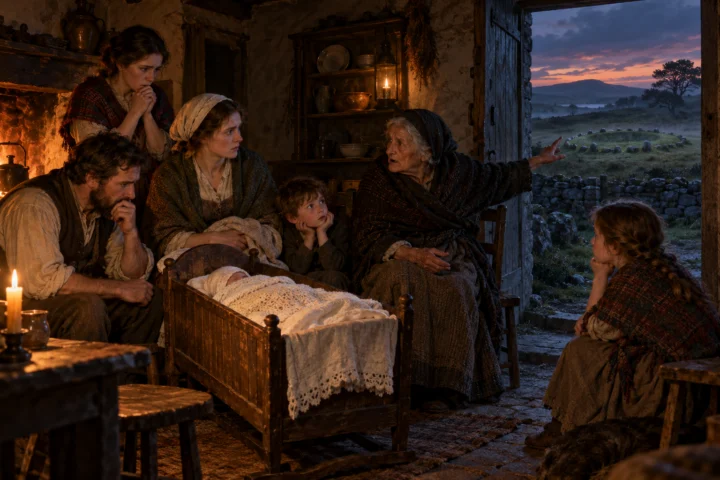
In changeling traditions, fairies or other beings steal a human—often an infant—and leave a substitute. The supposed replacement might fail to grow, cry constantly, eat unusually, appear old or behave unlike the person remembered. Similar motifs occur across Ireland, Britain, Scandinavia and continental Europe, with different names and local rules.
The tradition turned unexplained change into a narrative. Childhood illness, developmental disability, postpartum distress, dementia and ordinary family conflict could all become evidence after the label was applied. Rituals intended to force the fairies to return the person ranged from prayers and protective iron to exposure, fright and violence.
Folklore archives preserve what collectors were told; they do not demonstrate that substitutions occurred. They show how communities classified misfortune and negotiated responsibility. Some stories end with recovery, exposing a trickster or accepting loss. Others reveal how a supernatural diagnosis could remove the victim’s humanity.
The same motif could operate differently in a fireside tale, a warning to new parents, an explanation for bereavement or an accusation aimed at a living person. Treating all versions as one belief erases those social settings and their very different stakes.
The archive approaches changelings through fairy lore as local geography, the medieval wonder of the Green Children of Woolpit, and the staged evidence of the Cottingley Fairies.
Claim, Context and Cautions
A flexible diagnosis
Changeling signs were contradictory: a child might be too quiet or too loud, waste away or eat excessively, know too little or speak with unsettling maturity. Flexibility allowed the belief to absorb many conditions. Once suspicion formed, ordinary behaviour could confirm it.
The label also addressed grief and uncertainty in periods when infant mortality was high and medical explanations limited. Understanding that function does not excuse harmful treatment.
Tests, protections and danger
Protective customs included iron near a cradle, blessings and watching mother and child. Tests might demand that the suspected changeling reveal impossible age or react to an absurd act. In tale form these produce comic revelation. Applied to a real person, exposure, burning, beating or abandonment could become abuse.
Historical records must distinguish a narrated custom from proof that it was commonly practised, while taking documented violence seriously.
What the folklore archive preserves
Ireland’s National Folklore Collection contains multiple changeling accounts gathered from named tradition-bearers, especially during twentieth-century collection programmes. Entries record language, place, collector and manuscript context. They reveal variation rather than one canonical belief.
Collectors and schoolchildren also shaped the record through prompts and selection. An archive is evidence that a story was told in a particular setting, not a transparent window onto timeless ancient practice.
Reading changelings responsibly
Modern retrospective diagnoses should be cautious because short stories rarely provide clinical detail. Autism, genetic conditions and other disabilities may illuminate why behaviour was misunderstood, but no diagnosis can be assigned securely to a generic tale. Gender, poverty, inheritance and household power may also matter in individual cases.
The tradition is best classified as folklore with real social consequences. No evidence supports literal substitution. The mystery lies in how a story converted difference and fear into certainty—and how later readers can preserve cultural history without repeating its dehumanising premise. The ethical centre is the person who was labelled: difference never made someone less human, whatever explanatory language surrounded it.
Contextual glossary
Terms used in this entry
Definitions are offered as reading aids, not as conclusions about the case.
- Changeling
- In European traditions, a fairy or substitute being said to have been left in place of a person, often a child. The belief has a documented history of explaining illness or difference and sometimes enabled serious mistreatment.
- Uncertainty
- The stated limit on what a measurement, reconstruction or body of evidence can establish. Describing uncertainty is not indecision; it prevents a result from appearing more precise than the evidence allows.
Reference trail
Sources
- Oral Tradition, The National Folklore Collection at University College Dublin (opens in a new tab)Academic institutional history of the archive, its manuscript collections, fieldwork and research uses.
- RTÉ and the National Folklore Collection, Changeling in Folk Tradition (opens in a new tab)Public-service cultural programme made with the National Folklore Collection, contextualising changelings as belief narrative rather than fact.
- Dúchas.ie, child–adult dynamics in Bailiúchán na Scol (opens in a new tab)Academic study of how collection instructions, children and adult tradition-bearers shaped folklore records, including changeling stories.
Case Book
Photographs, Maps and Supporting Images
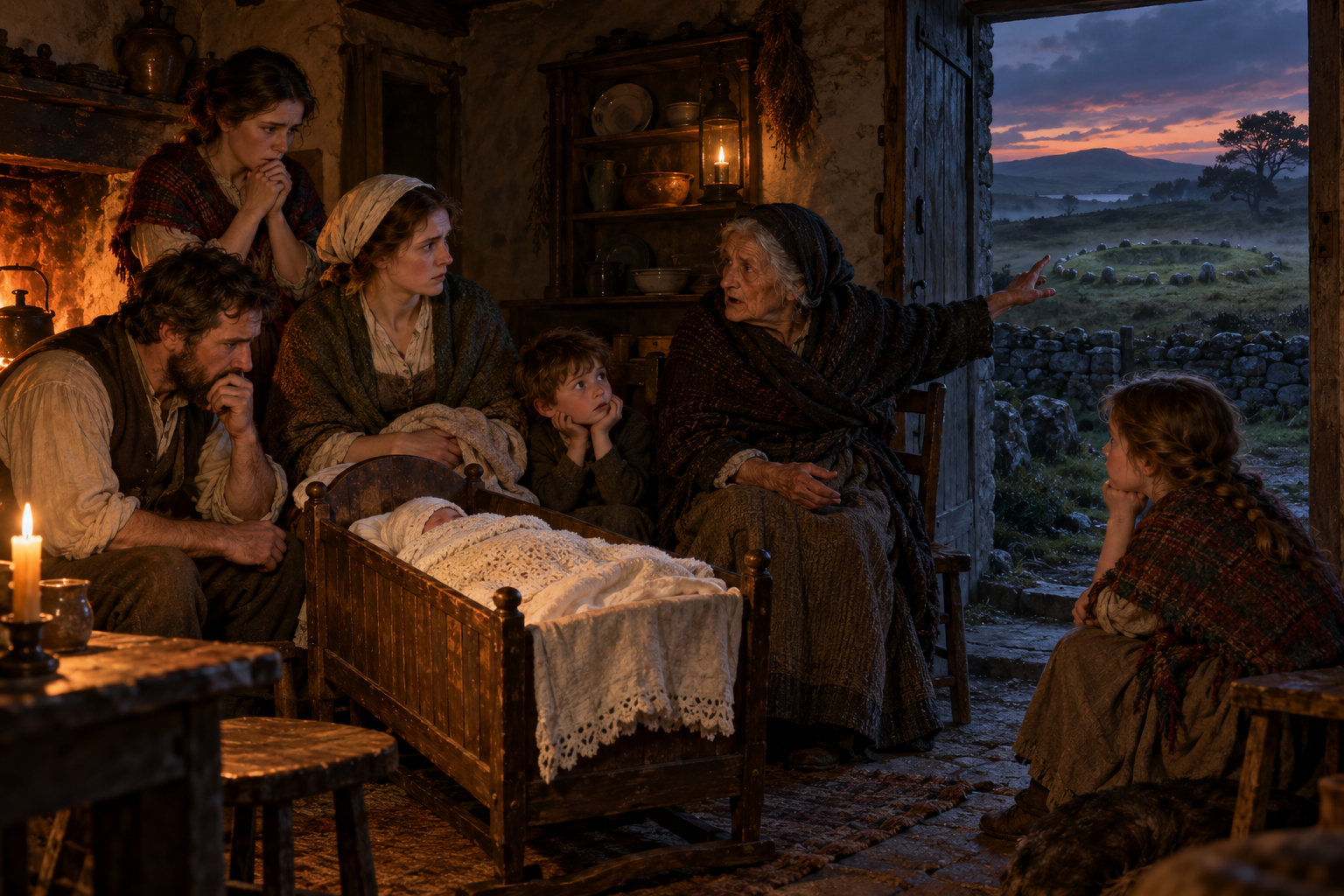
Supporting images provide documentary, geographic or visual context. Read each caption for its date, source and evidential limits.

Continue researching
Follow the evidence, context and comparisons
Curated connections
Selected editorially for this entry.
Hills, rings, paths and boundaries often matter more than wings or glitter in older fairy traditions.
Curated connection · Case fileThe Green Children of Woolpit: Two Chroniclers and a Village WonderIn the late 12th century, two chroniclers recorded a story about green-skinned children found near Woolpit. The shared core is old; its meaning and literal history remain uncertain.
Curated connection · Case fileThe Cottingley Fairies: Paper Wings, Cameras and BeliefTwo Yorkshire cousins, a camera and a set of fairy photographs became one of the most instructive image hoaxes of the twentieth century.