Hauntings & Apparitions
The Battersea Poltergeist: Taps, Notes and a Long Investigation
From 1956, the Hitchings family reported household disturbances attributed to “Donald”. Investigator Harold Chibbett kept a large record, while ordinary access and weak controls left human agency unresolved.
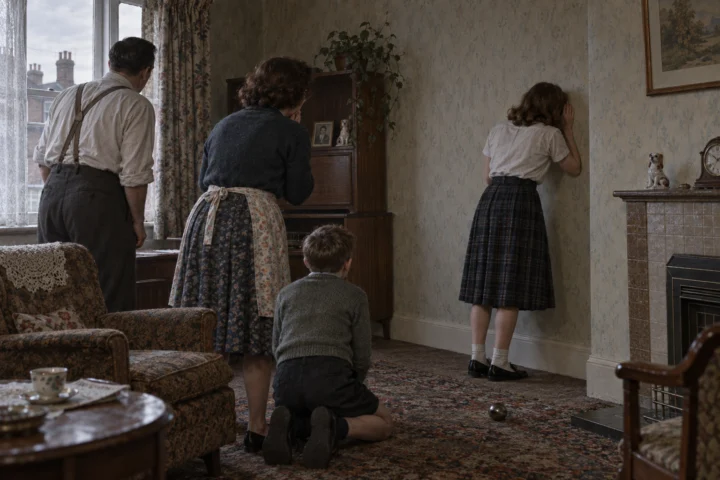
In January 1956, the Hitchings family of Wycliffe Road, Battersea, found an unfamiliar key on fifteen-year-old Shirley’s bed. Tapping followed, then reports of objects moving, messages, small fires and a personality called “Donald”. Newspapers arrived quickly; psychical researcher Harold Chibbett stayed with the case for years.
The surviving material is unusually extensive. Chibbett kept notes and correspondence, and Shirley later collaborated on a book. Volume, however, is not the same as experimental control. Most events occurred in a crowded family house, often close to the teenager around whom the disturbances clustered.
Some messages offered historical identities, including Louis XVII, but verification attempts failed or revealed accessible sources. Fraud, play, family dynamics and misperception can explain much without requiring a discarnate communicator, although the record does not allocate every incident to a person.
Useful comparisons include the archive’s anatomy of a haunting report, the better-known Enfield case, and the documentary problems in Gef the talking mongoose.
Claim, Context and Cautions
A key, then tapping
The first reported anomaly was a silver-coloured key that appeared on Shirley's bed, was removed, and appeared again. Taps soon answered questions through a code. As communication became more elaborate, the supposed agent acquired the name Donald and a history.
This progression—from ambiguous object to responsive personality—is central. Later stages depended on conventions learned jointly by the household and visitors.
The house as an uncontrolled setting
A terraced home offers walls, pipes, furniture, adjoining rooms and many opportunities for sound to travel. Family members, investigators and reporters moved through the space. Observers could sincerely hear taps without seeing how they were made.
No continuous multi-angle recording or exclusion protocol covered the years of claims. Incidents reported in good faith therefore remained vulnerable to deliberate or unconscious human action.
Harold Chibbett’s archive
Chibbett interviewed the family, visited repeatedly and retained notes, letters and press material. His persistence gives the case a chronology rare among poltergeist stories. It also made him part of the social system he was studying, corresponding with Donald and testing claimed information.
An archive can preserve contradictions as well as claims. It does not retroactively create controls that were absent in the room.
Historical identities that did not verify
Donald claimed to be Louis XVII and supplied details about earlier lives. One apparently impressive reference to an eighteenth-century play proved to have been available in a radio broadcast. Other biographical claims could not be confirmed.
This does not identify who produced the responses. It shows that the content did not demonstrate knowledge beyond the household's possible reach.
Why Shirley remained the focus
Reports repeatedly clustered around Shirley, as in many classic poltergeist narratives involving adolescents. That pattern has been interpreted as psychokinesis, stress expression or simple opportunity for trickery. None is established merely by recurrence.
Shirley maintained that the events were real and later preserved Chibbett's papers. Respect for her testimony does not require accepting Donald's claimed identity.
A documented claim, not a verified entity
The Battersea case is historically real as a sustained household report that attracted investigators and press. The evidential step from taps and moving objects to an autonomous personality is not supported by independently controlled observation.
Human agency is the strongest general explanation, but the surviving archive cannot reconstruct every act or motive. “Disputed” is more accurate than either a confirmed haunting or a fully confessed hoax.
Contextual glossary
Terms used in this entry
Definitions are offered as reading aids, not as conclusions about the case.
- Poltergeist
- A cluster of reported noises, object movement or disruption traditionally attributed to an unseen agency. Cases require attention to household dynamics, access, building conditions and witness timing.
- Psychokinesis
- The claimed influence of mind on matter without ordinary physical action. Experiments must exclude handling, air movement, vibration, selective reporting and procedural leakage.
- Haunting
- A pattern of unusual experiences attributed to a place, including apparitions, sounds, movement or sensed presences. A location log is more informative than treating every incident as one cause.
- Anomaly
- An observation or result that does not fit the current account. An anomaly identifies a question; it is not, by itself, evidence for any particular extraordinary explanation.
- Hoax
- A deliberate attempt to make false evidence or a false story appear genuine. A hoax can still become culturally important, but its later influence should not be confused with the original claim.
Reference trail
Sources
- Society for Psychical Research Psi Encyclopedia, “Battersea Poltergeist (1956)” (opens in a new tab)Case chronology based on Harold Chibbett’s papers and later witness material, with criticisms and failed verifications.
- The Battersea Society, “The Battersea Poltergeist” (local-history PDF) (opens in a new tab)Local-history account drawing on Shirley Hitchings and Harold Chibbett’s records, including the house and early chronology.
- Poltergeist Archive, Battersea 1956 contemporary press collection (opens in a new tab)Transcriptions and images of period newspaper reports, useful as claims made at the time rather than proof of cause.
- Society for Psychical Research review, The Poltergeist Prince of London (opens in a new tab)Review identifying the witness memoir and the provenance of Chibbett’s long-running case files.
Case Book
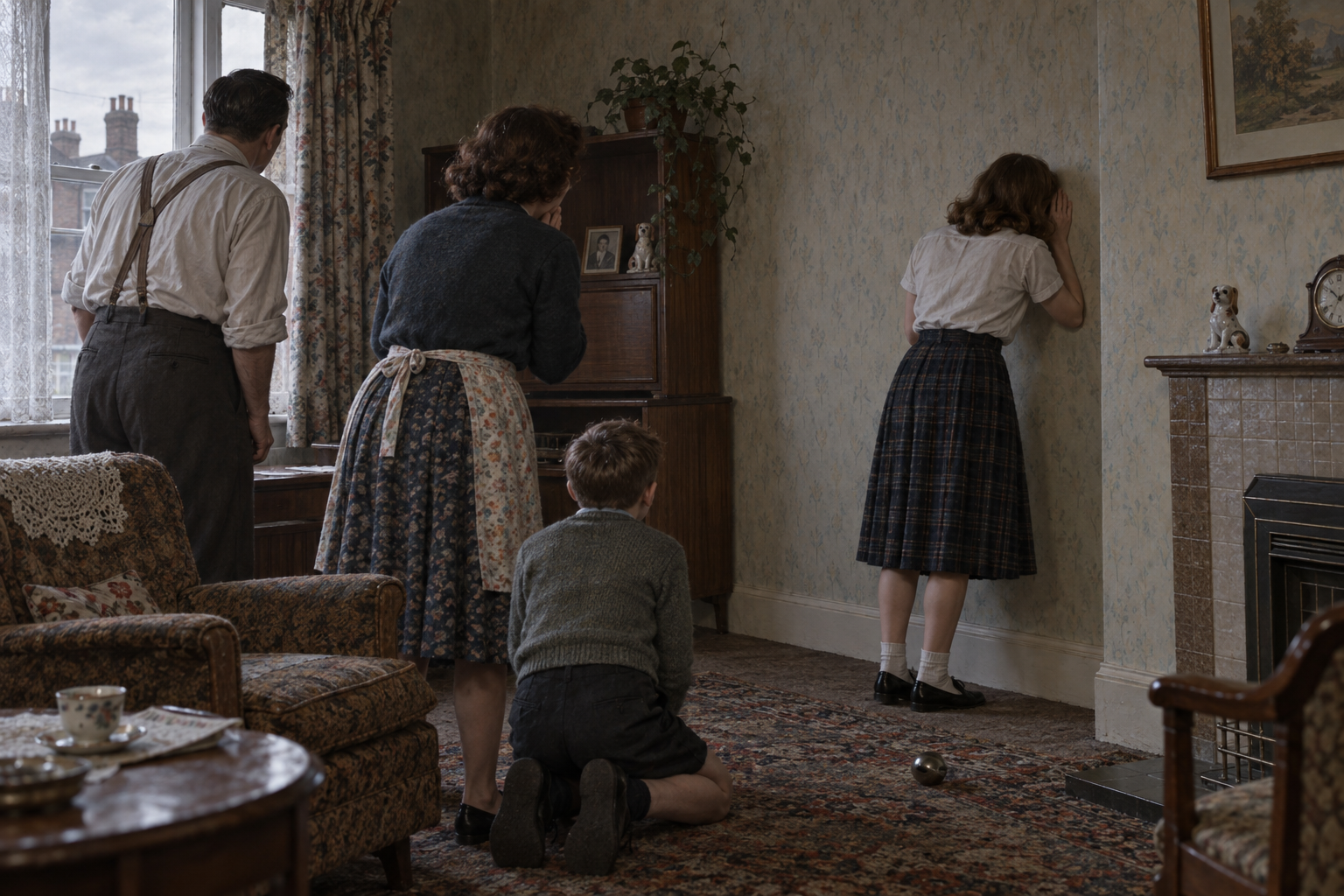
Photographs, Maps and Supporting Images
Supporting images provide documentary, geographic or visual context. Read each caption for its date, source and evidential limits.

Continue researching
Follow the evidence, context and comparisons
Curated connections
Selected editorially for this entry.
A practical guide to separating atmosphere, testimony, memory, environment and possible causes in a reported haunting.
Curated connection · Case fileThe Enfield Poltergeist: Noise, Narrative and the Council House on Green StreetThe Enfield case remains famous because it was recorded, argued over and repeatedly reinterpreted, which makes it a perfect archive for uncertainty.
Curated connection · Case fileGef the Talking Mongoose: A Voice Behind the WallsFrom 1931, the Irving family said a talking animal inhabited their Isle of Man farmhouse. Notes, interviews and samples survive, but the claimed mongoose was never independently established.