Hauntings & Apparitions
Gef the Talking Mongoose: A Voice Behind the Walls
From 1931, the Irving family said a talking animal inhabited their Isle of Man farmhouse. Notes, interviews and samples survive, but the claimed mongoose was never independently established.
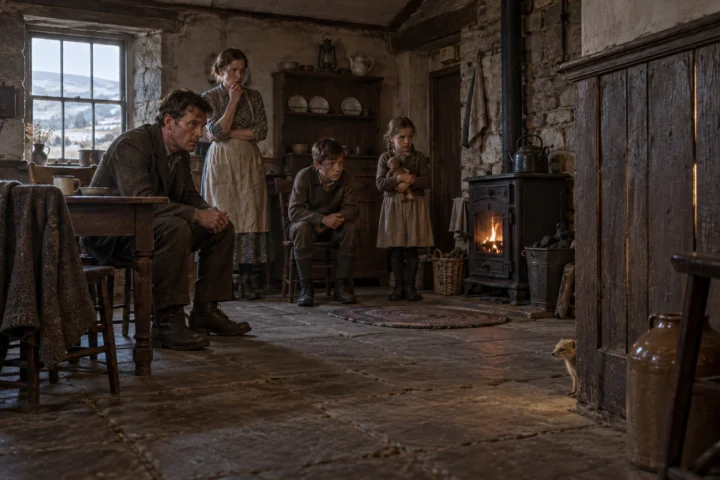
In 1931, James, Margaret and Voirrey Irving began hearing noises in their isolated farmhouse at Cashen’s Gap, near Dalby on the Isle of Man. The sounds developed into a voice that joked, gossiped, insulted visitors and claimed to belong to a mongoose named Gef. The Irvings treated the speaker as a troublesome household presence rather than a conventional ghost.
Gef became famous because the family kept records and welcomed correspondents, reporters and psychic investigators. Yet the central evidential problem never changed: outsiders heard sounds, but no independent observer securely saw a talking animal produce them. Submitted hairs, teeth and impressions did not establish an unknown mongoose.
The case can be read as a hoax hypothesis, a family performance, a study in voice and expectation, or an unusually elaborate domestic folklore. Deliberate manufacture is strongly suggested by the evidence, but no confession resolves who produced which incident.
For comparison, see the archive’s guide to haunting reports, the contested household testimony of the Enfield poltergeist, and how strange tales acquire public authority.
Claim, Context and Cautions
A voice in the walls
The family first described scratching, tapping and animal-like noises. James Irving tried calling out syllables, after which the unseen presence appeared to imitate speech. The voice acquired a name, age and extravagant biography. It said it travelled around the island, relayed neighbourhood information and sometimes performed small tasks.
The stone-and-timber house offered concealed routes for sound. Visitors could hear a voice without locating its source, a condition compatible with the family's claims but also with ventriloquism or speech through wall cavities. Hearing something unexplained is not the same as identifying its speaker.
The household record
The Irvings documented incidents in diaries and correspondence. Voirrey, the daughter, was closely associated with Gef, though reports did not assign every sound to her. The records give the case unusual texture: domestic arguments, jokes and mundane errands sit beside supernatural claims.
They are also records produced inside the household at the centre of the claim. Repetition and detail can demonstrate sustained storytelling without independently verifying its cause. Later reconstructions must resist turning the archive's abundance into automatic corroboration.
Investigators at Cashen’s Gap
Psychical researcher Harry Price and editor R. S. Lambert visited in 1935 and published The Haunting of Cashen’s Gap the following year. They interviewed the family, examined the house and compiled earlier reports. Gef did not appear for them in a form they could verify.
Their book preserved important primary material while acknowledging the evidential impasse. Price's surviving archive contains visit notes, interviews and correspondence, allowing the history of the investigation to be checked separately from later comic or paranormal retellings.
Physical evidence that did not hold
Photographs attributed to Gef were indistinct and did not establish a mongoose. Samples offered as hair were compared with material from the family's sheepdog, and teeth and claw-like items did not provide zoological confirmation. Plaster impressions were not persuasive evidence of an unknown animal.
These failures do not prove that every reported noise was consciously staged. They remove the main route by which the claim might have advanced from testimony to biological evidence. No authenticated body, clear photograph, controlled recording or independently observed performance survives.
Hoax, performance or family system?
Ventriloquism and household manufacture remain the most economical explanations. The house could channel sound, and Gef's knowledge and personality were bounded by the family's world. Publicity may also have rewarded continuation. Against that, the Irvings maintained the story under ridicule and did not leave a simple confession.
Calling the case disputed is more exact than declaring a solved zoological mystery. The evidence strongly favours human agency, while the record cannot reliably allocate every voice, object or motive to one person.
What the case preserves
Gef is valuable not because the archive verifies a talking mongoose, but because it documents a long collaboration between a family, an alleged presence, investigators and the press. The story developed in the rooms where it was heard and in the files created to explain it.
Its odd humour also resists the standard haunting template. Gef could be menacing, helpful, vulgar and absurd. That unstable character is exactly what makes the case a rich example of domestic folklore—and a poor basis for a literal new species.
Contextual glossary
Terms used in this entry
Definitions are offered as reading aids, not as conclusions about the case.
- Hoax
- A deliberate attempt to make false evidence or a false story appear genuine. A hoax can still become culturally important, but its later influence should not be confused with the original claim.
- Haunting
- A pattern of unusual experiences attributed to a place, including apparitions, sounds, movement or sensed presences. A location log is more informative than treating every incident as one cause.
- Corroboration
- Independent information that supports part of an account, such as a record, trace or separately obtained observation. Repetition from a shared source is not independent corroboration.
- Poltergeist
- A cluster of reported noises, object movement or disruption traditionally attributed to an unseen agency. Cases require attention to household dynamics, access, building conditions and witness timing.
Reference trail
Sources
- R. S. Lambert and Harry Price, The Haunting of Cashen’s Gap (1936) (opens in a new tab)Digitised contemporary investigation containing interviews and the authors’ observations; it preserves claims but does not independently verify Gef.
- Harry Price Library of Magical Literature: archive catalogue (opens in a new tab)University of London catalogue identifying Price’s Gef files, including visit notes, interviews, reports and correspondence.
- National Geographic, “The strange case of Gef, the talking mongoose” (opens in a new tab)Historical overview of the Irvings, the 1935 visit and the failure of submitted physical samples to confirm a mongoose.
- Society for Psychical Research review of Christopher Josiffe, Gef! (opens in a new tab)Review of archive-based modern research, useful for the case’s documentary afterlife and competing interpretations.
- Christopher Josiffe, “Gef the Talking Mongoose” (Fortean Times/IHR repository) (opens in a new tab)Archive-led historical article summarising the household narrative and investigator record.
Case Book
Photographs, Maps and Supporting Images
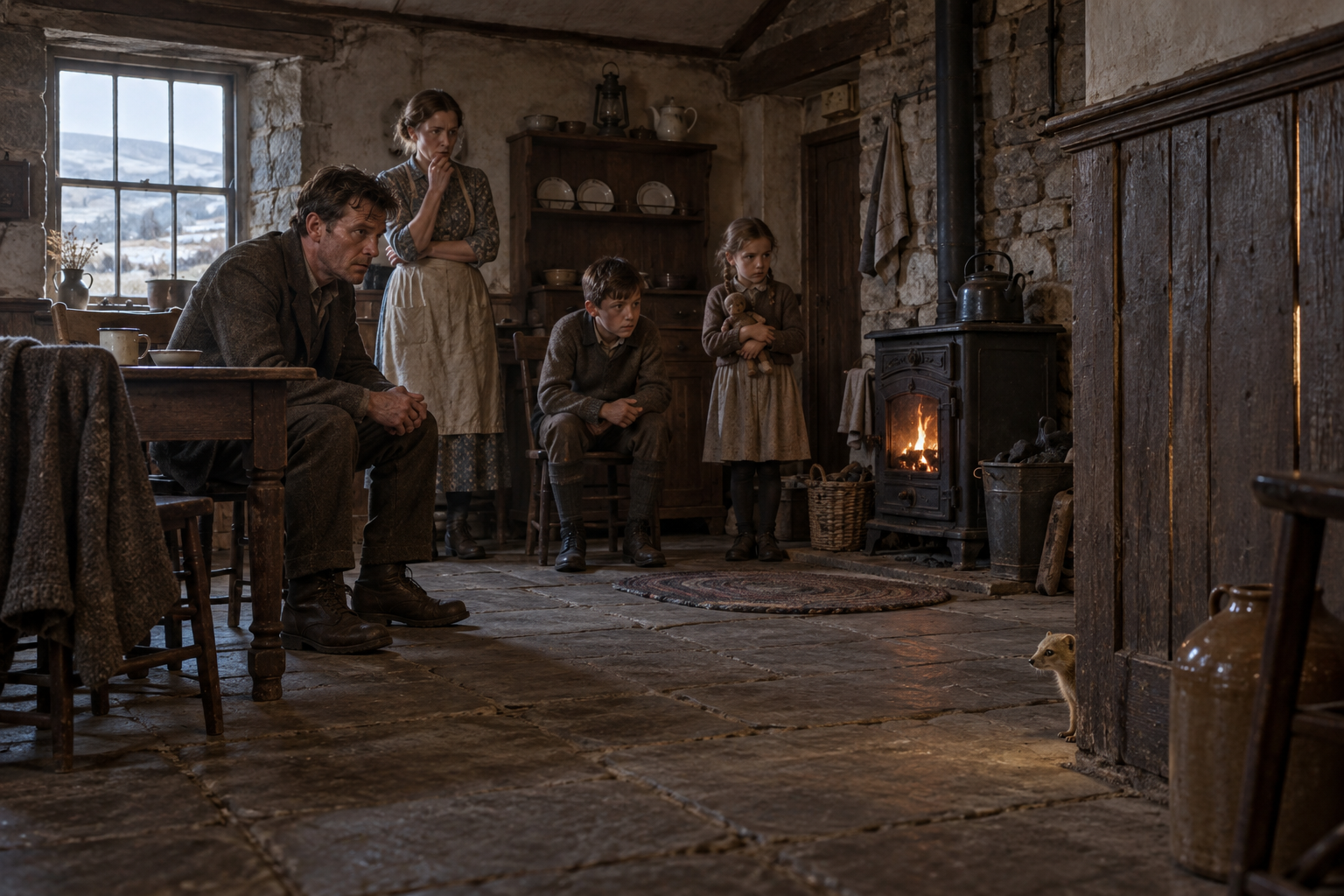
Supporting images provide documentary, geographic or visual context. Read each caption for its date, source and evidential limits.

Continue researching
Follow the evidence, context and comparisons
Curated connections
Selected editorially for this entry.
A practical guide to separating atmosphere, testimony, memory, environment and possible causes in a reported haunting.
Curated connection · Case fileThe Enfield Poltergeist: Noise, Narrative and the Council House on Green StreetThe Enfield case remains famous because it was recorded, argued over and repeatedly reinterpreted, which makes it a perfect archive for uncertainty.
Curated connection · ArticleThe Role of Newspapers in Spreading Strange TalesOld newspapers preserved remarkable local reports, but they also shaped them for appetite, humour and alarm.