Occult & Psychical Research
The Fox Sisters: Rappings, Performance and the Sound of Belief
The Fox sisters' spirit raps helped launch modern Spiritualism, then became a lesson in performance, grief, confession and belief that survives exposure.
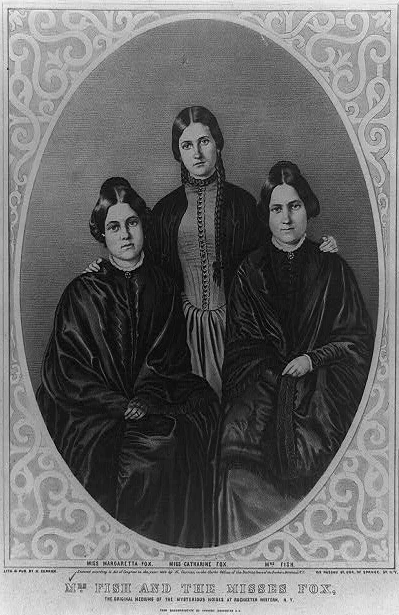
The Fox sisters offered the dead a simple interface: knock once, knock twice, count and spell. In 1848, sounds in a small New York house appeared to answer questions. The claim was intimate enough for a parlour and procedural enough to resemble a demonstration.
Hydesville, 1848
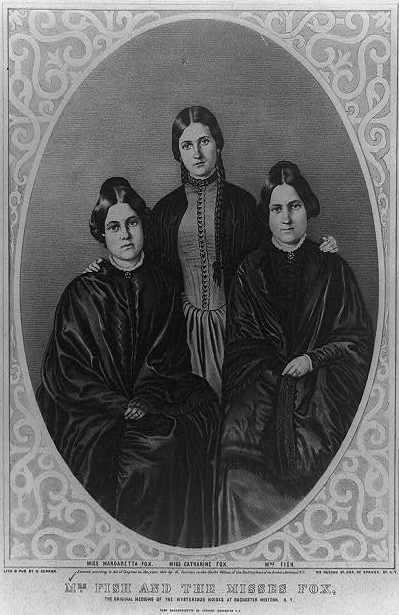
Margaret and Catherine Fox lived with their parents in Hydesville, New York. In late March, the family and neighbours reported rapping sounds that seemed to imitate knocks and respond to questions. A narrative formed around the spirit of a murdered peddler, although later searches and retellings did not establish that origin securely.
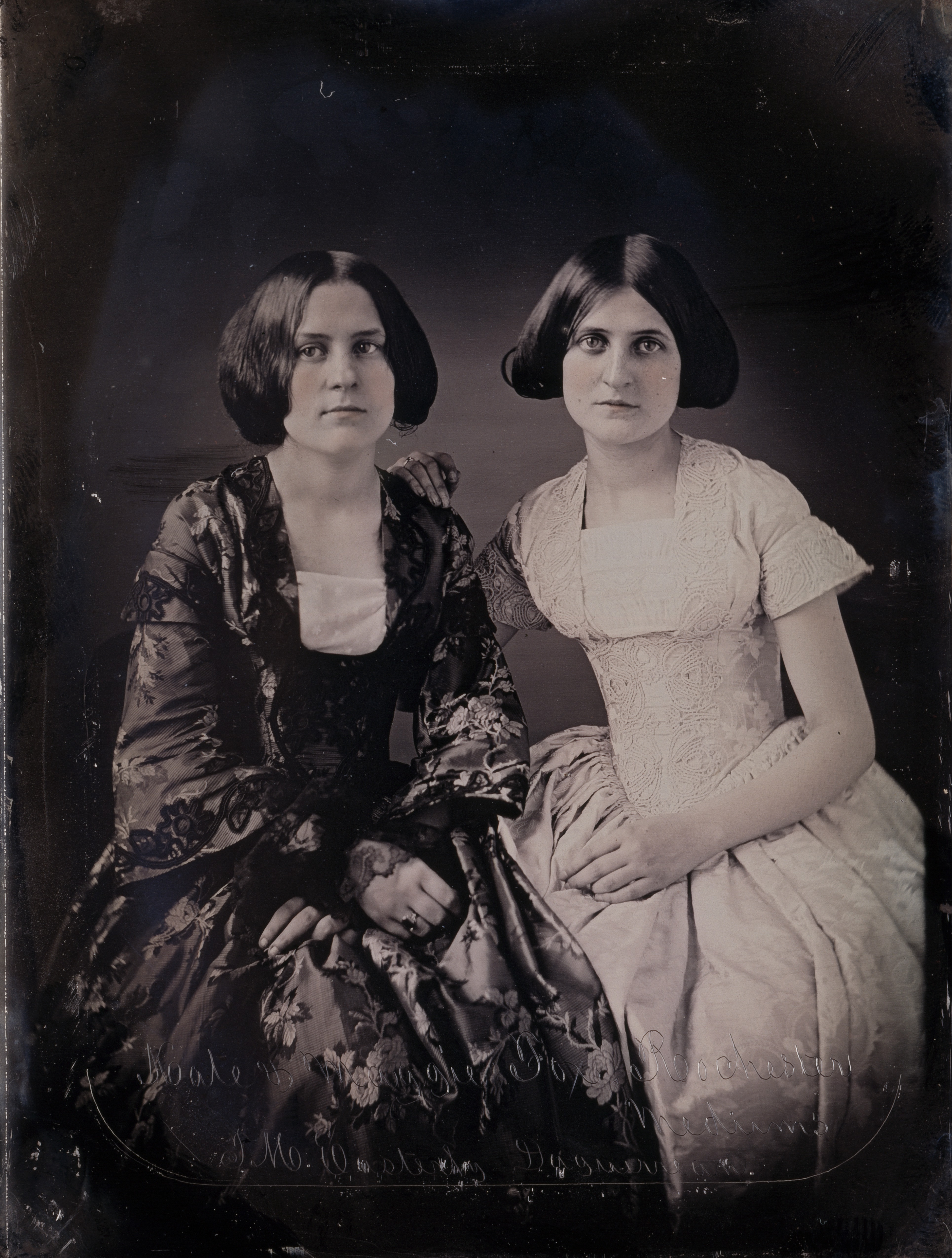
The sisters moved to Rochester, where their older sister Leah helped organise public appearances. In November 1849 they demonstrated the raps at Corinthian Hall. The events moved from a household report to paid public performance.
Why a knock looked modern
The method reduced an invisible claim to signals that audiences could hear. Numbers, letters and yes-or-no answers made communication seem repeatable. In an era transformed by telegraphy, the idea of messages crossing another invisible boundary carried technological as well as religious resonance.
Spiritualism also met grief. Families faced high mortality and separation; many wanted continuing relationships with the dead. The seance offered comfort in a form presented as observation rather than doctrine.
Performance and suspicion
Sceptics proposed concealed movement and joint sounds. Examinations sometimes restricted the sisters’ positions, but public tests varied and rarely provided controls strong enough to settle every claim. Performance conditions, audience expectation and the lack of a visible source helped the sounds acquire meaning.
In 1888, Margaret publicly demonstrated how raps could be produced with her toes and described the early events as deception. She later attempted to retract aspects of the confession. Financial pressure, family conflict and the public theatre surrounding both statements complicate motive, but the normal production method was demonstrated.
A movement larger than its origin
By then Spiritualism did not depend on one family. Other mediums, churches, publications and practices had developed. Believers could reject the confession, argue that genuine phenomena occurred alongside tricks, or detach the movement from the sisters entirely.
This is why exposure does not simply reverse belief. A claim can create communities, rituals and identities that survive the evidential collapse of its first performance. The Cottingley Fairies provide a visual comparison: later admission altered the photographs’ status without erasing their cultural life.
What the raps can establish
The historical record establishes performances, public reaction, a major religious movement and a later confession. It does not establish communication with a murdered peddler or the dead. The strongest explanation is humanly produced sound amplified by grief, publicity and a culture ready to hear meaning in it.
The case remains important because the mechanism was small and the consequences were vast. A knock became a technology of belief.
Claim, Context and Cautions
Claim
Responsive rapping sounds around Margaret and Catherine Fox were presented as coded communication with spirits.
What is solid?
The Hydesville reports began in 1848, the sisters gave public demonstrations, Spiritualism expanded rapidly, and Margaret later demonstrated a normal method for producing raps.
What remains disputed?
Margaret later complicated her confession, and believers argued that deception did not explain every seance. No controlled evidence established communication with the dead.
Possible explanations
Deliberately produced joint sounds, audience expectation, grief, performance and publicity provide a coherent account of the founding events.
Sceptical view
A repeatable signal feels objective only when its source is controlled. Public tests varied, and meaning was assigned before the production method was excluded.
Why it still matters
The Fox sisters show how a modest performance can answer a large emotional need and create a movement able to outlive exposure.
Contextual glossary
Terms used in this entry
Definitions are offered as reading aids, not as conclusions about the case.
- Spiritualism
- A religious and cultural movement centred on communication with the dead, especially influential from the nineteenth century onward. It developed churches, publications, rituals and competing forms of mediumship.
- Séance
- A gathering intended to communicate with spirits, usually through a medium, table movement, voices or other signs. Lighting, access and the exact procedure matter when evaluating physical claims.
Reference trail
Sources
- Encyclopaedia Britannica: Spiritualism (opens in a new tab)Historical overview of Spiritualism and the Fox sisters' role.
- Library of Congress: Fox Sisters lithograph (opens in a new tab)Public collection record for the 1852 Currier lithograph.
- Wikimedia Commons: Fox sisters 1852 (opens in a new tab)Public-domain image source used by this case.
Case Book
Photographs, Maps and Supporting Images
Supporting images provide documentary, geographic or visual context. Read each caption for its date, source and evidential limits.
Continue researching
Follow the evidence, context and comparisons
Curated connections
Selected editorially for this entry.
Two Yorkshire cousins, a camera and a set of fairy photographs became one of the most instructive image hoaxes of the twentieth century.
Curated connection · ArticleThe Difference Between Evidence, Testimony and LegendA field guide to three words that often get tangled in mystery research.
Curated connection · ArticleCursed Objects and the Stories We Attach to ThingsWhy ordinary objects can gather blame, awe and dread when misfortune needs a visible container.